Ivy Sweater – Knitting Pattern

Ivy Sweater – Petite Knits.

At Rose City Yarn Crawl this year, I went to the Boss Kitty trunk show, and saw the most amazing mohair. 

Green yarn skeins for knitting or crochet, close-up of soft, vibrant fiber.

Neon green is my absolute favorite color, so I knew I had to make something out of this. I had already printed out the pattern for the Ivy Sweater by Petite Knit, and thought it would be a good choice. In a lot of her patterns, she holds a strand of mohair with her working yarn. I thought this pattern was one of them, but when I went to cast on, I realized that wasn’t the case. 

For my base yarn, I used Cascade Yarns’ Friday Harbor in the color black. It’s a super soft wool and silk blend. When I first picked it up in the store, I thought it was an uber-soft cotton. It was the perfect non-fussy base to use with the temperamental mohair. 

I was able to get gauge with one strand of mohair, my worsted yarn, and the needle size she recommended. My fabric was fairly structured, probably because of the added bulk of the mohair. I like that kind of fabric, but if you wanted something drapier, I would probably recommend not holding a mohair with the worsted, but your mileage may vary. 

For my measurements, (bust 39 ¾) I made a size 5. I usually like my tops to be fairly form-fitting and I had to keep reminding myself that I was intentionally making something with a loose boxy fit. 

When I tried on the top to test the body length, I almost frogged the whole project. I sent truly incredibly blurry photos to a friend—and former yarn-store co-worker—of mine. She was able to talk me off the frogging ledge, and reminded me that blocking fixes all sins. 

Bright green textured knit top worn by a person taking a mirror selfie, showcasing the garment's det.

See? I told you they were so blurry. I have a smart phone for taking blog-post pictures, but I use a flip phone in my day-to-day. 

My main problem was the hemline. It sat where I wanted it to sit, but it was bunching up in an unflattering way. In addition to that, the hem was supposed to roll, which I liked, but it was rolling too much, which I didn’t like. 

This stage of the process is also when I decided that I wasn’t going to do full-length sleeves. This has less to do with aesthetics and more to do with how hot I get in knit sweaters. This thing was already warm. Adding full sleeves would probably have me melting like the wicked witch. 

One important thing to note. Fashion rules say that the sleeve hemline and the body hemline should be at different heights. This helps a finished garment not look super boxy, and also gives it some visual interest. When I decided to shorten the sleeves, I wanted to make sure I followed that rule. I chose a sleeve length that ended right above my elbow. It gave me more than a t-shirt, but less than a full sweater. Most importantly – that length wouldn’t chafe against my inner elbow.

Close-up of a green knitted sleeve on a pink arm in a craft room.

After that, it was pretty much done! The only thing left to do was to weave in the ends and block it. I took pictures of the fit before blocking. 

A woman taking a mirror selfie in a bathroom with a shark-themed shower curtain, wearing a green tex.

How I pinned it for blocking. 

Soft, colorful foam puzzle mats with a green artificial grass rug on top, placed near a window with.

And….the fit after! 

A woman standing outdoors on a balcony with a cityscape background, wearing a green textured sweater.

Honestly, I don’t love the fit.

It looks fine from some angles, but from other angles it drapes in a way that I’m not crazy about.

A lush green fuzzy sweater worn by a person outdoors in an urban setting.

I’m thinking of some ways that I can cinch the waist in, maybe with some Chinese knots or a metal buckle situation. I love the feel and look of the fabric, so I’m definitely not giving up on this shirt, but I think I can add something that will improve the fit. 

I’ll report back on the results! 
I Finished a Knitting Project – Sophie Hood Pattern Review

Beautifully knitted Sophie Hood in blue and teal shades.

Last May (almost a year ago!) I wrote this in the newsletter…

I’m learning how to knit!

Again. 🙄

The last time I tried, I thought I hated knitting. But what I did was make a very, very basic mistake.

I know how to help beginners learn. It’s what I do!

But I went against all of my own advice from this post about choosing an applique pattern for a beginner.

Friends – I chose a boring pattern. Truly, the most boring pattern ever.

Let me back up. . .

A few years ago I decided I wanted to learn how to knit. Jo (my daughter and now also my business partner) is an excellent knitter, and she offered to teach me.

I bought some inexpensive-but-nice-feeling yarn and started to make The Most Boring Scarf in the Whole Wide World.

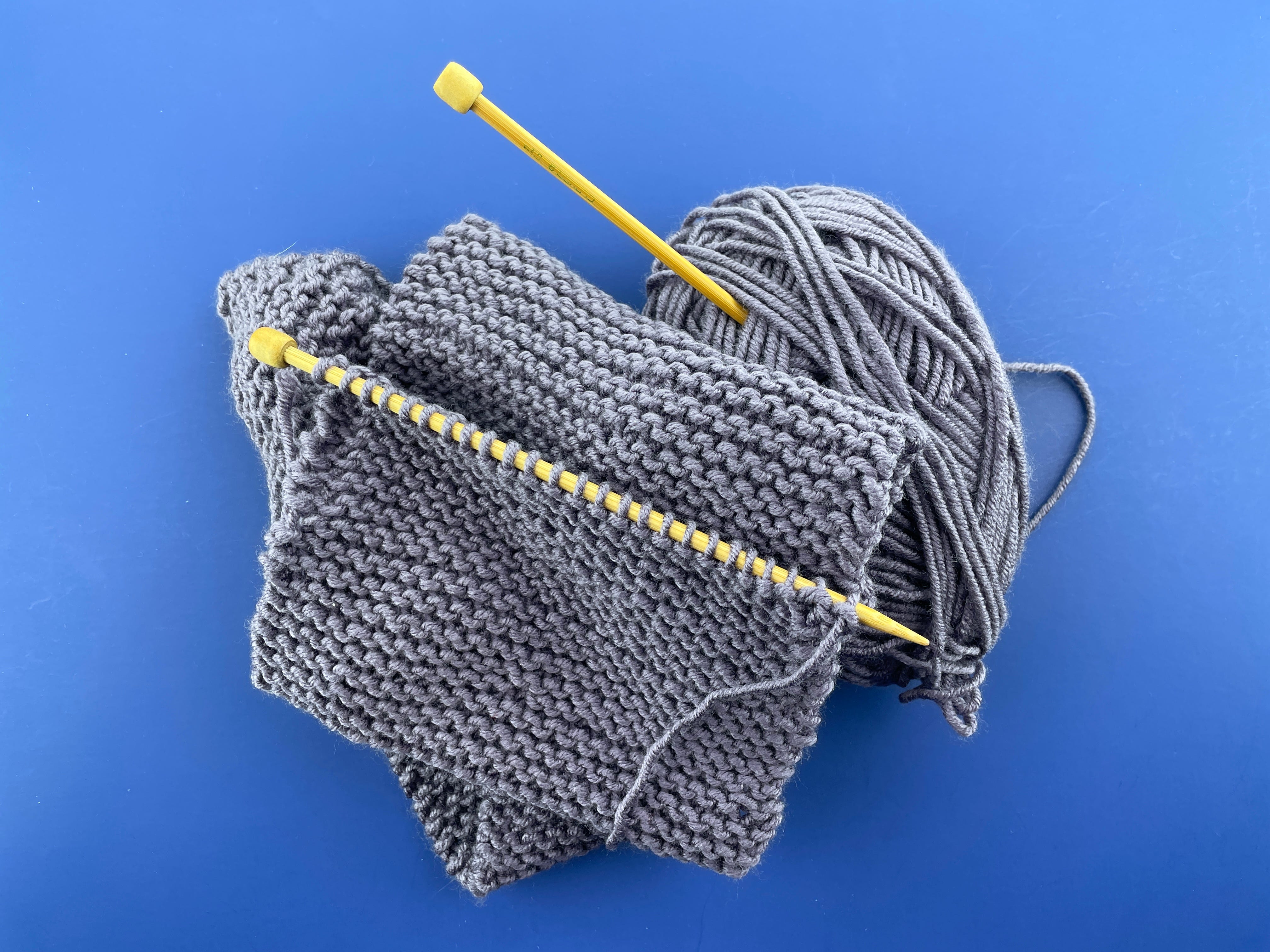
A very simple, partially-knitted garter stitch scarf.

It was just knitting back and forth. Endless knitting. Boring knitting. That photo above is my progress after, I think, three years.

Yawn.

I don’t even wear this kind of scarf! I was making it just to learn how. There was nothing exciting about the thing itself.

This year [this was in March 2025] I decided to try again.

I chose the Sophie Hood, a very popular pattern from Petite Knit. It’s an intermediate-level pattern, with increases and decreases, and a built-in i-cord edge. I decided to complicate things even more by adding a second yarn and striping them. Some experienced knitters were dubious about choosing this for a first project, but it’s a thing I’ll actually wear, and I know I’m a patient learner. I’m okay with stopping to get help/watch some videos whenever I need to.

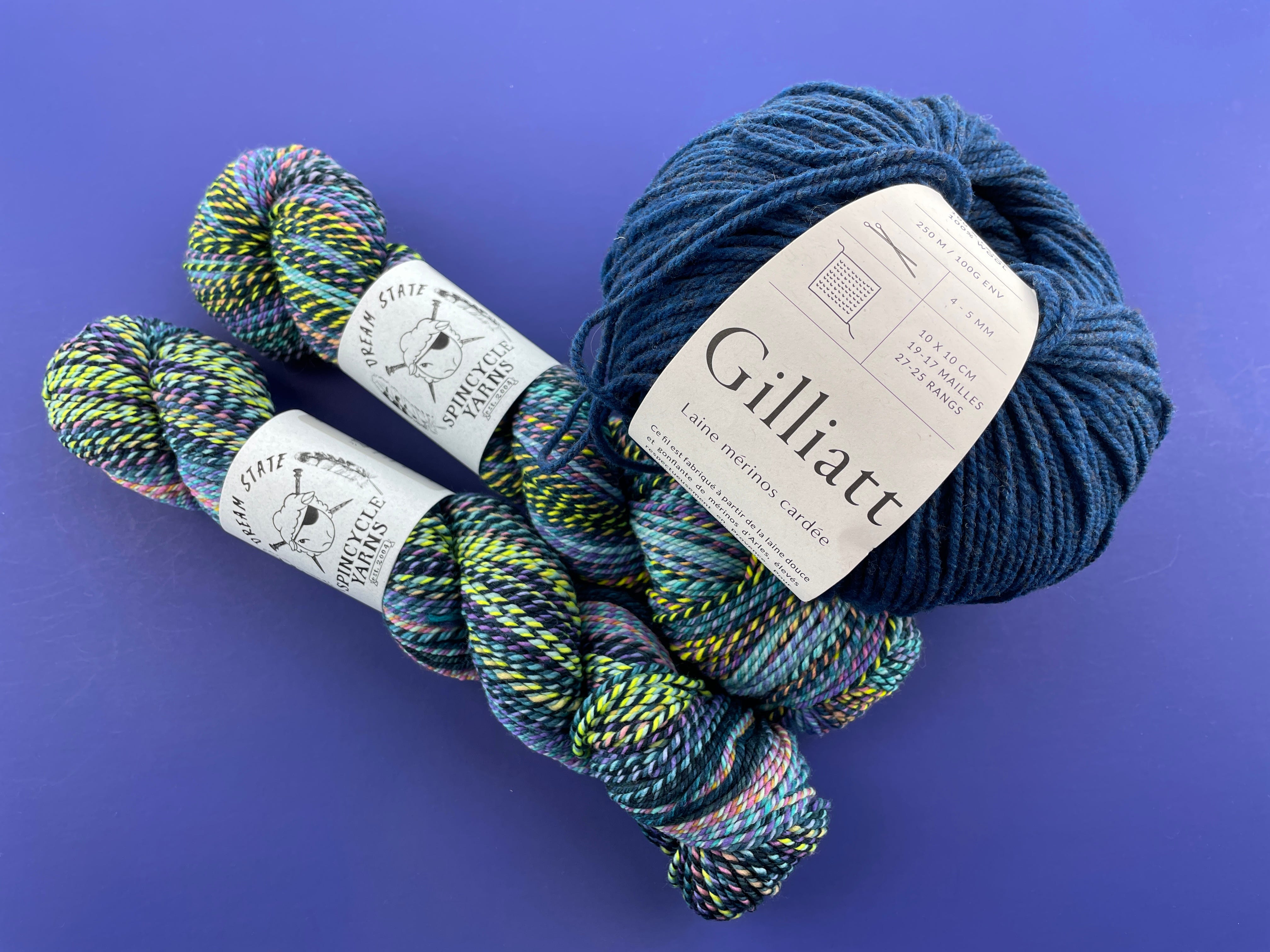
Jo and I went out and enjoyed the Rose City Yarn Crawl, and she helped me choose yarn. Look at how pretty it is!

Skeins of yarn, ready for knitting.

Now I was ready to start again.

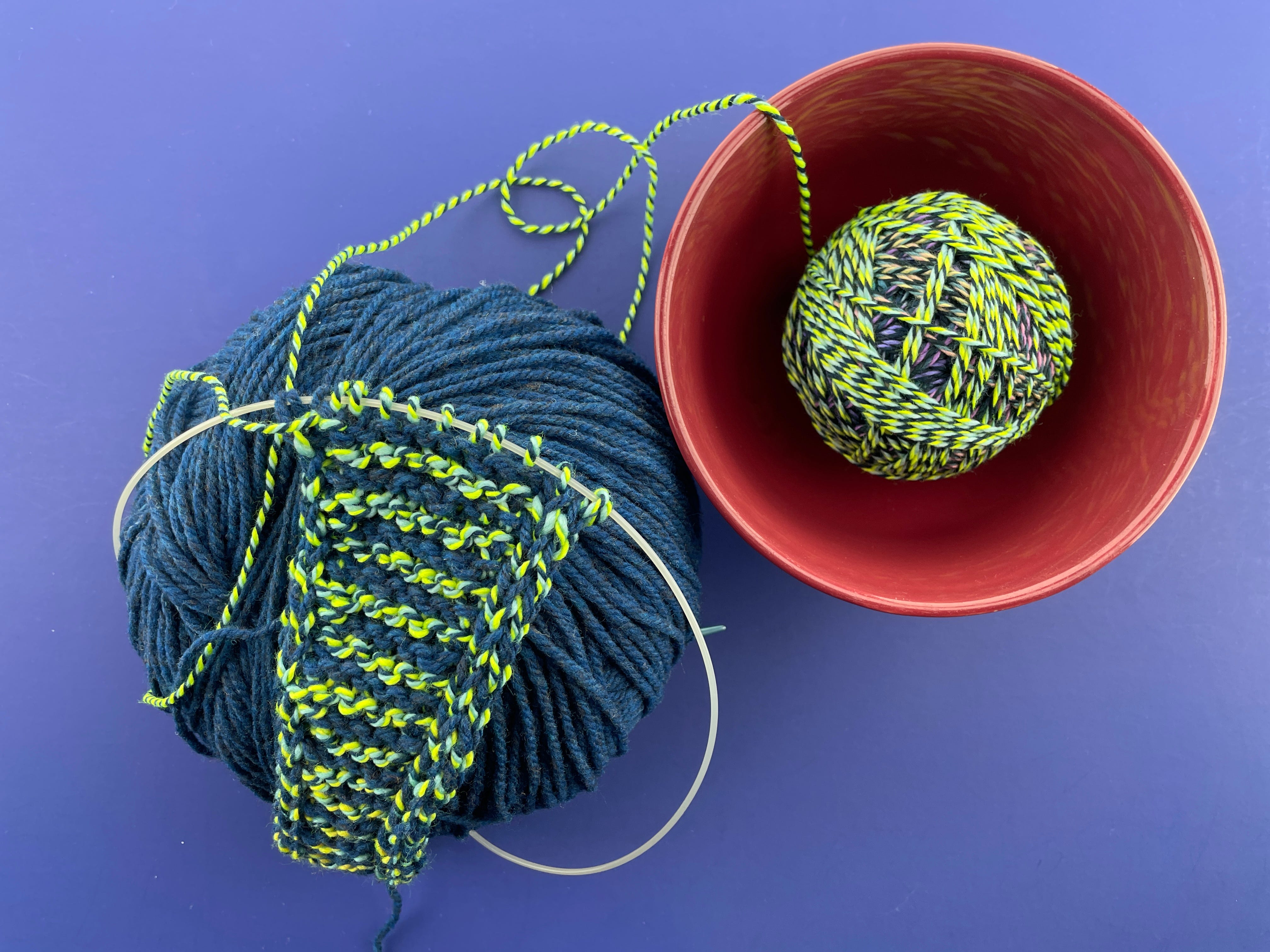
Here it is after (I think) a week.

The start of a knitted scarf.

I had to learn again how to cast on, how to knit, how to do that pretty i-cord edge, and how to change colors. I made some mistakes and had to learn how to un-knit my stitches. (It’s way harder than just pulling out crochet stitches!)

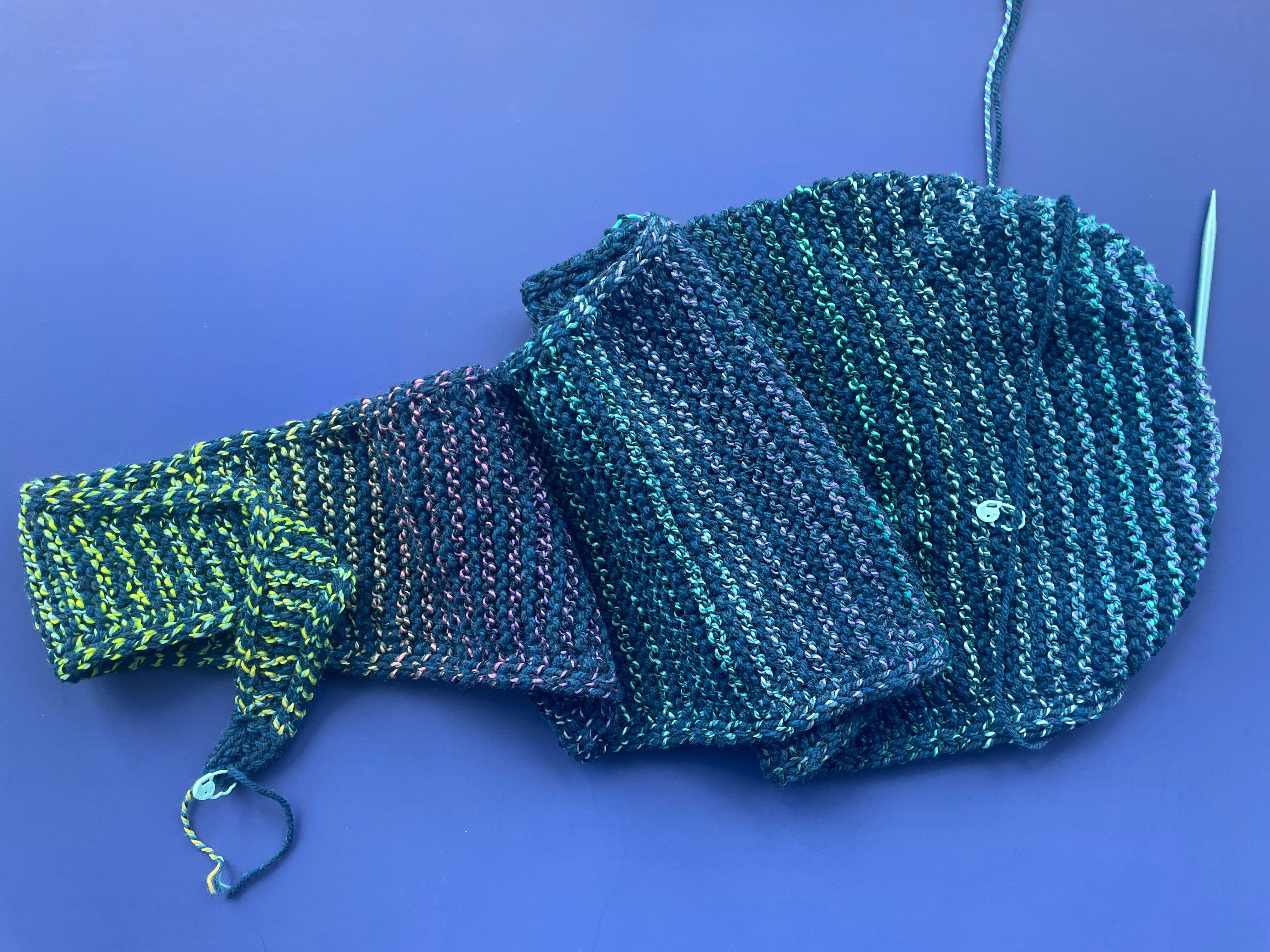
I’ve been making slow and steady progress, and now I’m halfway finished! [This was in May 2025.]

Knitted Sophie Hood, halfway finished.

Look at those yummy color changes in the stripes!

So here’s the thing – all those things that make the project more difficult are also making it more interesting.

Yes, sometimes I forget to switch to the i-cord stitch and I have to un-knit stitches and do it the right way – but that i-cord edge looks so finished and nice! And knitting with two balls of yarn is annoying and I have to keep untwisting them, but I love the stripes! And every time my contrast yarn changes color I get a little frisson of excitement.

I’m having fun, and I can’t wait to wear my finished scarf.

A long time ago, I heard someone (I don’t remember who) speaking about kids learning to read. Learning to read is hard, and he was talking about the importance of writing books that kids will enjoy, because putting a lot of effort into decoding a boring book is not very rewarding. But if a book is a pleasure to read, the kid will be more willing to practice, and that practice will make them more proficient, which will, in turn, make the activity more pleasant, and around and around we go.

All of this is a very long way of saying that if you want to learn something new – whether it’s knitting, quilting, crochet, embroidery, cooking, whittling, playing the cello, or whatever – do it with something you’re excited about!

So that’s the end of the original post, but today I have an update. I finished it!

I actually finished it in November, but it’s taken me this long to take a picture. 😂

Wendi wearing a knitted Sophie Hood in a tulip field.

Here it is from the side.

Woman wearing a blue knit hooded scarf in a vibrant field of tulips.

And here it is laid flat.

Brightly Colored Knitted Sophie Hood.

It’s a hood with long scarf ends that come to a nice, small taper at the tips. The scarf hangs down just past my knees – long enough to wrap around my neck from front to back, and around front again.

(It was very windy out at the tulip farm and the tip of the scarf has blown to my back in the side view photo, but you can see it in the front view.)

Here’s why the Sophie Hood is a great first knitting project…

  • There’s no purling. The entire scarf is just knitting and slipping stitches.
  • The i-cord edge is super easy and gives it a real pro look – very satisfying.
  • Knitting has (I am learning) a kajillion different ways to increase, but this pattern uses only one. And it’s easy. And the rows when you start are so short that you get lots of immediate opportunities to practice it. By the time the rows get longer with lots of stitches between your increases, you’ve got them down pat.
  • I highly recommend striping with two yarns. It’s not hard, and the stripes actually helped me keep track of where I was in the pattern at all times. That was especially helpful because I’m still learning how to “read” my knitting.

For those following along in my Wardrobe Project, I’m wearing this with my new blue dress, some me-made-pants (which I’ll blog about soon) and one of my favorite kimono-style jackets.

And I’m not done knitting! Or choosing what appear to be complicated projects!

I love the look of cables, so I’m working on a vest that’s basically all cables. Here’s my swatch.

Cable knit swatch showcasing intricate knitting pattern and vibrant blue yarn. Perfect for knitting.

I also wanted a smaller project that’s easier to schlep around. I love the socks that Jo has knit for me, so now I’m working on a pair of socks! There’s enough weird shaping to learn for them that I just picked a simple ribbed sock pattern. I’ve finished the first one (it fits perfectly!) and I’m well on my way through the cuff of the second, so there will be more knitting to report on soon.

I’m making clothing! I mean, I guess it’s technically an accessory – but I wear it, so it counts! 🙂

Colorwork Cuff Club – August

Purple and orange patterned knitting socks, tattoo on ankle, cozy fiber art, colorful handmade footwear, vibrant knitting design.

Socks are one of my very favorite things to knit. They’re almost instant gratification. I can make a pair of socks in a weekend if I have enough Star Trek, X-Files, or Secret Lives of Mormon Wives to watch.

(One of those things is not like the other.)

When one of my knitting friends showed me the Colorwork Cuff Club pattern by Summer Lee, I knew what my next project was going to be. 

Like the title suggests, this is a sock club. You buy the base pattern once, and you get a new colorwork cuff every month. (You also get all the previous month’s patterns when you buy the base pattern.) The cuff changes, but the foot pattern is the same every time, which makes these socks knit up super quick. 

I’m not planning to knit the cuffs in order, but I did happen to start that way. The first cuff pattern released was also the first one I knit—August. 

Patterned cozy knit socks in purple and teal for kids, perfect for handmade clothing and winter wear.

This pattern was so nice, I made it twice. One set, the blue, is for my mother. The other set is for me. 

For the blue socks, I used Fiona Kay’s Stampede Sock in the color Nevermore as the main color. She doesn’t seem to be running her Poe collection anymore, but she always has new stuff on her website and her Instagram. I was also able to find her yarns at Northwest Wools

For the accent color I used a mini skein from Lamb Good Fibers. It was part of a whole set of minis, so I have no idea what the color name was. 

For the purple socks, I used Knitted Wit Sock in the color Galaxy Flower. This was part of Knitted Wit’s Herstory collection, which are monthly colors each representing and highlighting a famous woman. Once they’re gone, they’re gone for good, so you may have a hard time finding this exact color.

I really like Knitted Wit’s yarn for socks. They’re durable, soft, and are perfect for colorwork. 

For the accent color I used a Teal Torch Knits mini in the color Neon Melon. I love neons, and I think this was the perfect accent color to go with the dark purple. 

I had a blast making these socks, and I’m already working on my next pair from the Colorwork Cuff Club—this time September. 

(I swear I’m not doing them in order.)

For those who like to track their knitting in Ravelry, here’s my post about this project.

Best,
Jo

Giveaway: "Mini Knitted" Book Series + Interview with Sahiyo Ishii

Mini Knitted Books

I have an amazing opportunity for you today! Search Press (the publisher of the adorable Mini Knitted series) is giving one reader 5 books, including:

Keep reading for details on how to enter! Sachiyo Ishii is the author of 4 of these books, and she’s joined us to tell us a bit about herself and her process!

Each book is packed with projects (more than 25 patterns per book), using a variety of techniques with simple knitting stitches.

Interview with Sachiyo Ishii


Sachiyo is the prolific author of 4 of the Mini Knitted books, and I was delighted that she took the time to come talk to us! Welcome, Sachiyo!

How did you begin knitting? And when did it take a professional turn?
I took up knitting in my 30’s after my second son was born. I could not knit a stitch until then. I thought dressing my boys in my handmade clothes was trendy and very Yummy Mummy, but soon discovered that knitting requires skill and patience. With my friend’s help, I did achieve my very first piece, but the stitches were messy and uneven, and the sleeves came out in different lengths.

It seemed to me that I had a very long way to go until I would be able to knit a decent garment. I almost gave up knitting altogether, however, I discovered that you can make small toys with basic skills. I practiced published patterns for some time and then, I started creating my own to add personality. I knitted many animals and proposed my current publisher, Search Press the idea of the knitted animal park. It is great to find a channel that I can put my effort into.

You’ve written so many books! Where do you find your inspiration?
I get inspiration from everywhere. When I walk in town, looking through books and magazines, shop windows, everywhere! I am constantly thinking of new designs no matter where I go or what I do. Illustrations and cartoons, felted work and sugar craft are a good source, too. They are already in simplified forms and it is easy to make them into my craft projects.


What do you like to do in your free time?

I enjoy attending fitness classes and swimming. When I get stuck with a project, swimming can be the best solution to get a fresh idea. I don’t do enough but I like visiting craft shops and fairs. I guess I cannot completely be free from crafting.

What is your favourite yarn/knitting needle/craft supply?
For many years, my favourite yarns are Rowan. I love felted tweed especially. It is such a delight to knit with quality yarn.
I have been using bamboo needles since I took up knitting. They are less slippery and keep stitches well and the best of all, they feel great in hands. If you are still new to the skill, bamboo needles are must. I have been using Clover Takumi needles.
My favourite is Clover products. My mother loved them for many years and recently I inherited them all. Some are bought over 30 years ago but still in very good condition.

Is there a favourite piece you’ve made? Perhaps for yourself?
It is hard to say since I have many favourites, but I love the knitted carousel. I have a whole set of amusement park in knitting and would love to do a book someday. Most of my creations are for myself except occasional gifts to my friends. It is great to be an author. You get to keep all samples!
knitted carousel Sachiyo Ishii

Thank you, Sachiyo!

Find Sachiyo!

Website: www.Knitsbysachi.com
Instagram: knitsbysachi
Facebook: www.facebook.com/KnitsBySachi/
Ravelry: sachiyo-ishii
Pinterest: knitsbysachi
Twitter: Knitsbysachi

Norah Gaughan’s Knitted Cable Sourcebook: Review

This book. Norah Gaughan’s Knitted Cable Sourcebook. Drool.

I saw it. And I bought it.

I don’t buy a lot of craft books. (Seriously, all of my books fit on one shelf!)

But I bought this one and love it. And I added my old cable stitch dictionary to my ‘Spring Cleaning’ pile. Because I don’t need it any more.

Norah Gaughan's Knitted cable sourcebook

(does this inside cover give you an idea of all of the amazingness inside?)

I had read a lot of amazing reviews about this book, but I’m a bit of a skeptic. I thought, ‘oh, they’re probably just saying nice stuff because Norah Gaughan is really famous’. (geesh, that makes me sound really awful, doesn’t it? It’s just that in my job, I see a lot of books.) And the cable on the cover is nice, but it didn’t make me pass out from the amazingness.

But once my book arrived I discovered that my skepticism was unwarranted. It actually IS really amazing.

The introduction isn’t very long, but it’s packed with pretty juicy information. The topics covered include:

  • Using a double point needle as a cable needle
  • Left vs. Right slants
  • How to slip stitches onto a needle & how to work the held stitches
  • Cable terminology
  • How to read cable charts
  • Tips for keeping your place on a chart
  • A full explanation of Norah’s own Stockinette Stitch Equivalent System (SSE), so you can swap different cable stitches into different patterns
  • How to fix a mistake in a cable
  • How to count cabled rows

I read the introduction and felt like, ‘Wow. That has everything I need to know.’

The cable designs (many not previously published) are just stunning. Look at this one.

Norah Gaughan's Knitted Cable Sourcebook

What?!?

Very few are this complicated… most of the stitch patterns are two notches above ‘simple’, but stunningly beautiful and hovering significantly below ‘crazily complex’. Which is exactly what you want in a stitch dictionary.

I fell in love with the Seed Rib Half Drop (#84 in the book) and cast on for a scarf immediately.

Seed Rib scarf from Norah Gaughan's Knitted Cable Sourcebook

Isn’t it gorgeous? (The cable pattern, I mean… not my knitting!) It was so enjoyable to knit… I felt like each cable was a little piece of knitter’s candy. I just kept wanting to get to the next one!

FreshStitches scarf cable pattern norah Gaughan's

The book also contains 15 projects, which are all quite lovely and creative projects using cables, in addition to the more than 150 stitch patterns in the book.

Pullover Norah Gaughan's Knitted Cable Sourcebook

Whoa. This book is just plain fabulous. Treat yourself.

Those links are affiliate links. That means I earn a tiny commission if you buy after clicking through. 🙂

How to use 9" circular needles for any pattern!

You know I love my 9″ circular needles. I think they’re the easiest way to knit socks and sleeves.

But, because they’re fairly new, there aren’t a lot of patterns written specifically for the 9 inch needle. I’m often asked how to translate your favorite sock pattern into one that can be used on a 9″ circular.

Here’s how to do it! And good news, it’s easy!

How to translate any pattern to using 9" circular needles

In this blog post, I’m going to show you a simple little example of a piece of knitting with 10 stitches. The green string is our yarn!
yarn on 9 inch circular needle

Step 1: Place your End of Round marker

If you’re familiar with knitting on circular needles, then you are probably already doing this step. The end of round marker is an interestingly-colored marker (different from all the rest!) that tells you when you’ve hit the end of your round.

end of round stitch marker on a 9" needle

Place stitch markers where the double points would be

Now, here’s the real trick. You want to place stitch markers on your work to note where would have been between the double point needles (shown in the image as orange).
how to use stitch markers on a 9" circular

Using our little example, let’s say the pattern told you to cast 3 sts onto one double point, 3 sts onto another and 4 sts onto a third needle. You would place markers to section off 3, 3 and then 4 sts.

This trick works whether you’re instructed to use 3 or 4 double point needles.

If the pattern called for 2 needles (such as when you knit socks on 2 circular needles), then you can do the same trick, just using fewer markers!

That’s it! Now you can knit, and easily follow the instructions as they refer to double point needles. If you want a bit more help, you might want to find stitch markers that contain numbers (to remind you which ‘needle’ would have been which.

knitting on double point needles with freshstitches

You can now use 9″ circular needles on socks and sleeves… now that you know how to ‘translate’ the pattern! Happy knitting!

Have you heard about the Red Scarf Project?

Bright red knitted scarf project with yarn and knitting needles showcased on a white background.

This post originally appeared on November 20th, 2013. But it’s such a great cause, I’m reposting it with additional information!

What happens to a child in the foster care system when they turn 18? They’re ‘adults’, and are set out into the world alone, and without a network of family or social resources.

Sad, right?

If those kids are awesome enough to get themselves into college… who sends them care packages? Who do they call if they need an emergency $50 for a surprise textbook?

In most cases, they have no one to turn to.

Makes you sniffle, right?

That’s why I love Foster Care to Success, an organization that supports foster care children who have ‘aged out’ of the system. The organization collects money for emergency funds and runs other great drives to support this often-overlooked population.

I particularly love the Red Scarf Project. I read about it in Craft Activism.

Red Scarf project

The Red Scarf Project collects scarves from September 1st – December 15th every year, and then distributes them to a foster student on Valentine’s Day.

Isn’t that sweet? Can you imagine how special you’d feel if a handmade scarf with a sweet note showed up on your door? And what a boost that would give to your semester?

That’s why I’m knitting one!

Red Scarf Project

I didn’t feel like I had the time: the Kit Club packages, hosting Thanksgiving dinner, planning for the holidays… and then I told myself “Balarky! You can make the time! These college students don’t have families!”

And surprise… I’m finding the time!

Join in!

Can you spare the time?

Nothing fancy is required, just a simple red knitted or crocheted scarf. Check out the guidelines, here.

This link tells you where to mail the scarves, as well as the not-too-hard guidelines (basically is red, gender neutral and about 60″ long). Pattern suggestions, too!

Sweet extras, such as a hand-written note, are welcome!

What is Continental Knitting?

When I’m teaching new knitters, I notice that a lot of them get caught up in the terms for the different styles of knitting. What is continental knitting? What is throwing? And which one is better?

Do what’s most comfortable

When I teach beginning knitters, I don’t tell them anything about how to hold the yarn. I let them do what’s most comfortable. Most folks intuitively grab the needles and yarn in the way that works best for them!

What is Continental Knitting?

‘Continental Knitting’ refers to holding your yarn in your non-dominant hand. For right-handers, that means holding (and tensioning) the yarn with your left hand.

Continental knitting from FreshStitches

It’s called this because it’s thought to be the style of knitting most popular on ‘the continent’ of Europe (as opposed to England), but I’ve spoken to a number of international knitters that reveal this generalization isn’t completely accurate. The finer-grained truth is that there are a variety of knitting cultures (with their preferred yarn-holding styles) within Europe… but that’s a whole ‘nother blog post!

I made you a video so that you can see me knitting ‘Continental’:

Most crocheters knit this way, as they are used to tensioning their yarn in their non-dominant hand.

What is Throwing?

Throwing refers to the action of moving the hand holding the yarn around your dominant knitting needle. It is most commonly used with ‘English’ knitting (where you hold your yarn in your dominant hand), but not necessarily.

Throwing in knitting

Most people consider this to be a slower method of knitting… but let me tell you, I know some throwers who make my continental knitting look like it’s happening at a snail’s pace!

I made a little video of me throwing. I’m a bit slower at it because it’s not my usual style!

And more…

There are all kinds of styles of knitting that describe how you hold your hands and where you hold your yarn. We’ve only scratched the surface!

And there is no ‘best’ technique! Each style takes practice and suits different knitters!

However, if you want to do stranded knitting (colorwork), then you’ll probably want to learn both of these techniques for faster two-handed knitting.

Why do different gauges use more or less yarn?

I hear you. Doing a gauge swatch is boring. You have a lovely ball of yarn in your hands and you just want to get started!

But did you know that if your gauge is off, you may end up using more yarn than is recommended? And if you’ve purchased a kit, that may mean you run out!

eep!

What does gauge have to do with yarn usage?

We’re used to thinking about gauge as telling you how big your finished product is going to be. If you’re crocheting a stuffed animal, you may not mind if the result is 1/2 inch bigger… but that doesn’t mean you can skip the gauge swatch!

crochet owl by freshstitches

When you measure gauge, you measure the height and width of the stitch.

But a stitch is made by wrapping the yarn around your hook or needle. And bigger stitches are made with bigger loops.

knitting swatch on Karbonz needles

A bigger loop on your hook or needle uses more yarn!

crochet hooks and yarn by FreshStitches

If you’re a loose crocheter or knitter, that means that your loops are a bit bigger than standard… and you’ll use up a bit more yarn!

What to do

First of all, do a gauge swatch! It’s the only way to know if you’re really on target with your stitches.

If your stitches are loosey-goosey, then check out this post on how to get an even gauge in crochet. It isn’t pictured, but a similar technique applies to knitting.

You might also want to read some tips for getting accurate row gauge.

And, if your gauge is off, you’ll want to change your hook/needle size. Going down a size will give you slightly smaller stitches.

You might also want to check out if you’re committing one of these common gauge sins.

Finally… this is only tangentially related to the issue of gauge, but it’s a great chart, so I want to share! There are more tidbits about calculating yardage in this blog post.

Learn How to Knit a Sock

Rainbow striped socks knit by FreshStitches

I love knitting socks. And I get a lot of questions about which resources I’d recommend for learning.

So, in today’s blog post, I’m going to give you a list of my favorite sources!

Your First Pair of Socks

Do you feel comfortable increasing and decreasing? Have you used double point needles? Great! Then you’re ready to knit your first pair of socks!

My Easy Peasy Sock Pattern is designed for the first-timer. It’s a pattern that’s easy to follow and gives you a nice (although thick) sock.

socks

Socks knit by mmeglet on Ravelry
If it’s your first time, then there are a few things you should know. First, ssk is a decrease, not simply slipping two stitches and knitting the next. If you’re not familiar with the stitch, then watch this video. Second, turning the heel requires working short rows. They aren’t scary, but they’re weird. If you follow my instructions to the letter, your heel will come out perfectly. Don’t overthink it.

If learning from a written pattern isn’t for you, then I highly recommend Donna Drachunas’s Knit Sock Workshop on Craftsy. It’s a video course, so you’ll learn everything you need to know!

If you used handwash-only yarn to knit your socks, you’ll want to learn how to hand wash your socks!

Your Second Pair of Socks

I designed my sock pattern to be the easiest to do… but it’s not the best-fitting sock. For your second sock, you’ll probably want to use fingering weight yarn and choose a different pattern. I adore the Basic Sock Pattern by Churchmouse.

neon knitted socks

I’ve knit 7 pairs of socks from this pattern. It’s easy to understand and contains lots of variations.

I also adore The Simple Collection by Tin Can Knits. I haven’t knit them yet, but I have no doubt that Rye is a fabulous sock to knit as one of your first.

You also might be prepared to ditch your double point needles. My favorite way to knit socks is with a 9″ Circular Needle. Read this post to see why I love them!

Toe-up socks knitting

And more…

My second favorite technique is to use two circular needles. You can even knit two socks at a time! I highly recommend Antje Gillingham’s book for learning the technique.

two at a time on two circulars

Socks can become a lifelong addiction… they’re portable and fun to make. As you make more socks, you might get interested in more complicated patterns and designs. I have the book Sock Knitting Master Class: Innovative Techniques + Patterns From Top Designers, and it really gets your sock juices flowing. Check out this really interesting toe shaping I learned to do:

toe up socks

You might want to have a listen to my recent Coffee with Stacey episode about knitting socks– I chat all about yarns, caring for your socks and different techniques!

Ready to Cast on?

Are you already a sock knitter? Or want to start? I hope you love these resources!

pile of hand knit socks