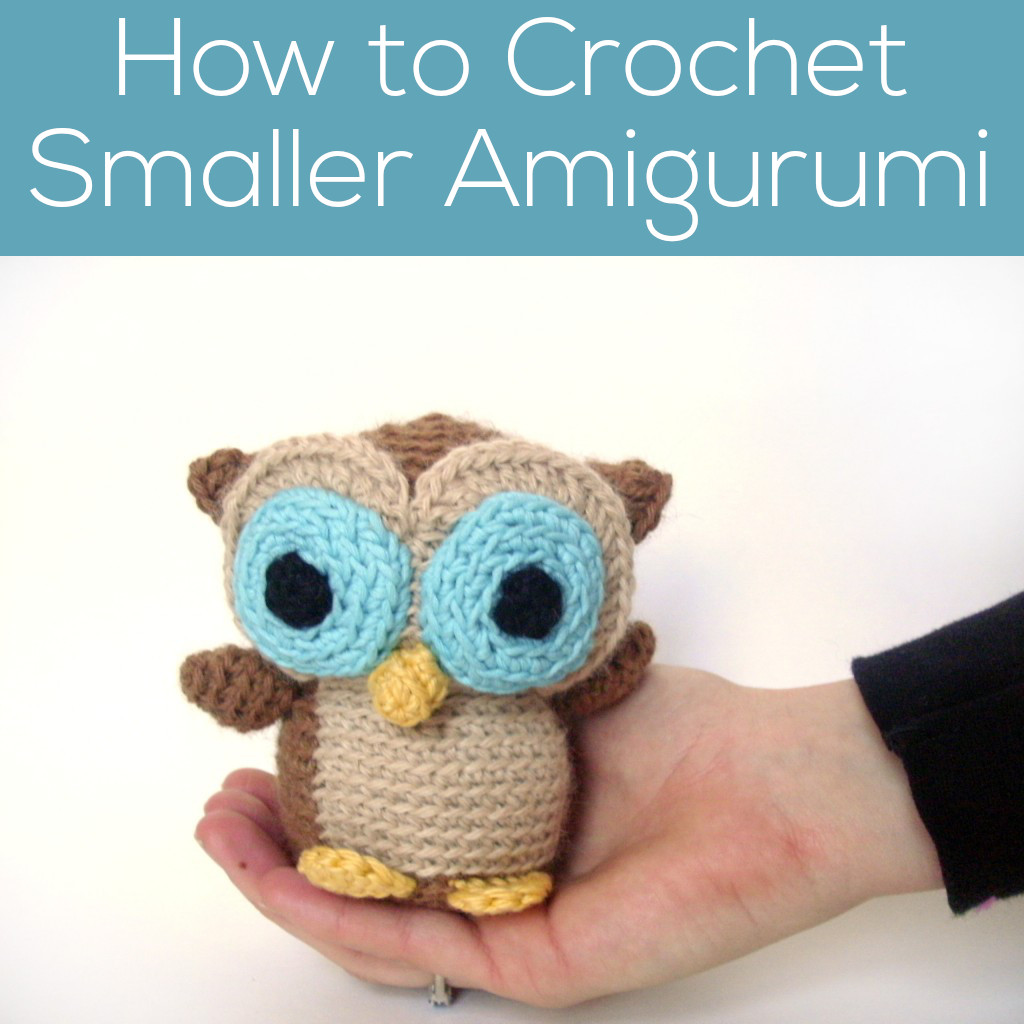
How to crochet a smaller amigurumi!

The easiest way to make a smaller amigurumi is to use thinner yarn and a smaller hook. You can even use embroidery thread!

But if you want to use regular yarn, there’s still a way to do it!

You’ll need to do some figuring on your own, but altering existing patterns is the first step to designing your own… so give it a try!
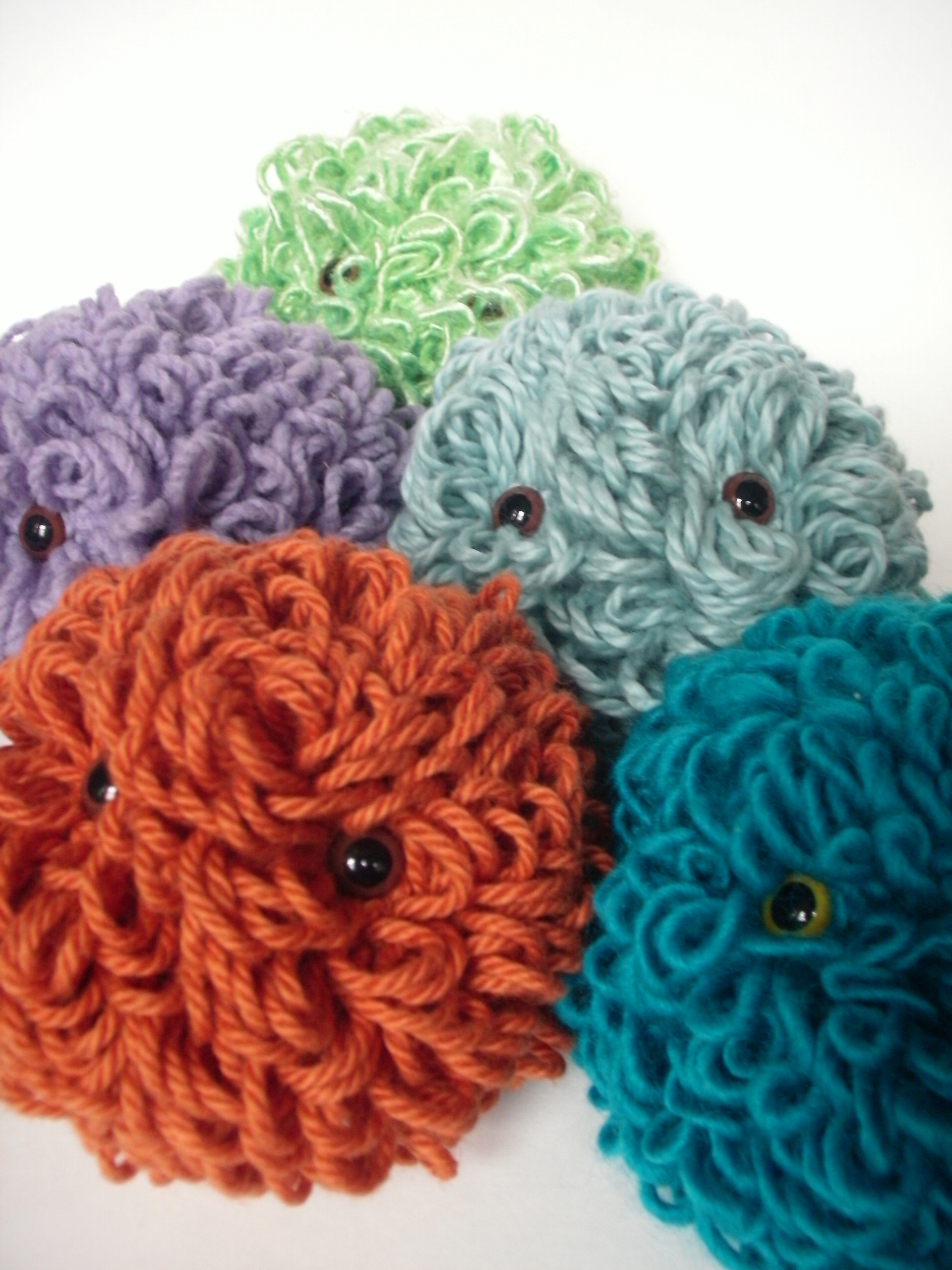
As an example, I’m going to talk about how to make any size Mike the Microbe, from my book Crocheted Softies. Feel free to try it out with any pattern!

Identify the parts of the Pattern

Have a good look at your pattern, and try to identify big chunks of the pattern.

When you have a look at the small microbe’s pattern, you’ll notice that rounds 1-9 are increase rounds (rounds where you add stitches), followed by 7 plain rounds (where no increasing or decreasing occurs) and 8 decrease rounds (rounds where you decrease stitches).
Start crocheting… with fewer rounds!

Mike the Microbe is adorable as is… but how do you make him smaller? Crochet fewer of all kinds of rounds!

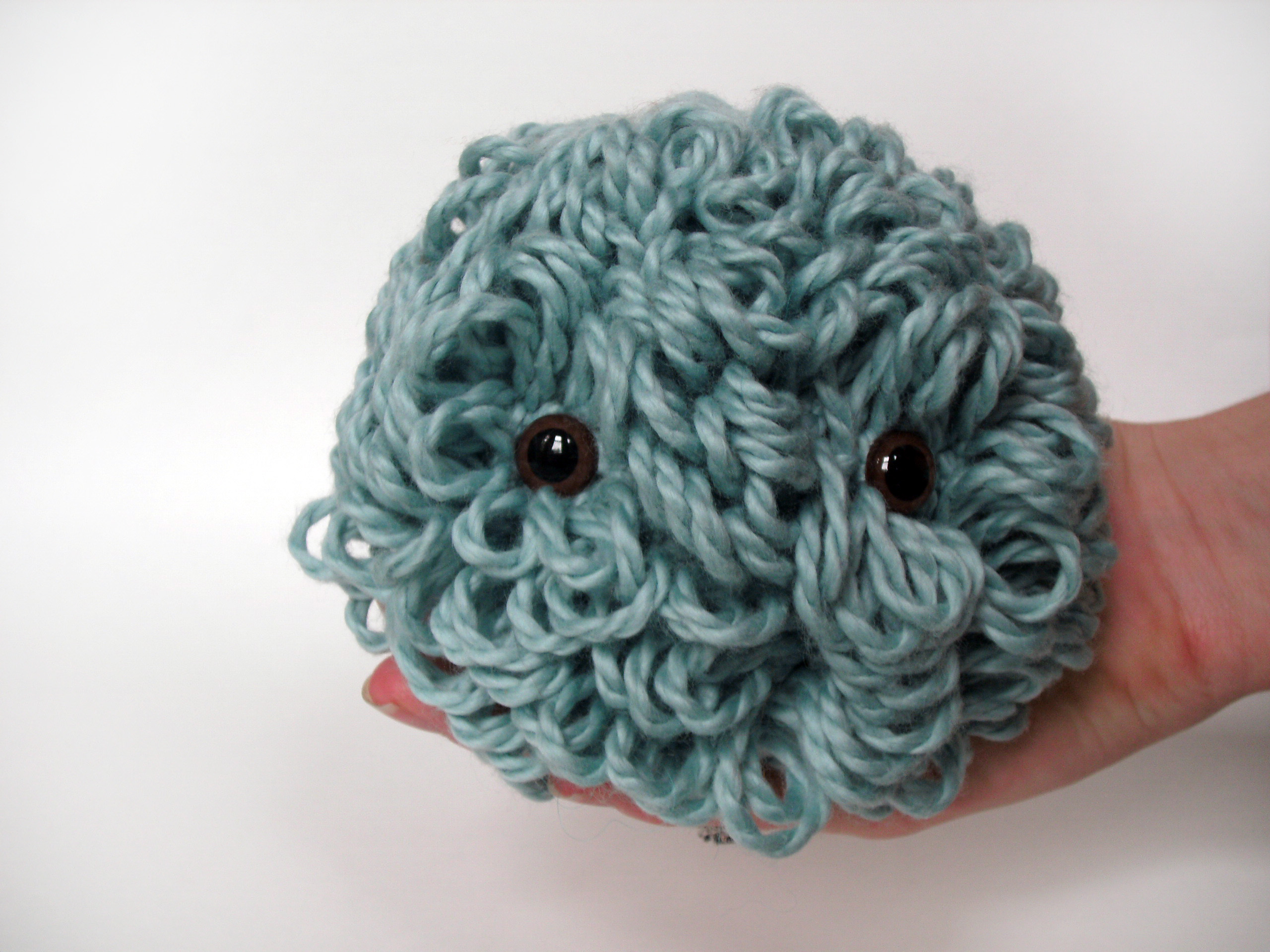
I crocheted one baby microbe by crocheting 5 increase rounds, 3 plain rounds and then 5 decrease rounds to finish.
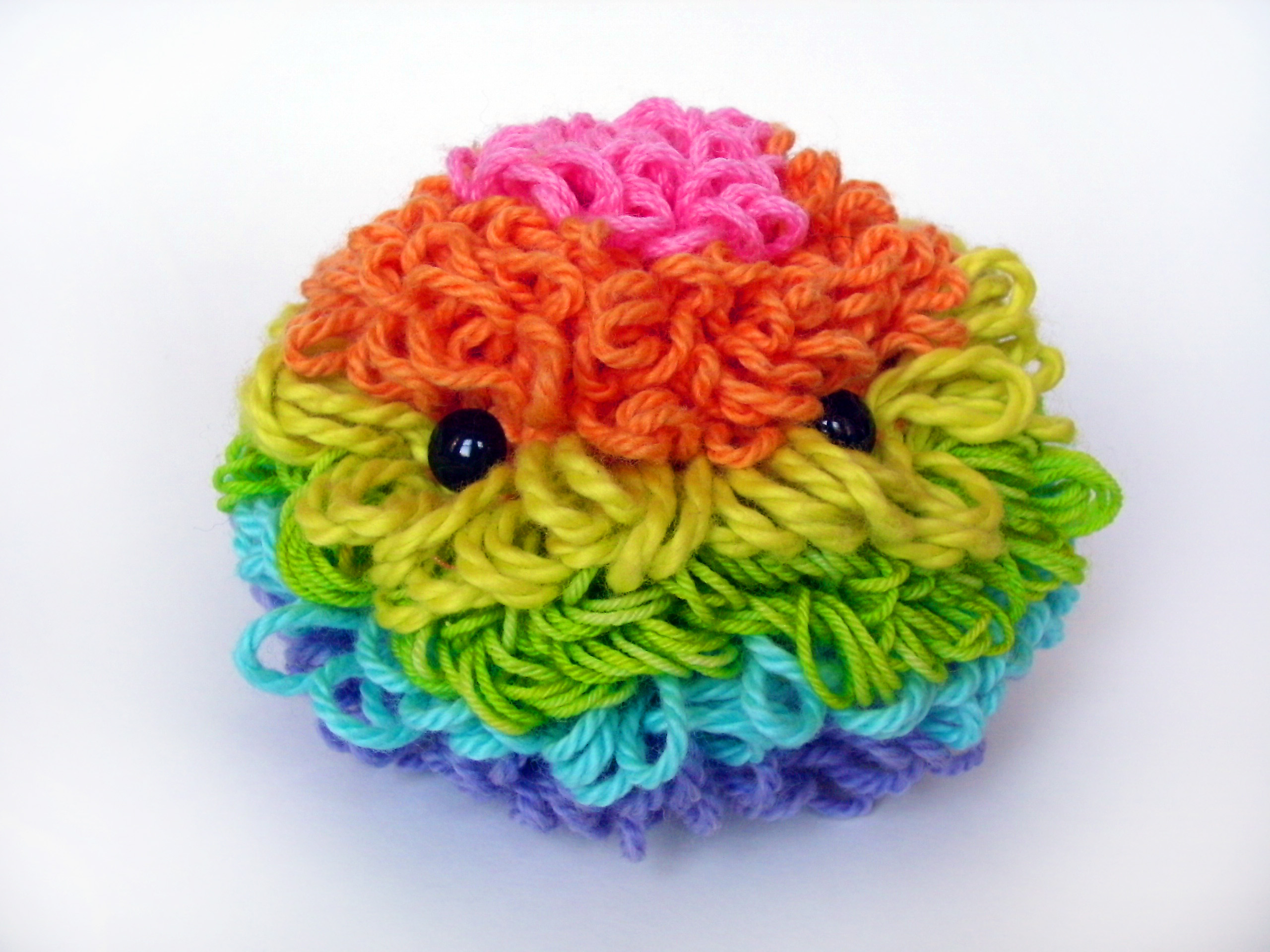
After the end of 5 increase rounds, I had 30 stitches… so when it was time to decrease, I started at round in the decrease instructions that had 30 stitches. Who knew so many instructions were built into the pattern?

Make features smaller, too!

Follow a similar logic for making smaller features… working fewer increase and plain rounds. Above, I decided to omit the buggy eyes- they were too hard to make smaller!

I also made a microbe adding the eyes that were in the pattern without modification- notice that they’re proportionally bigger on the body… but I think that’s cute, too!
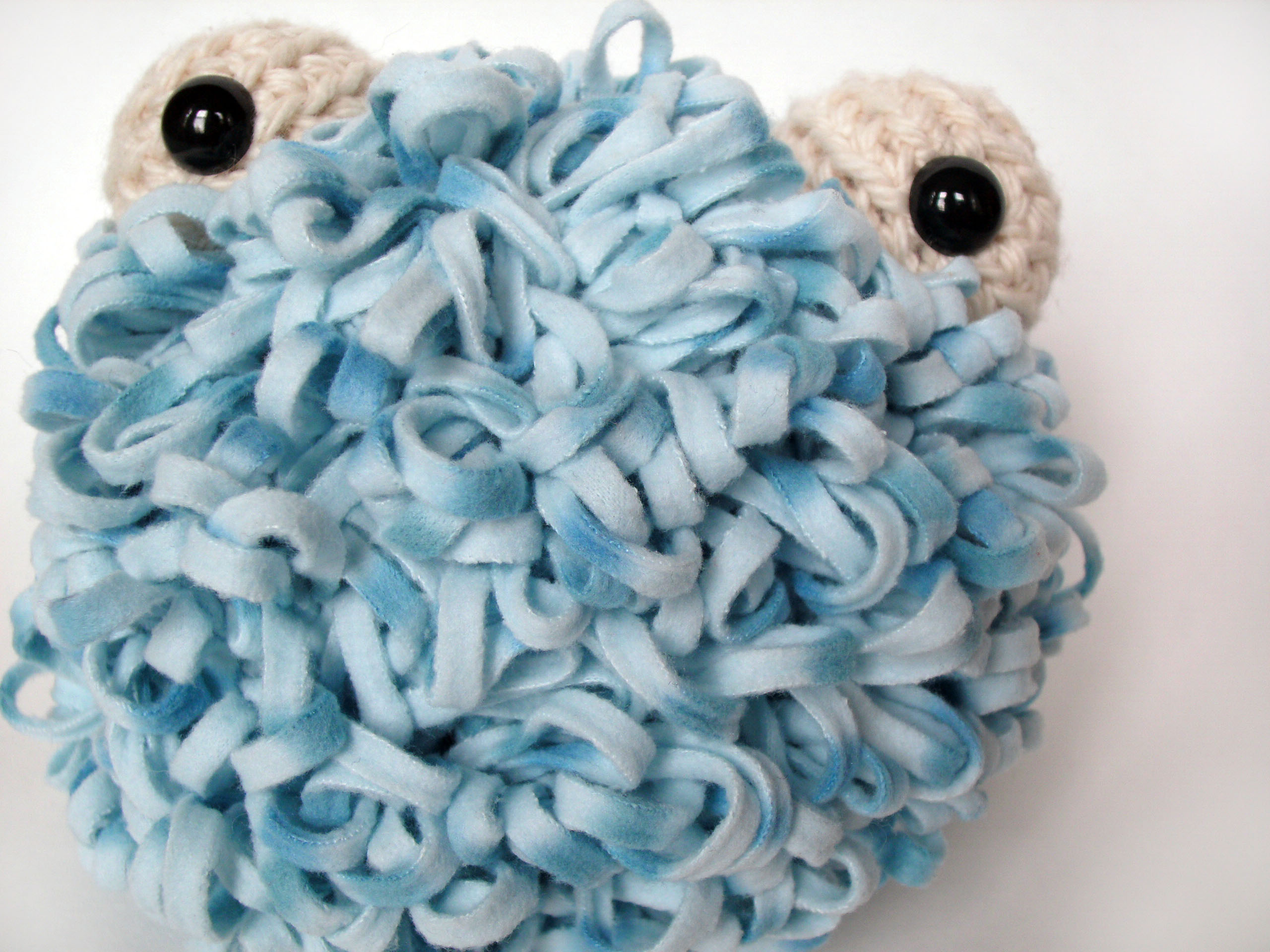
So tiny and so cute!

Try it on everything!
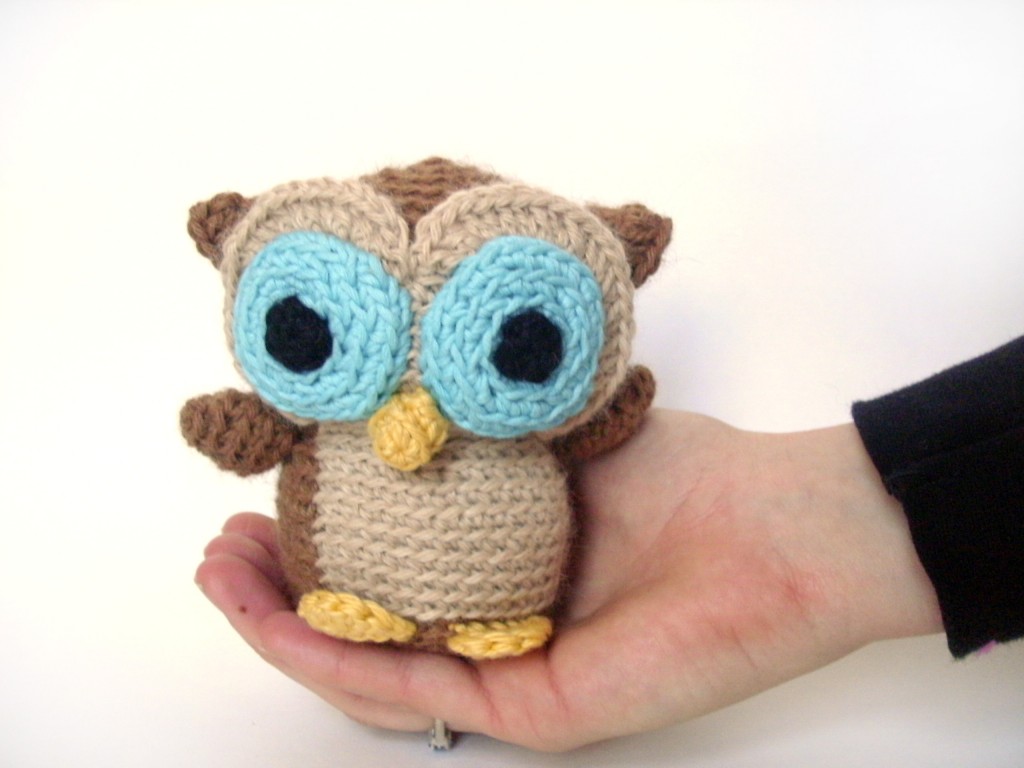
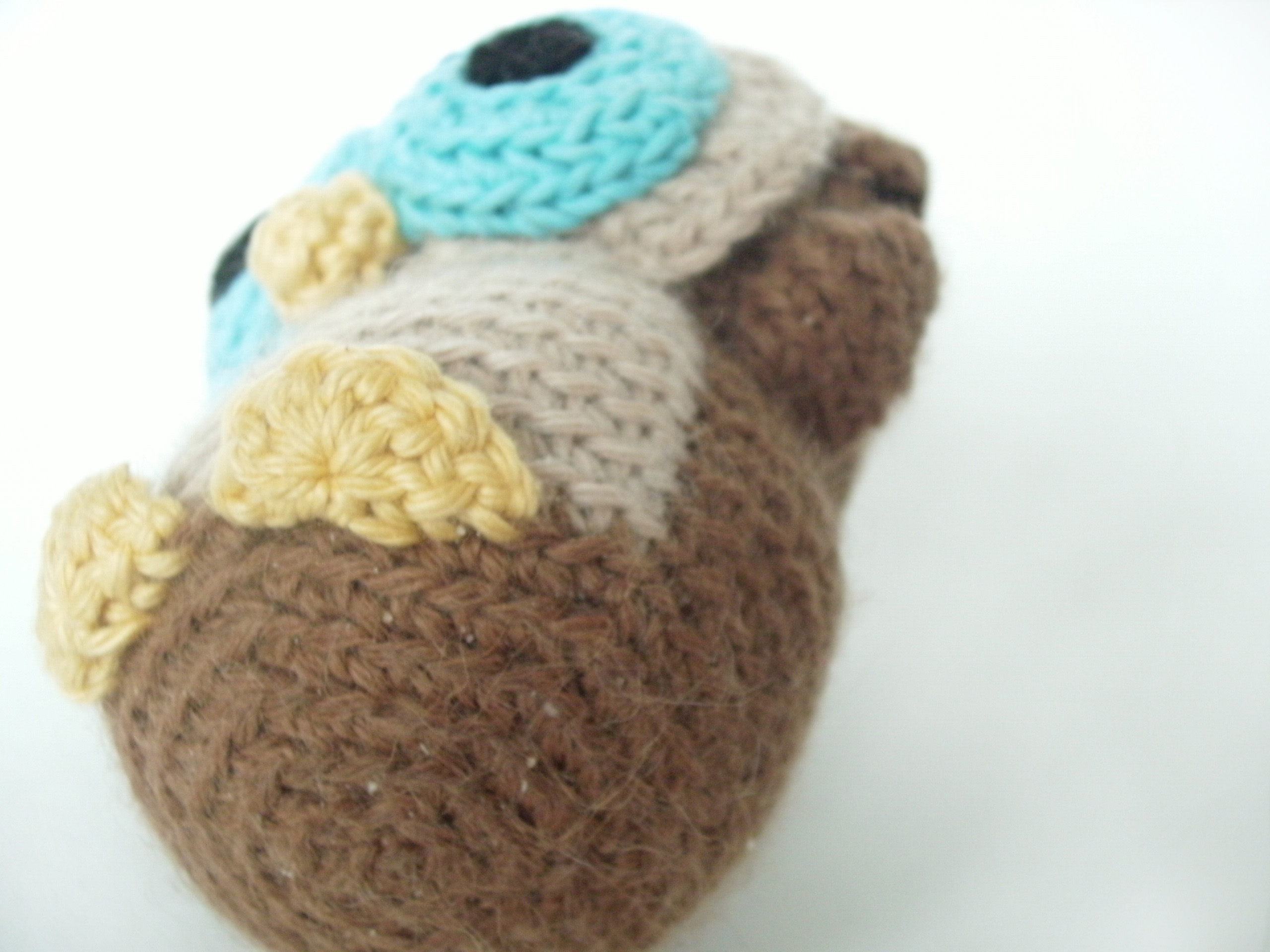
Once you’ve tried ‘shrinking’ a simple pattern like a microbe, it’s time to this trick with other amigurumi! I crocheted a tiny version of Nelson the Owl by crocheting 5 increase rounds and 5 plain rounds instead of the 10 called for in the pattern.

I worked fewer increase rounds on the wings and eye circles… and it’s important to keep in mind that it’s okay if the smaller version doesn’t look exactly like the bigger version. As long as it’s cute, you’re doing great!

Hope you give ‘shrinking’ some amigurumi patterns a try!

Vibrant handmade crochet toys and patterns from Shiny Happy World.

Here are handy links to all the posts about crocheting stuffed animals in different sizes. . .

Return to the main table of contents for Let’s Learn to Crochet Amigurumi.

Move on to the lessons for crocheting more advanced shapes.

Happy stitching!
Vibrant handmade crochet toys and patterns from Shiny Happy World.

Is ‘worsted weight’ the same as 8 ply yarn?

Blue yarn and crochet hook demonstrating yarn weight comparison.

I get asked this question via email quite often, so I figured it was time to answer it in a blog post!

The short answer is: no.

But leaving it there would make a very boring blog post, wouldn’t it? So, here’s a bit more info about how yarn weights are labeled!

What does ‘weight’ of a yarn mean?

‘Weight’ refers to the thickness of a yarn. Yarn can be very skinny or very bulky, and everywhere in between.

Knowing the thickness of your yarn is crucial when you’re trying to follow a pattern or figure out which hook/needle size to use, because the yarn’s thickness (largely) determines the gauge that you will get in your knitted/crocheted piece.

American and British Yarn weight terms

Worsted weight yarn is the American term for yarn that you might spy in Australia or the UK as ’10 ply’ yarn. It’s the most common yarn weight that you’ll find on American shelves… and if you shop in Big Box stores, you might see it labeled as a “medium weight yarn.”

8 ply is the yarn that you’ll find most easily in Australia (which I know from personal experience), and I’ve heard that it’s pretty standard in the UK as well. It corresponds to what is called ‘dk’ weight in the US.

Want a handy printable chart? This post has lots more info about yarn weight – including the different names and the recommended crochet hook size – for each weight

Help! How do I follow a US pattern with 8 ply yarn?

If you’re knitting/crocheting a garment, then there’s a slightly long and complicated answer about getting proper gauge and such when you substitute yarns.

However, the reason I get this question so often is because folks in the UK and Australia want to crochet an amigurumi pattern (which calls for worsted weight yarn), but they can only find 8 ply yarn. . . and then the solution is easy-peasy!

If you’re making amigurumi, what’s most important is that you use the right sized hook for your yarn. So, if you’re using an 8 ply yarn, select a hook size that gives you a nice-looking fabric that stuffing won’t show through.

Your finished piece will be an eensy bit smaller than one crocheted with thicker yarn… but it’s easier than ordering yarn from overseas!

So there you have it… worsted weight and 8 ply yarns aren’t the same… but you shouldn’t let that stop you from making an awesome amigurumi!

Free Goody Bag Pattern

Goody Bags - free sewing pattern from Shiny Happy World
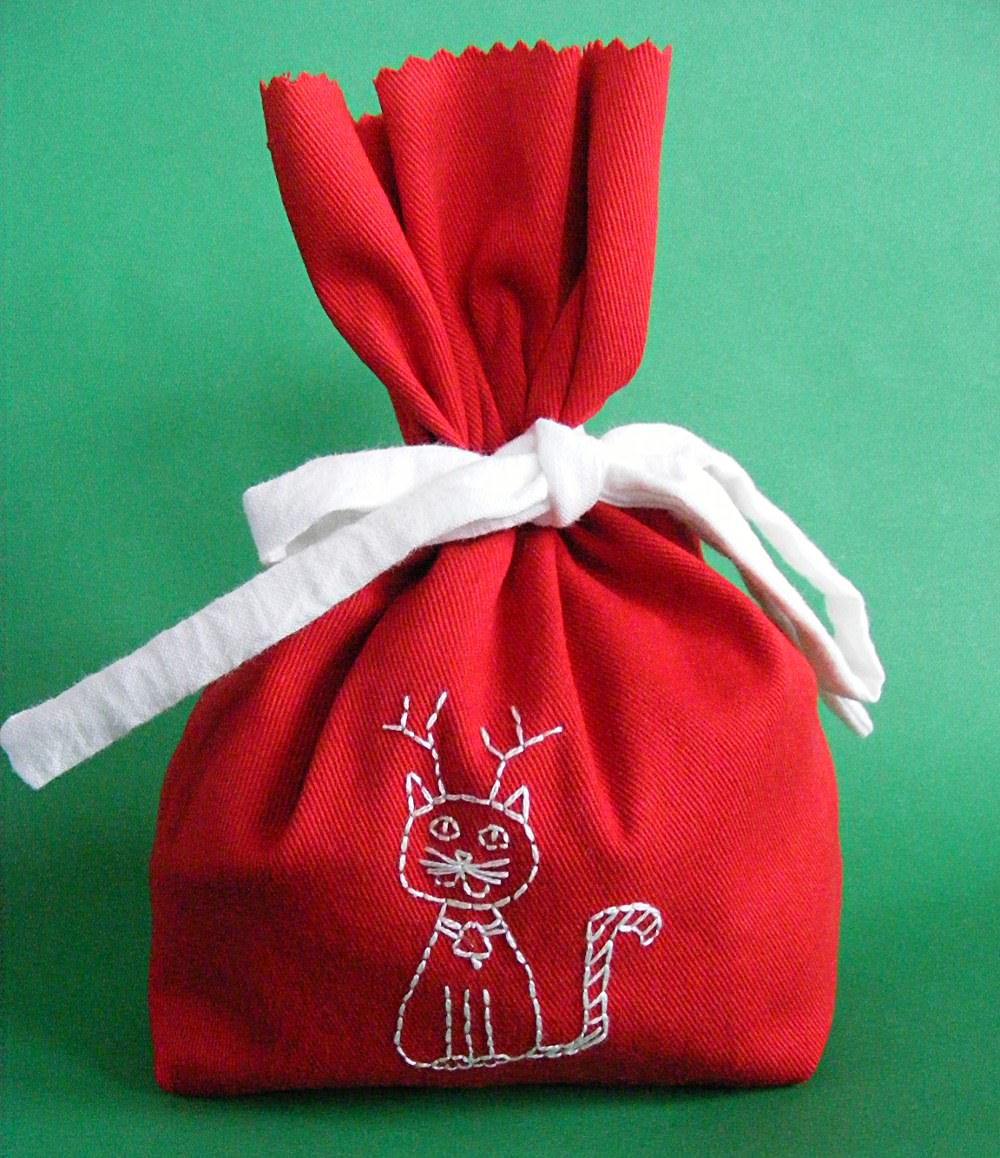
You can whip up some easy peasy reusable fabric gift bags with the free pattern you’ll find here. If you use a cute fabric and some ribbon you can whip up a batch in no time. If you fancy a little stitching time in front of the fire – try some of these Made by Joel designs on them.

I think they’d be great made up in black fabric and filled with black licorice for a little sack of “coal” to add to a stocking. πŸ™‚

Happy stitching!

Best,
Wendi
Applique Wendi (with fabulous hat)

A Playdate with Made by Joel – and a Giveaway!

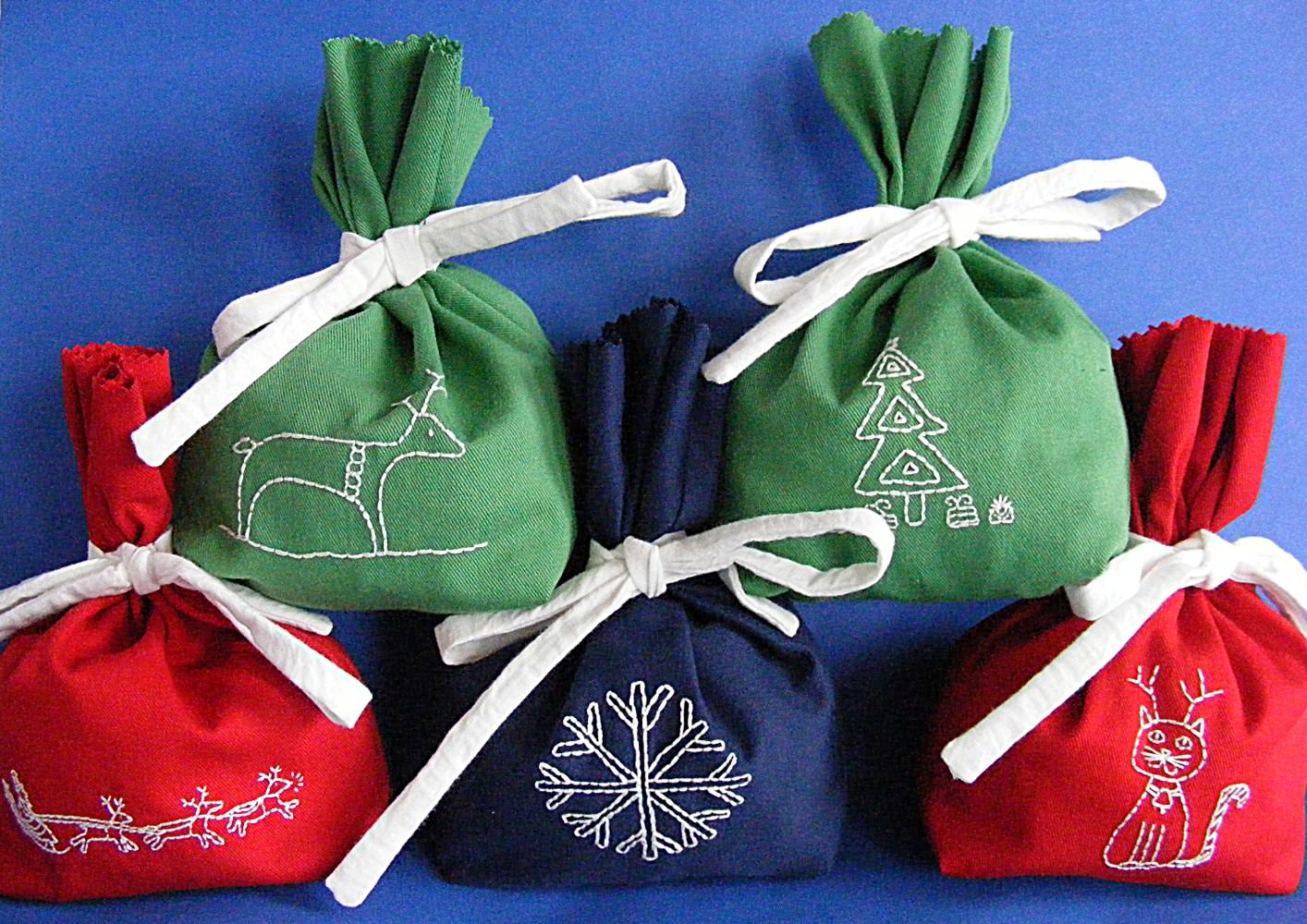
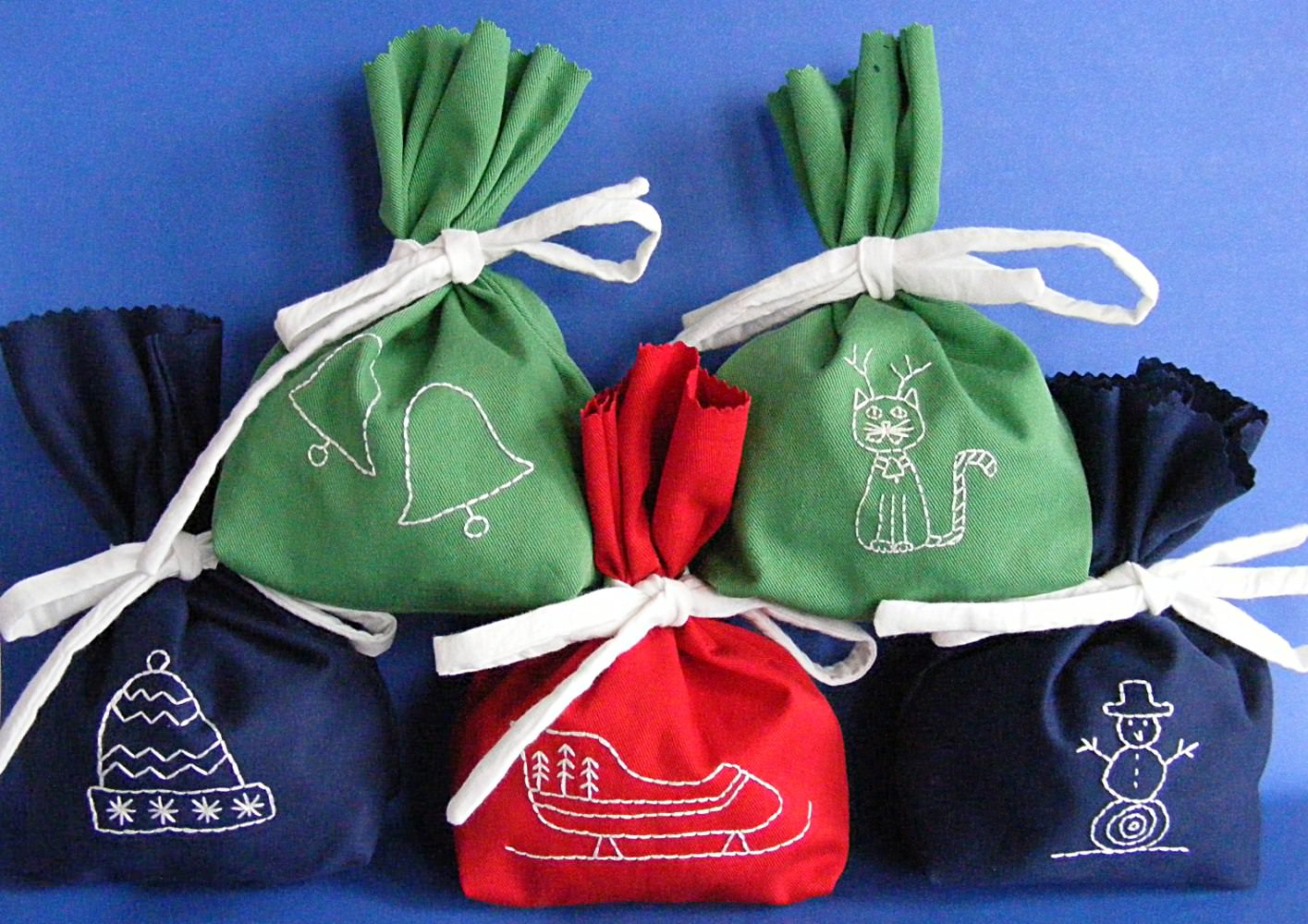
Free Christmas gift bag pattern with free embroidery pattern.

What do you get when you combine Joel’s Free Holiday Gift Tag printable with my Free Goody Bag pattern?

This! A cute, reusable Christmas gift bag!

The Joel, of course, is Joel Henriques, the amazing dad who blogs at Made by Joel and author of Made to Play – a book showing you how to make tons of great, creative handmade toys.

Want to make a Christmas gift bag yourself? It’s easy!

Get Joel’s free printable gift tags here.

Get the free Goody Bag pattern here.

Transfer the images from the gift tags to the fabric you’re going to use for the bags and stitch them up. I used a simple backstitch – easy peasy. There’s a video here showing how to backstitch.

Now you have bunches of fun reusable Christmas bags!

Have a great day everyone!

How to organize scraps of yarn

After you knit or crochet your first project, you’re immediately faced with an organizational problem: weird bits of leftover yarn. The more projects you do, the more these scraps build up.

And, if you don’t organize your scraps well, they have a habit of tangling themselves together into one giant knot. Not good.

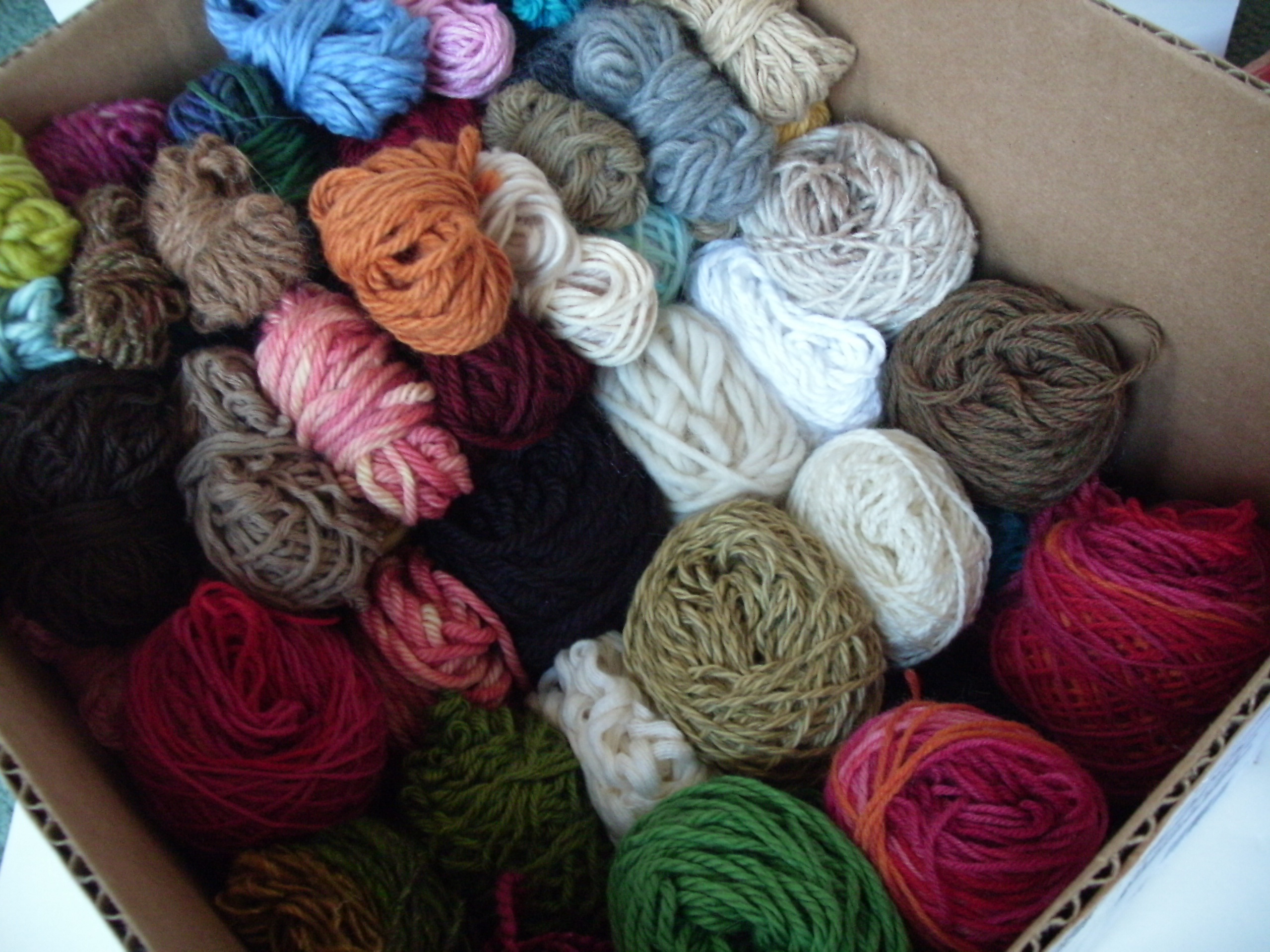
So, even though it may seem a little obsessive… I wind each one of my leftover yarn bits into a nice little ball, and tuck them into my ‘scrap box’.

The Box

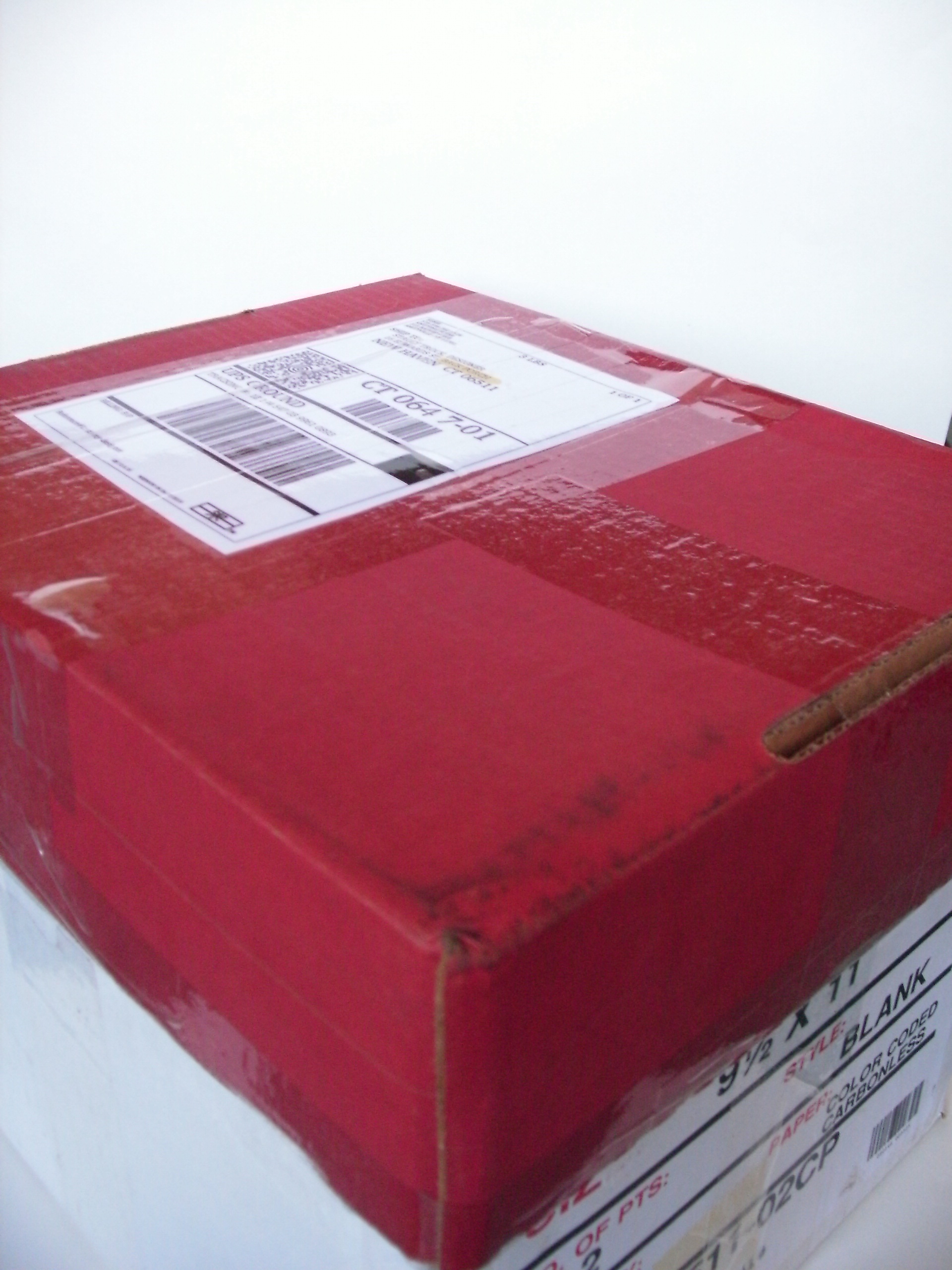
My box is just an ordinary copy-paper-turned-shipping box that I got in the mail one day. It’s sturdy, has a lid, and fits nicely on a shelf on my yarn bookshelf. Nothing fancy.

The big leftovers

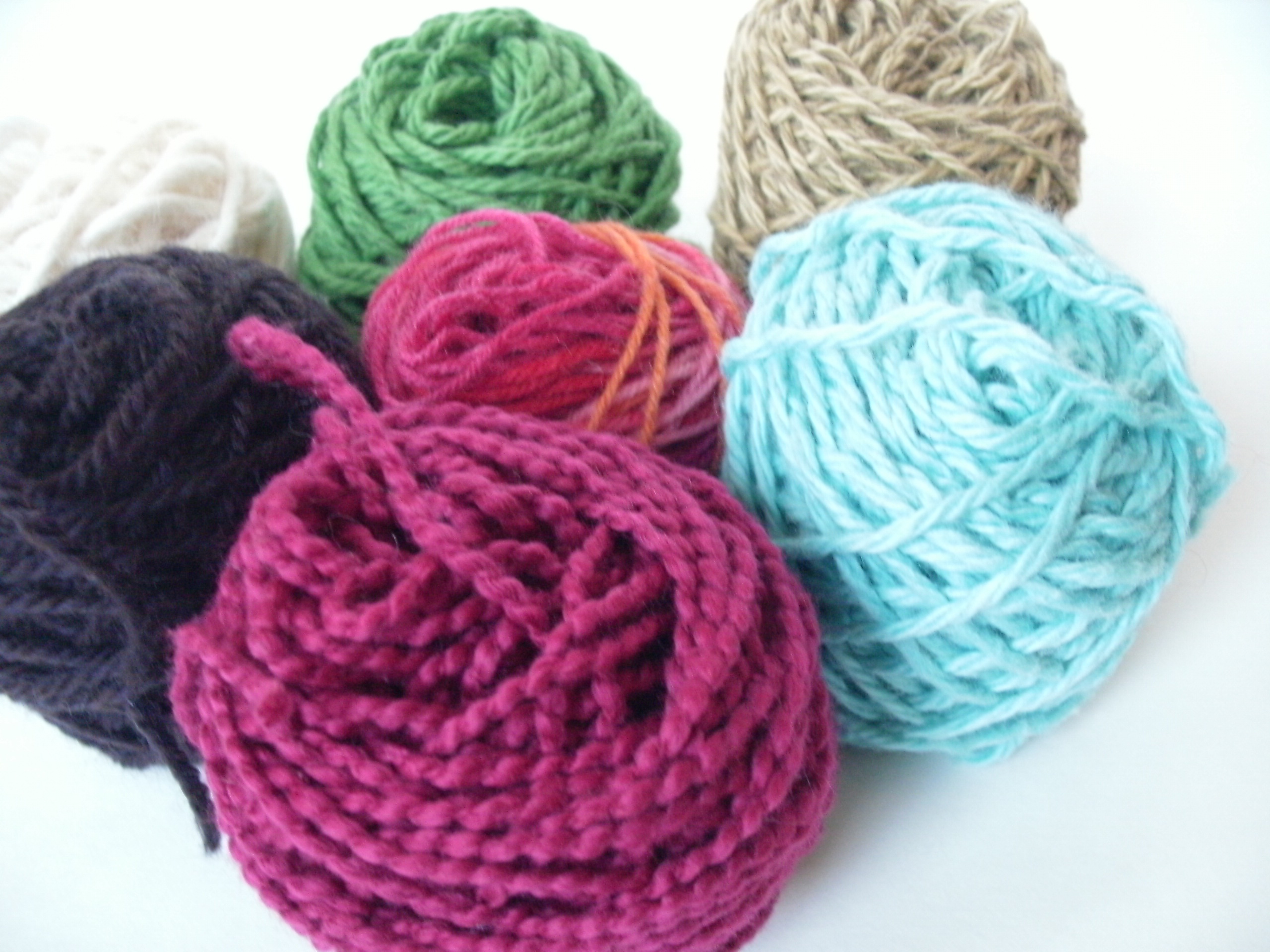
My favorite kind of scrap yarn is the ‘big leftover’. You know what I mean… it’s a quarter to a half of a skein of some yummy yarn left over from a project. Since these guys are pretty substantial in size, I wind them with my ball winder. I make sure to tuck the end in the ball so that there’s no danger of them becoming unraveled.
Little Bits

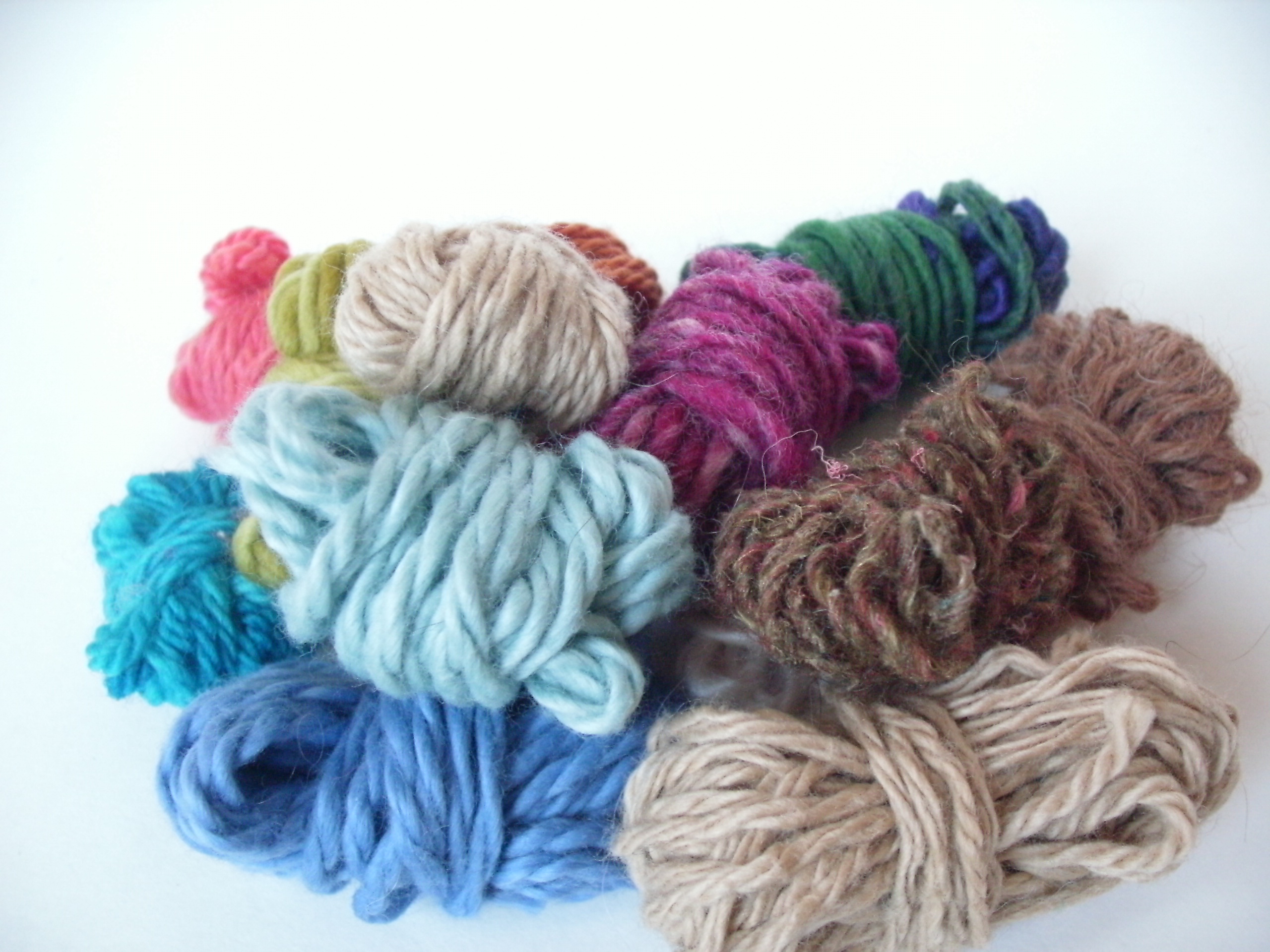
Little leftover bits of yarn are trickier… I’m not even sure why I keep them. Maybe one day, I’ll just need 10 yards of bright orange for some project or another…

I just wind these guys around 2 fingers (it’s much too little amount for the winder), and then tie them around the center. Just like the big leftovers, you’ll want to make sure the ends are fastened so they don’t get the chance to become a giant knot in your scrap box.

What to do with the scraps…

Hmm… for now, mine live happily together (and neat) in their box. Sometimes I grab a ball if I need a little bit of a color… but no serious plans yet.

So, tell me… how do you organize your scraps? Any plans for them?

Free Stocking Pattern + Free Ornament Pattern = Fun Handmade Goodness

Colorful Christmas stockings with unique appliquΓ© designs for holiday decorating, handmade felt Christmas stockings.

Handmade Christmas decorations are so much fun!

I’ve got a free Stockings pattern and a free Ornaments pattern.

They’re fun on their own, but look what you can do when you mix them together!

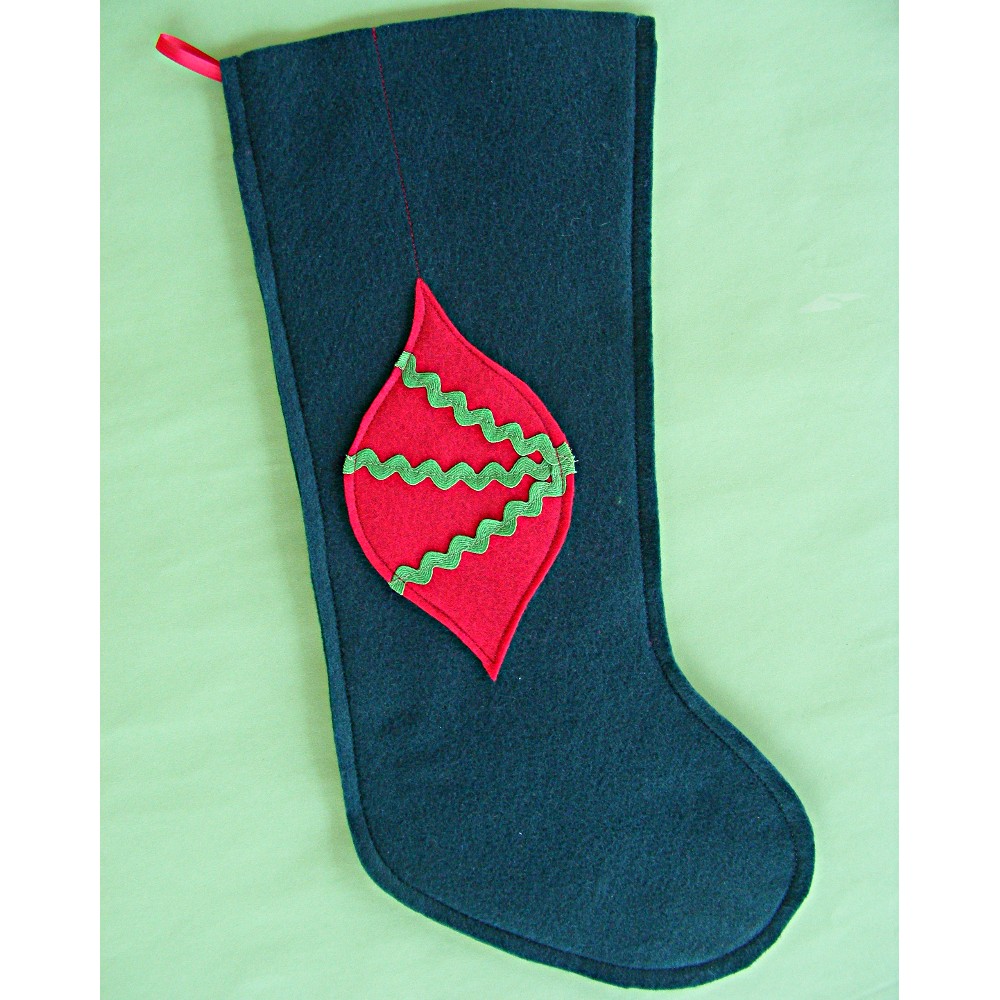
Festive Christmas stocking with a red and green appliquΓ© ornament decoration.

We’ll start simple. Sew some rickrack onto the ogee and sew the ogee to the stocking. If you want to get fancy you can run a line of stitching from the top point to make it look like it’s hanging. This stocking will take maybe 20 minutes to make and it’s very easy for a beginner.

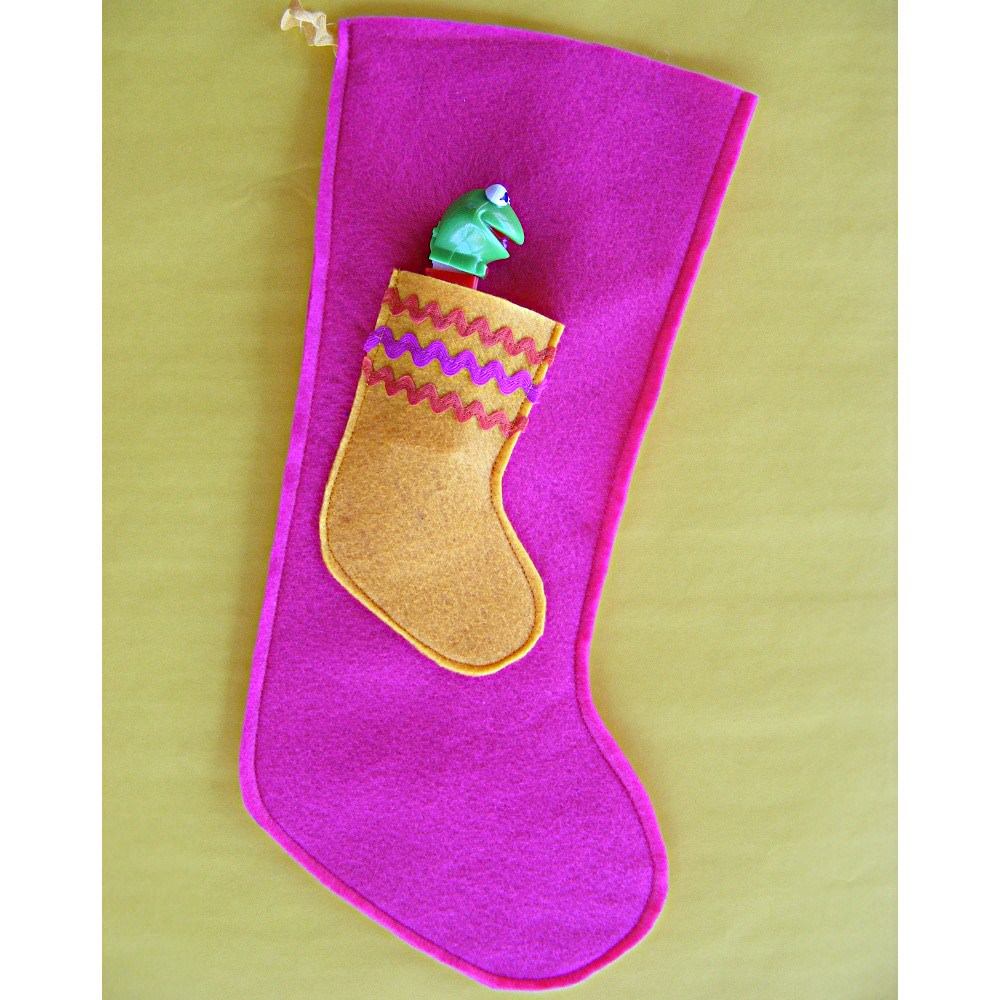
Colorful Christmas stocking craft with felt and decorative details, perfect for holiday sewing projects.

Here’s another super simple one – and one of my favorites. Stitch the little ornament-sized stocking to the regular sized stocking but leave the top unstitched. Now you have a stocking with a stocking-shaped pocket on it, perfect for holding a little Pez dispenser or a couple of lollipops or a small toy. Cute!

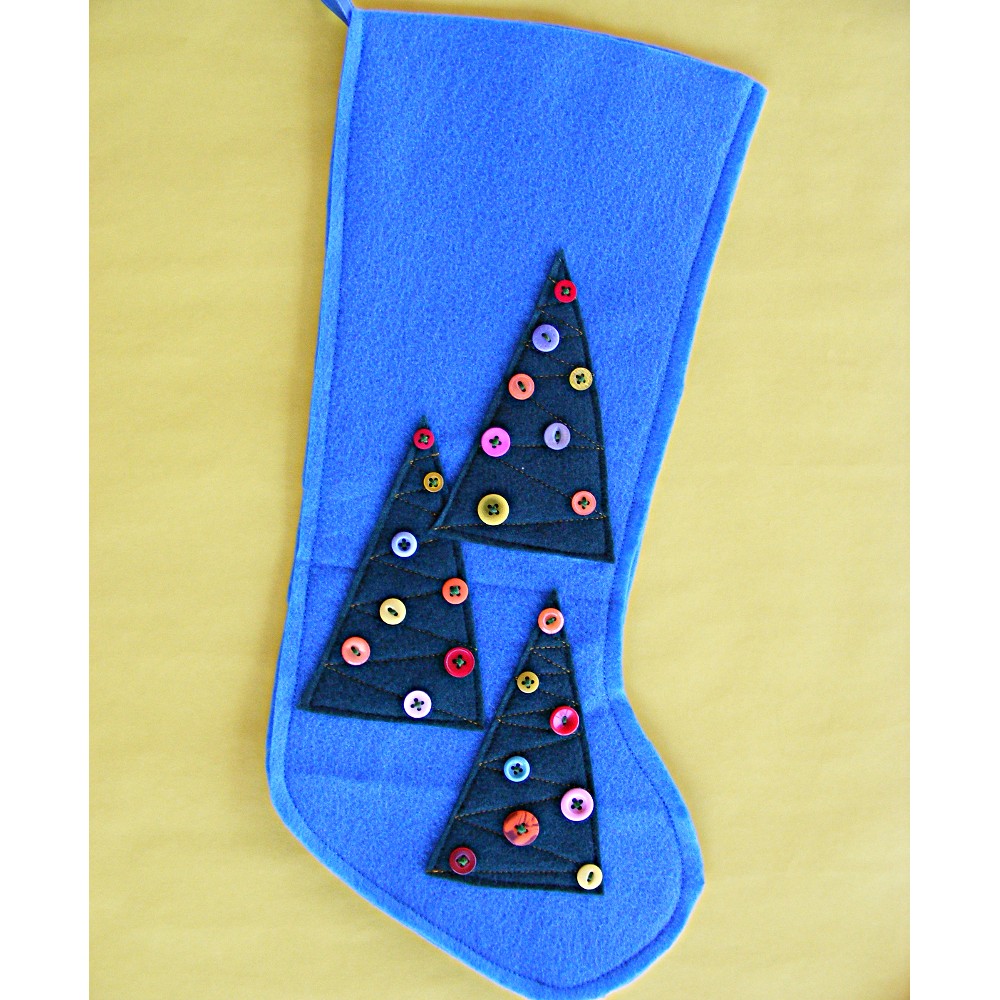
Colorful Christmas tree decorations on a blue felt stocking for holiday crafts.

You don’t have to limit yourself to just one felt applique. For this stocking I cut out three tree triangles from the ornament patterns, stitched them to the stocking with a little swaggy zigzag action, then added random buttons. A forest of decorated trees!

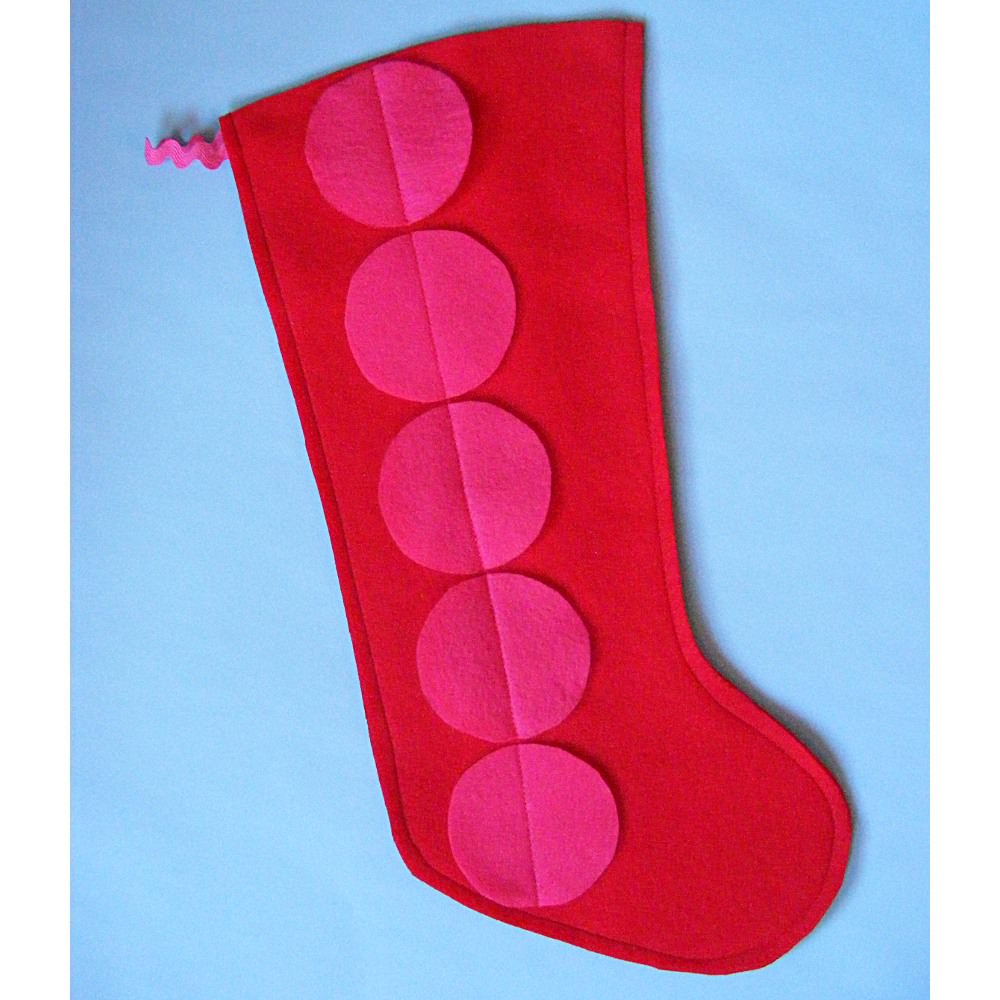
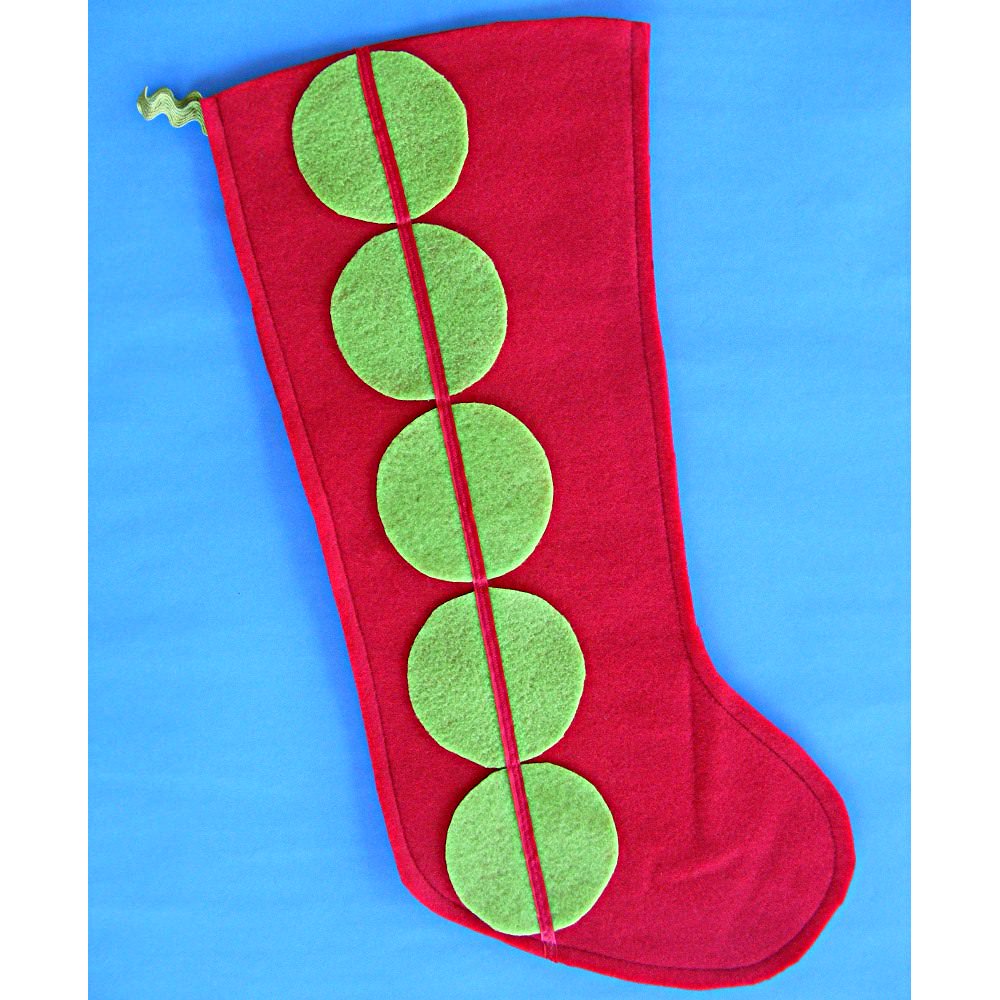
Red Christmas stocking with pink felt circles and curly pink felt trim for holiday decor.

You can fit exactly five of the large ornament circles in a stack up the side of the stocking. Lay them in place, stitch one row of stitching up the middle, and you’re done.

Bright red Christmas stocking with green felt holiday Christmas lights applique.

Here’s a variation with a more well-defined stripe. Instead of simply stitching up the middle of the dots, I laid a strip of satin ribbon down the center and then stitched over it. Easy peasy!

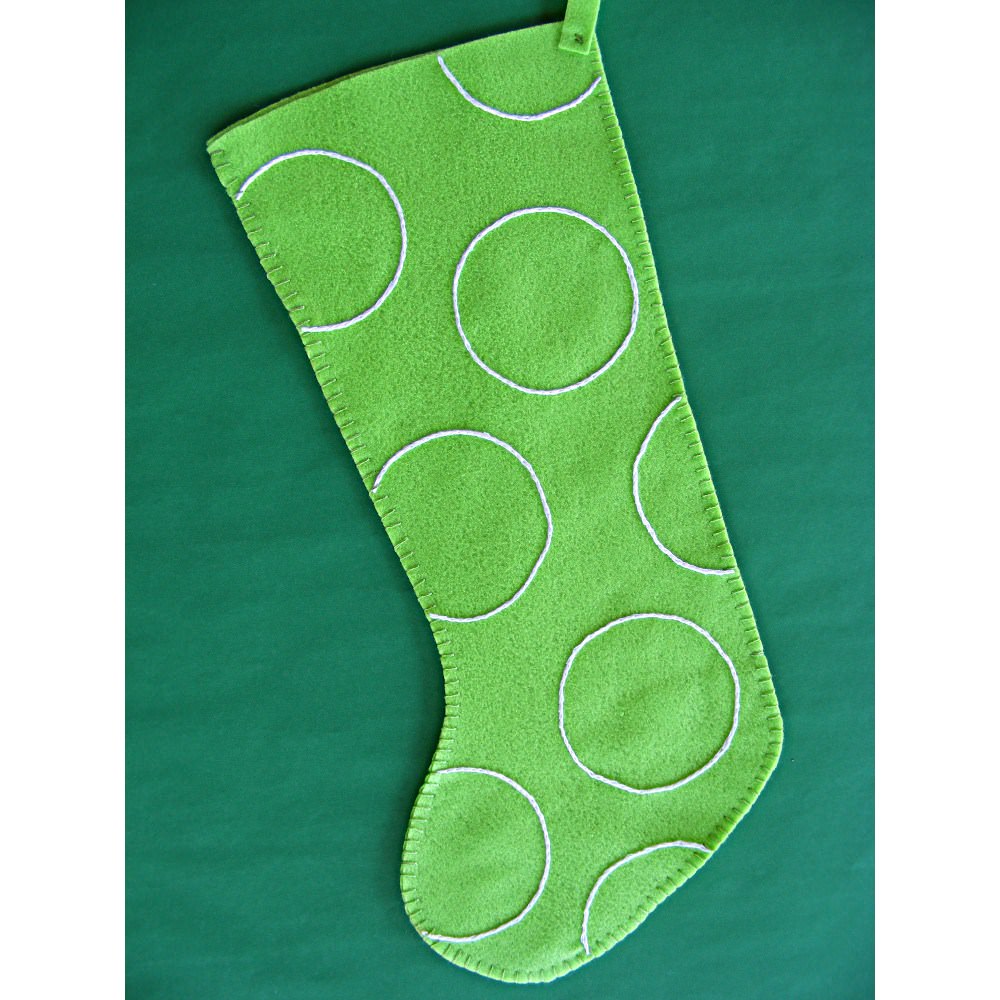
Bright green felt Christmas stocking with white circle patterns, festive holiday decoration.

Forget about felt applique! For this one I didn’t sew down the big dots – I just used one as a pattern. I traced around it (randomly scattered over the stocking) and embroidered the circles with split stitch in white thread. Doesn’t it look minty fresh?

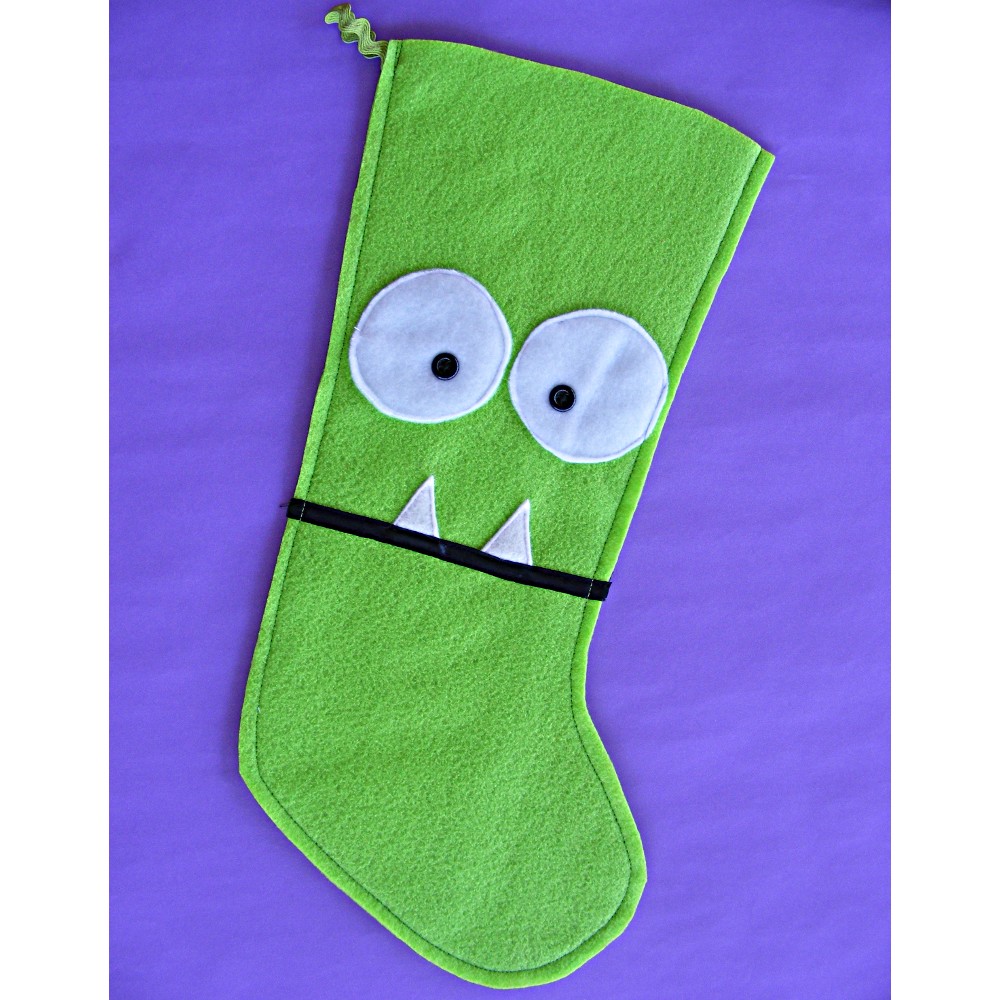
Bright green felt monster Christmas stocking with googly eyes and stitched teeth, perfect for holiday decor.

And then there’s this beauty! The big ornament circles make great eyeballs, no? The black strip for the mouth is a bit of satin ribbon, and the teeth are simply felt triangles tucked behind the ribbon before stitching.

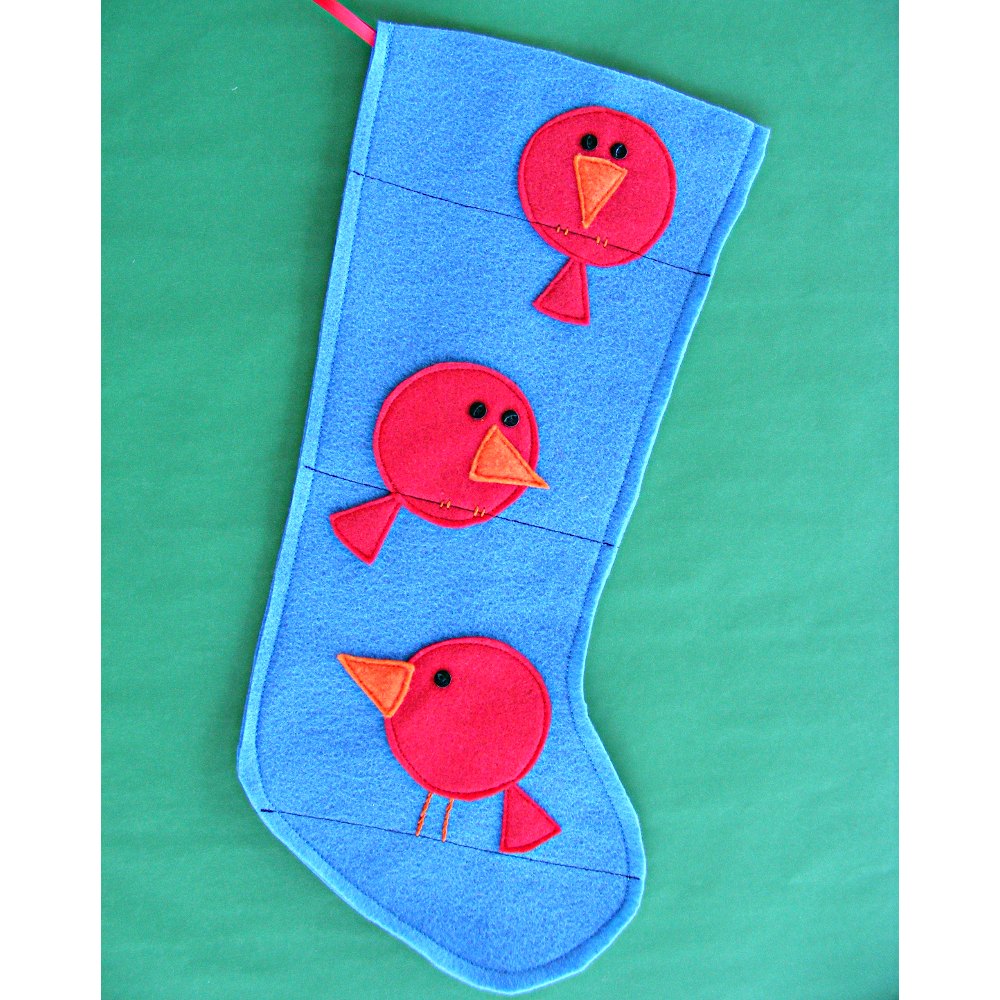
Bright blue felt Christmas stocking with cute pink bird appliques and embroidered details, perfect for holiday decor.

And now – my favorite. I used the big circles from the ornament patternΒ  – and Ed Emberley’s Picture Pie: A Cut and Paste Drawing Book. Those three birds are straight out of the book – and it’s filled with other cool pictures too, all made from circles.

I’d love to see what variations you all come up with! Get the freeΒ ornaments pattern here and the freeΒ stocking pattern here. And then please post your finished projects to the Shiny Happy People group so everyone can admire them. πŸ™‚

Happy stitching!

Best,
Wendi
Applique Wendi (with fabulous hat)

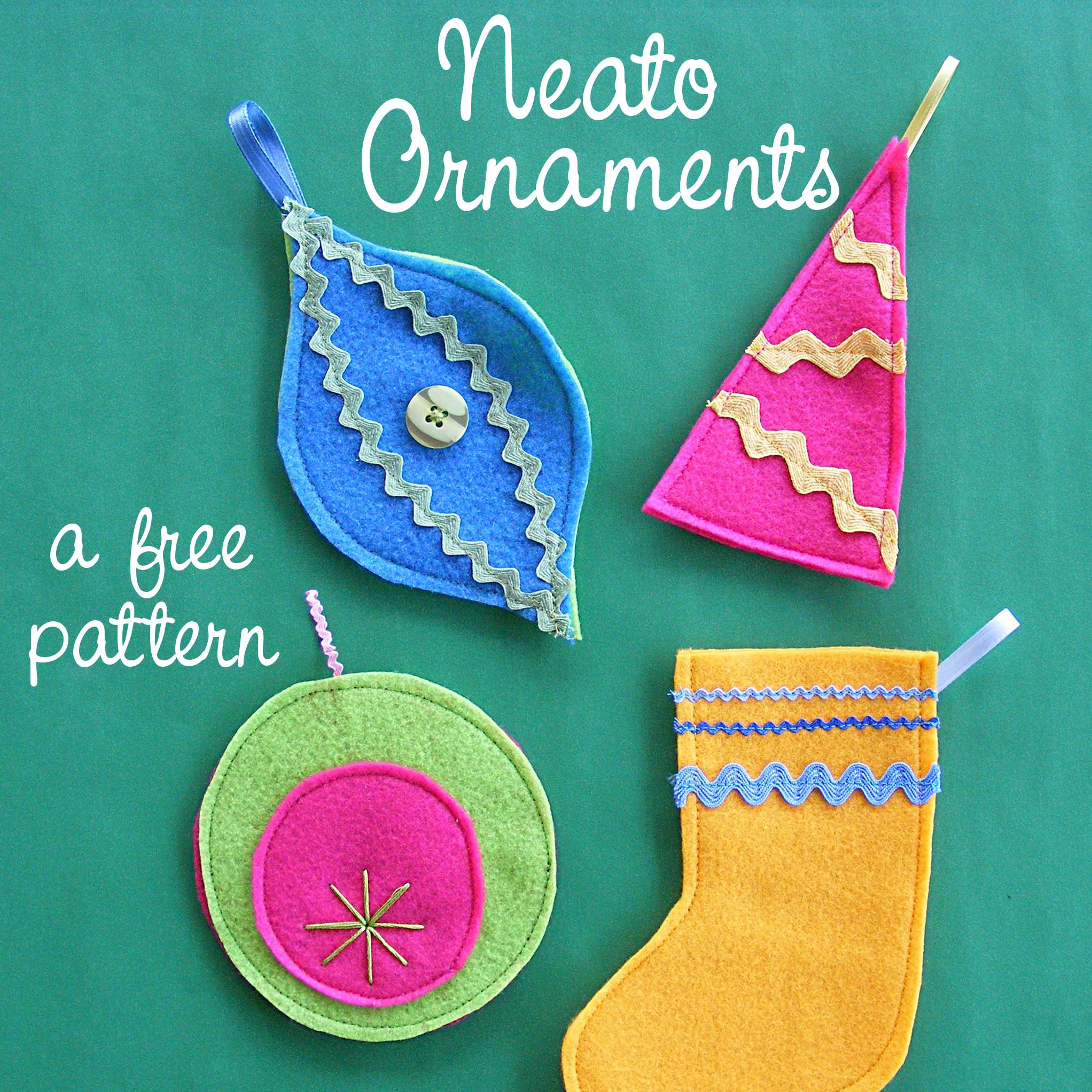
Neato Ornaments – FREE Pattern!

Colorful felt Christmas ornaments with decorative trim, including a Christmas stocking, ornament, and tree made from felt and ribbon.

Yesterday I gave you a pattern for a good, basic holiday stocking. Today it’s felt ornaments. (Psst! Visit this post to see how to combine my stocking pattern and this ornament pattern for extra fun!)

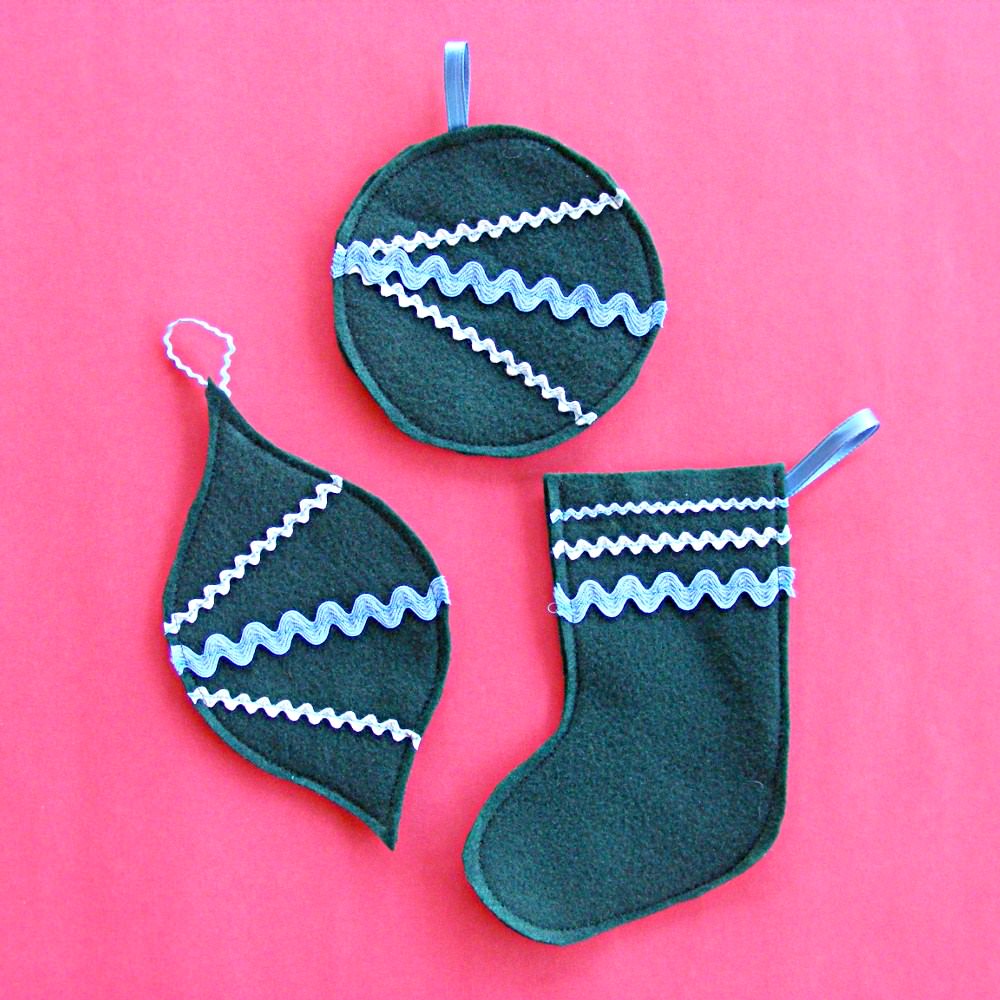
But now. . . ornaments. The pattern (click here to download) includes some really basic shapes – a tree, a stocking, an ogee, and two circles. The fun comes with what you do with these basics.

Felt Christmas ornament and stocking decorations with rickrack trim, perfect for holiday crafts.

Add rickrack. (Boy – do I love rickrack or what?)

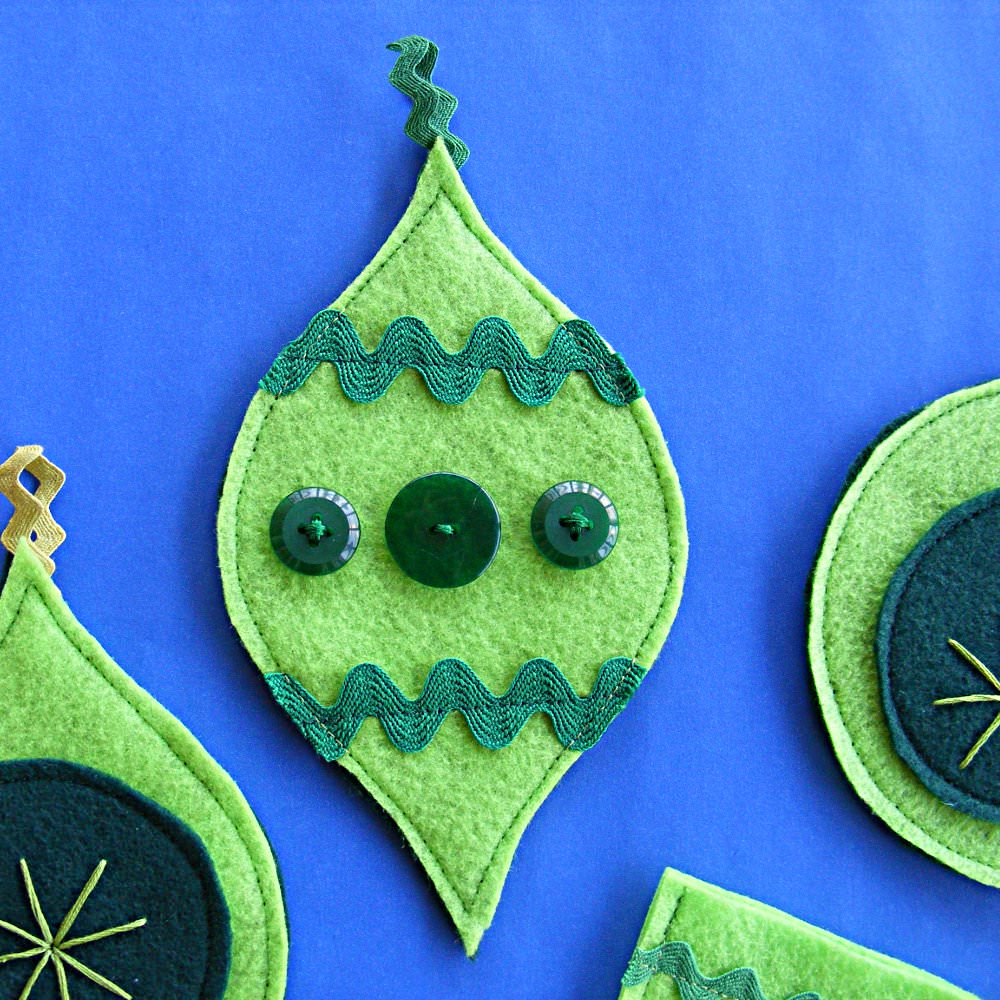
Felt Halloween ornament with buttons, zigzag trim, and embroidery details.

Add buttons!

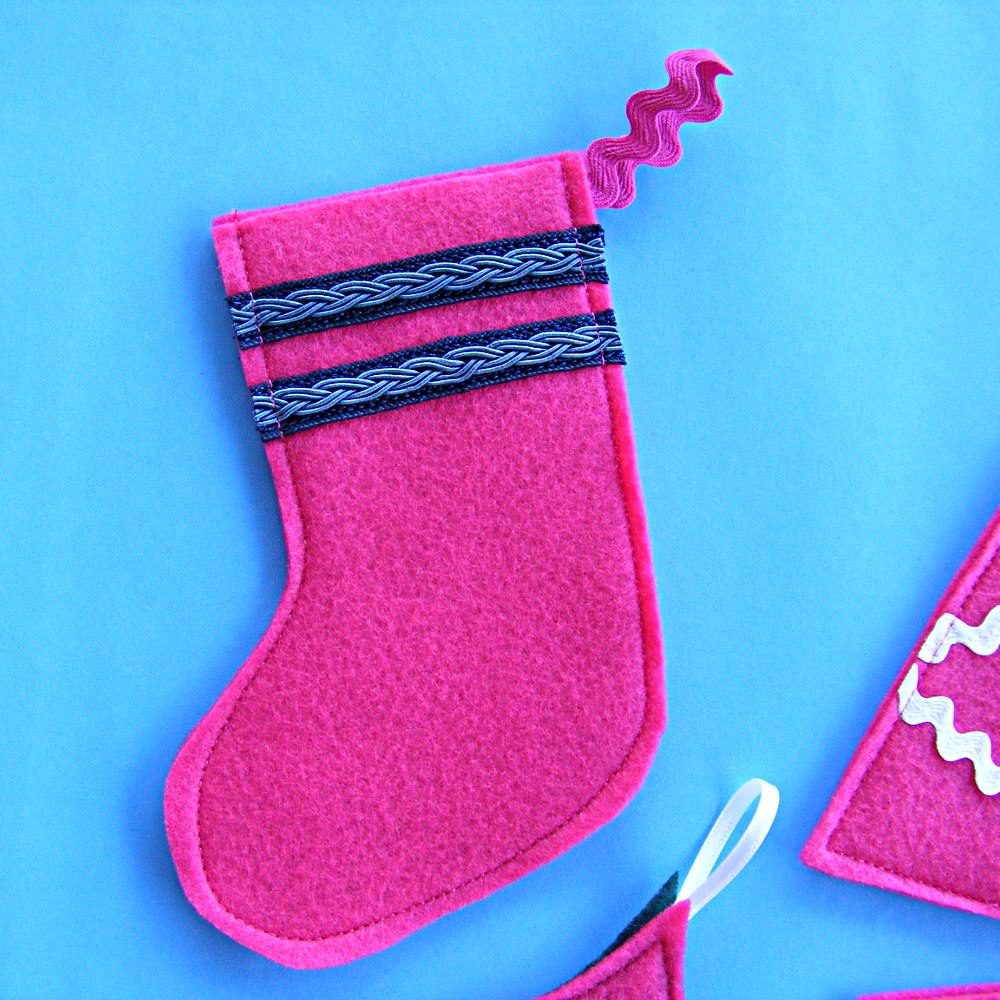
Pink felt Christmas stocking with braided trim and curly pink embellishment.

Add fancy vintage trim!

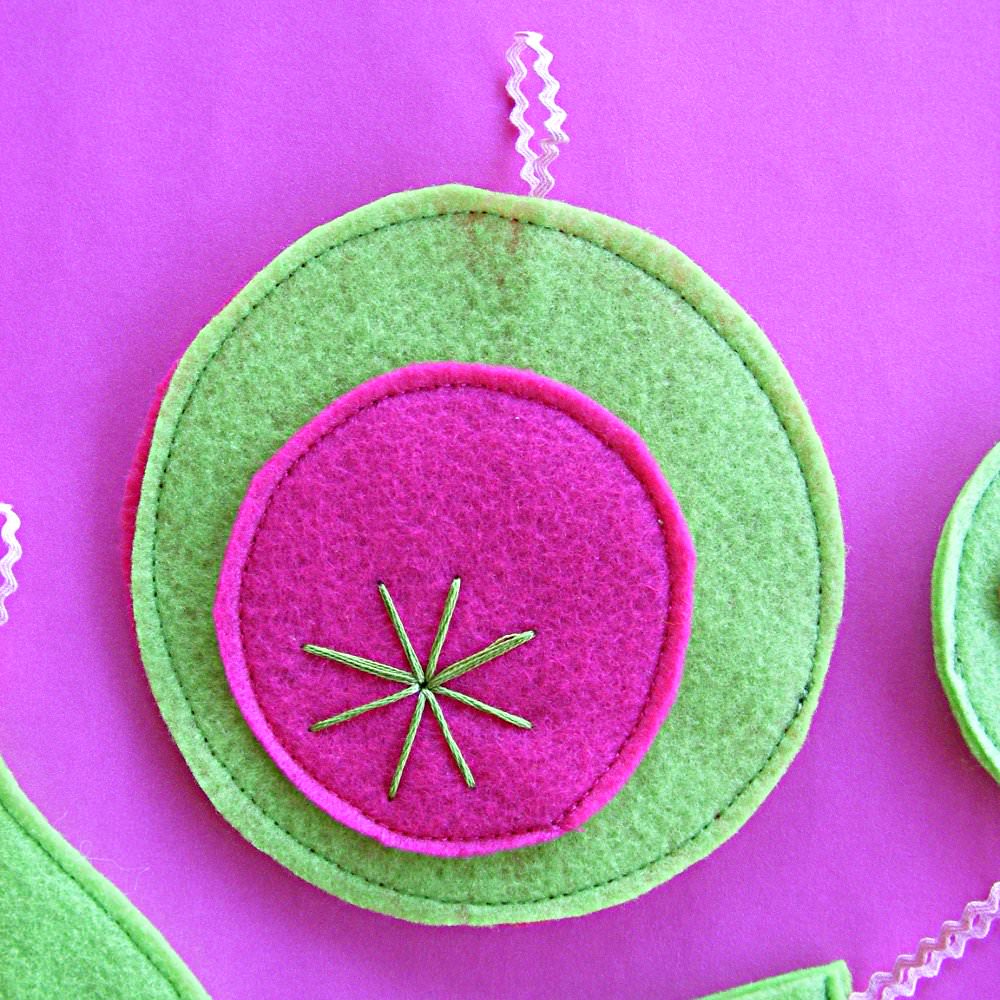
Colorful felt fruit craft, pink and green strawberry applique for kids.

Layer them together with a bit of really simple embroidery!

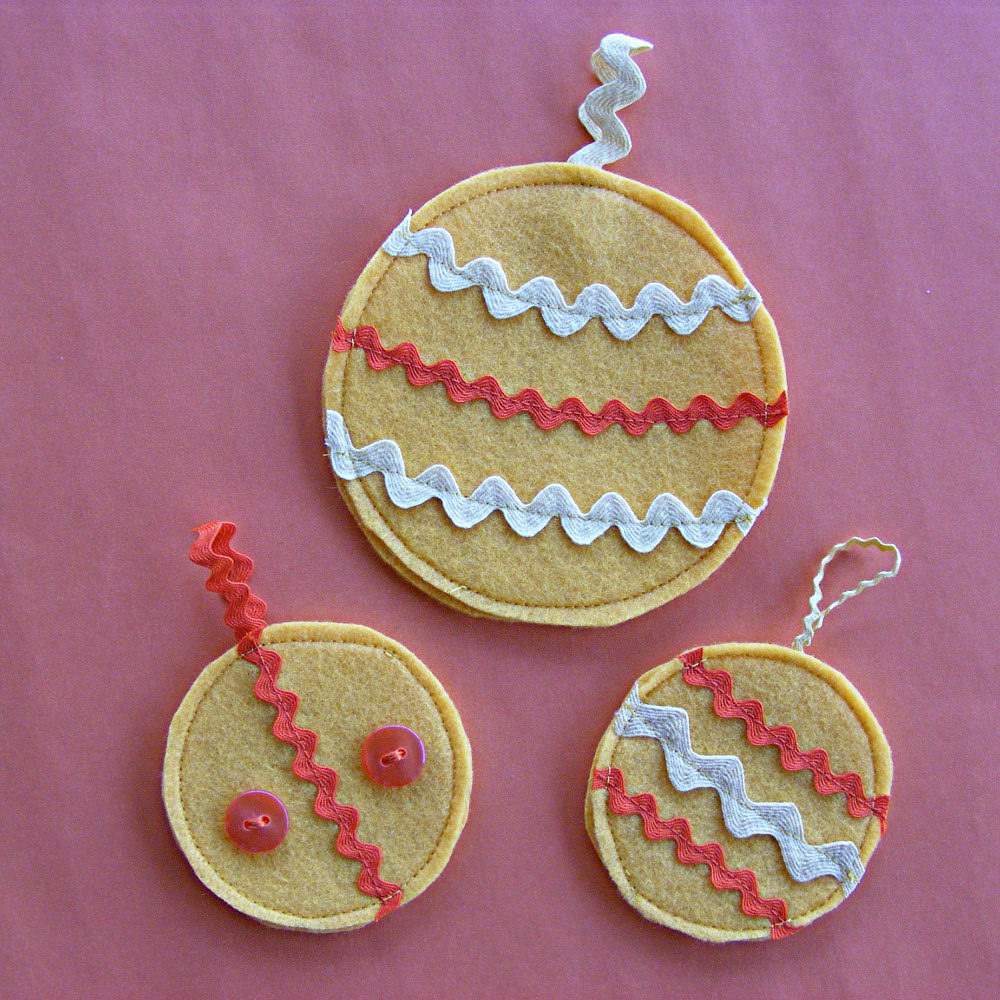
Colorful felt ornament craft from Shiny Happy World, featuring ric-rac trim and decorative stitching.

Don’t feel like you’re tied to traditional colors. I love these yellow and orange ones! (Especially nice too for folks who celebrate solstice.)

Download the free pattern. Gather up your tiny scraps of trim, your odd beads and buttons, your little bits of yarn – and have fun! These shapes are really simple and fun for kids to play with too. Put on some Christmas carols, serve up some cookies, and let them sew the rickrack on with the machine (nice easy straight lines). They – and you – will have a blast. I promise.

Read this post for the best part – combining the stockings and these ornaments in really inventive ways. πŸ™‚

Happy sewing!

Best,
Wendi
Applique Wendi (with fabulous hat)

Review of The Big Book of Knitted Monsters by Rebecca Danger

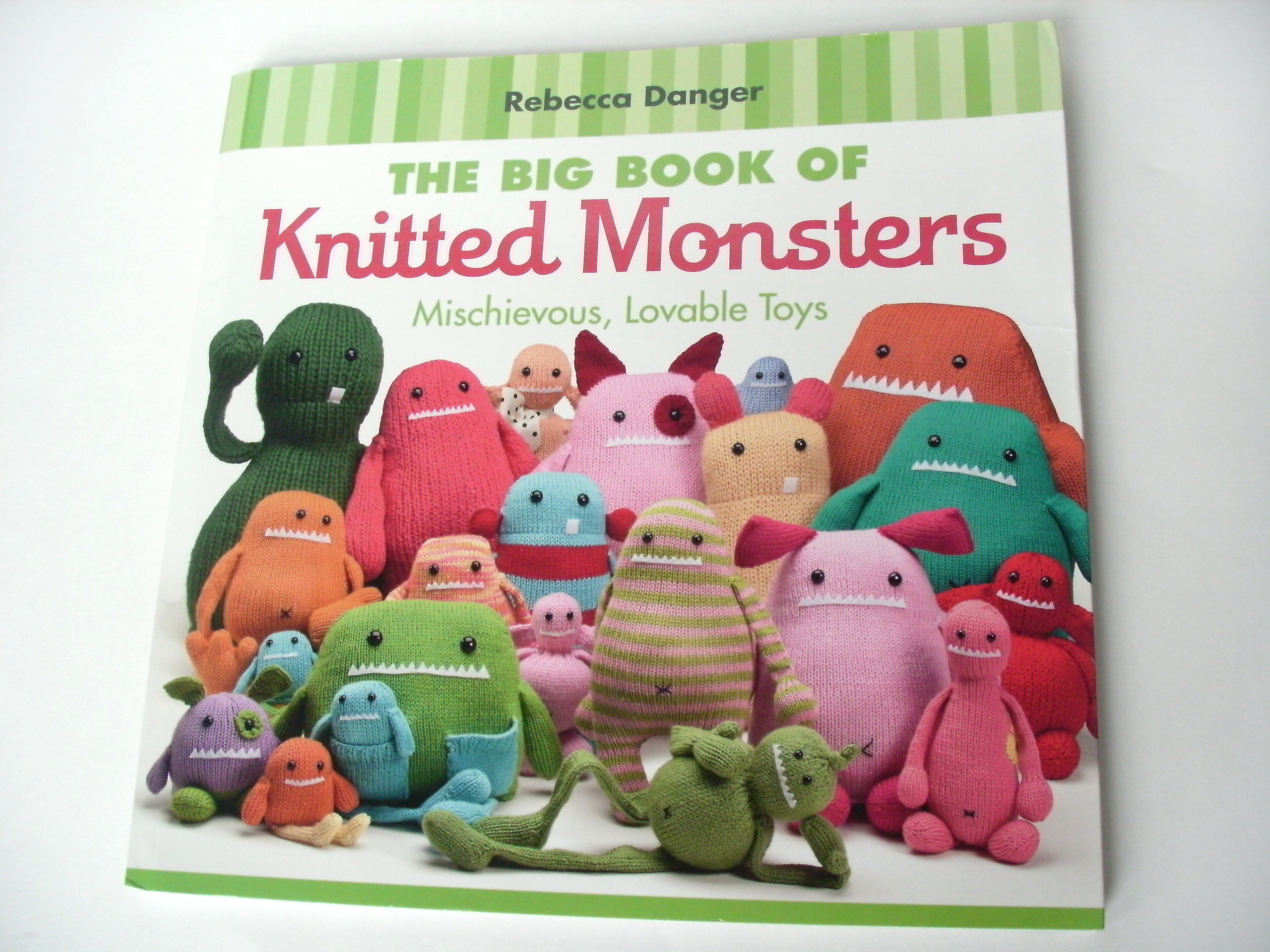
Love knitting cute monsters? Rebecca Danger’s Big Book of Knitted Monsters has been on the wish-list of every monster-knitter I know! And for good reason: it’s packed full of adorable monster patterns. This book isn’t for every knitter out there, so you’ll want to skip down to reading my review to see if it’s for you. But first, I want to show off the cutie I knitted from the book!
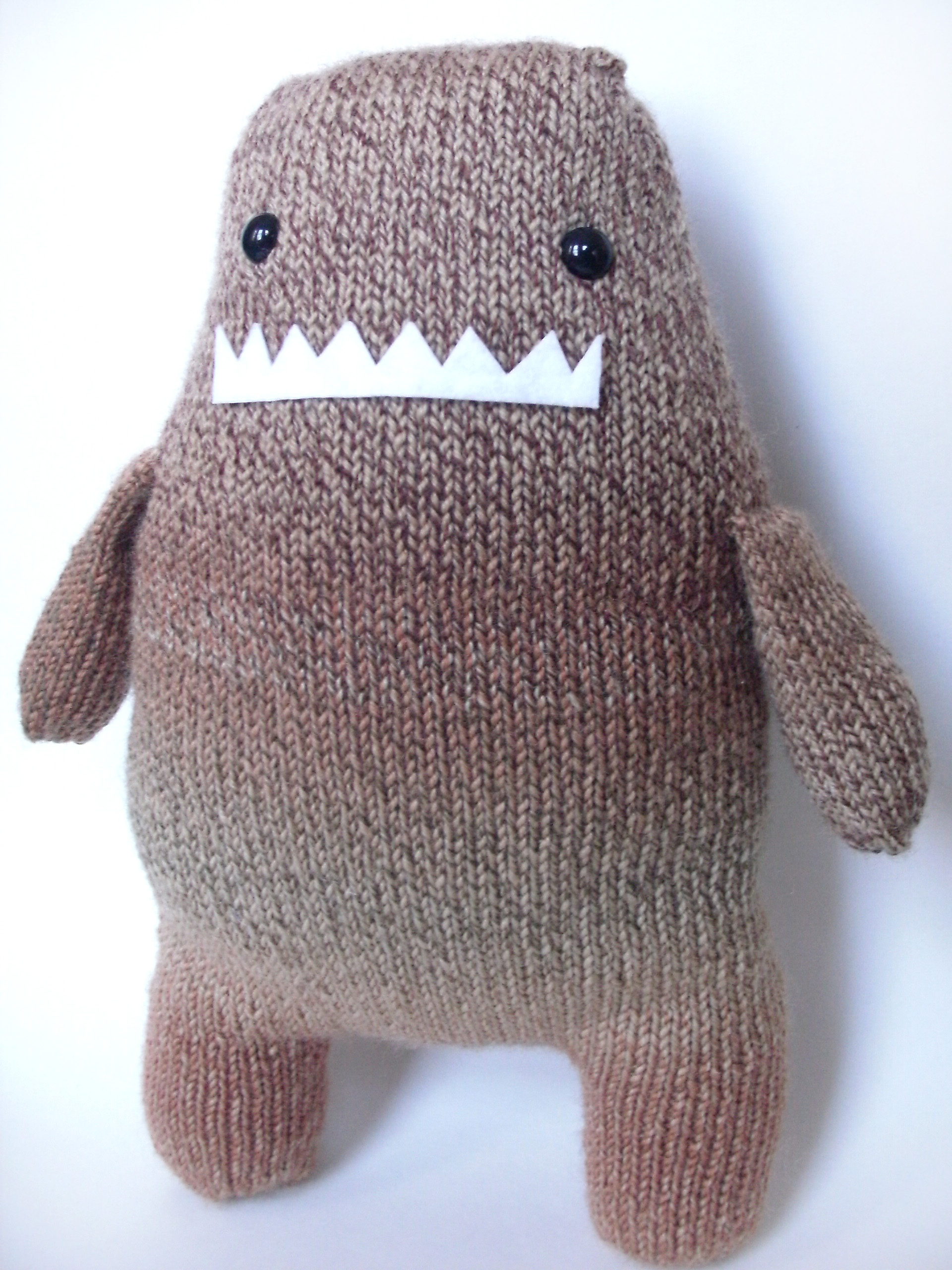
Hugo the Couch Monster

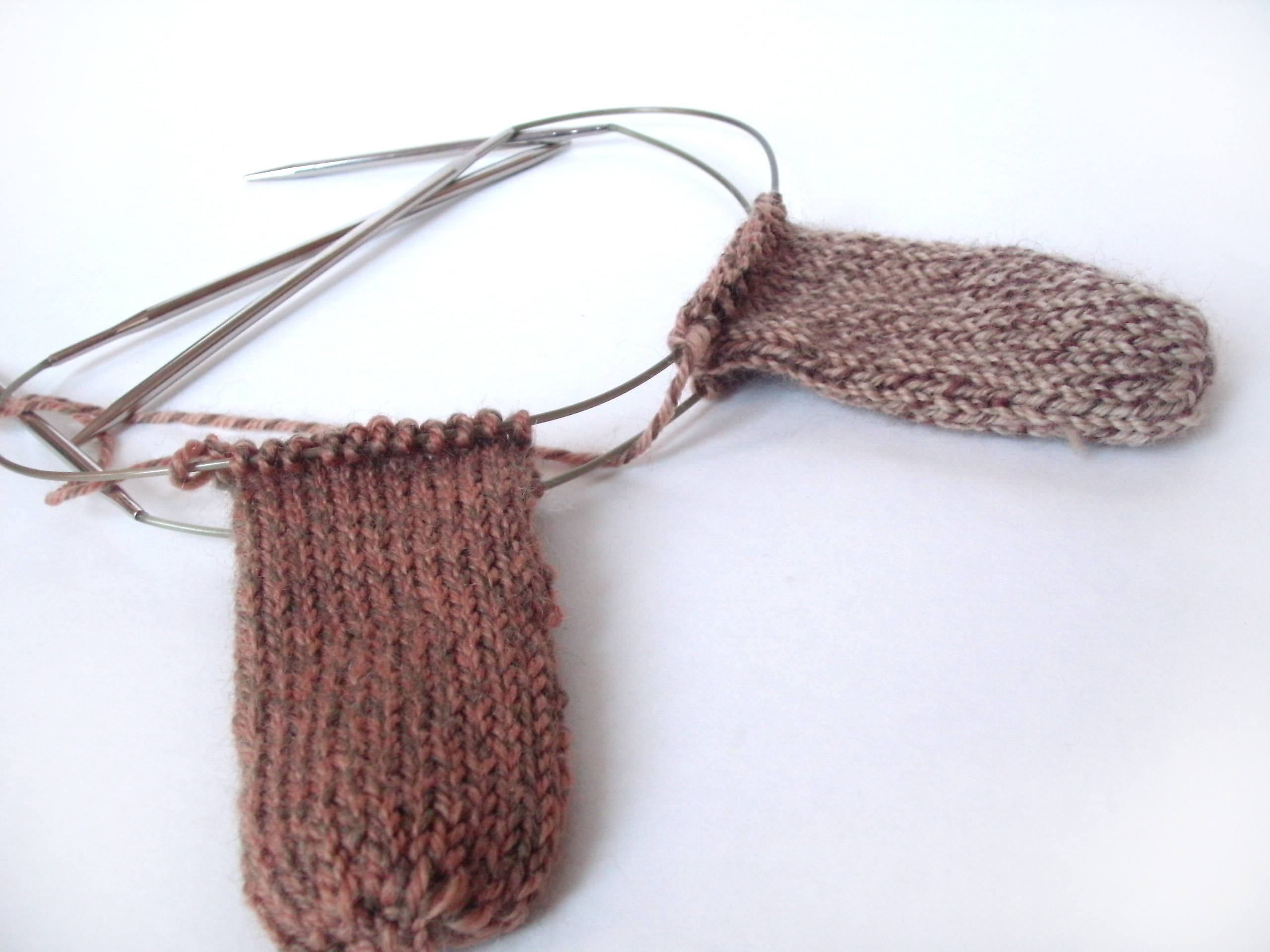
I couldn’t wait to break into the book and make a monster of my own! I chose Hugo the Couch Monster… he’s a real cutie! Since all of the patterns in the book are ‘any size, any yarn’ patterns… I was pleased to use up some of my stash! Hooray!

The book recommends using magic loop, but I’m a two-circulars sort-of-girl, and that technique worked out just fine!

And I’m very happy with my resulting cutie!

What do you think?

The Review

If you’re familiar with Rebecca Danger and her adorable monster patterns, then you know what this book is about! Big Book of Knitted Monsters contains 20 patterns for cuddly monsters that you can customize to be any size you’d like.

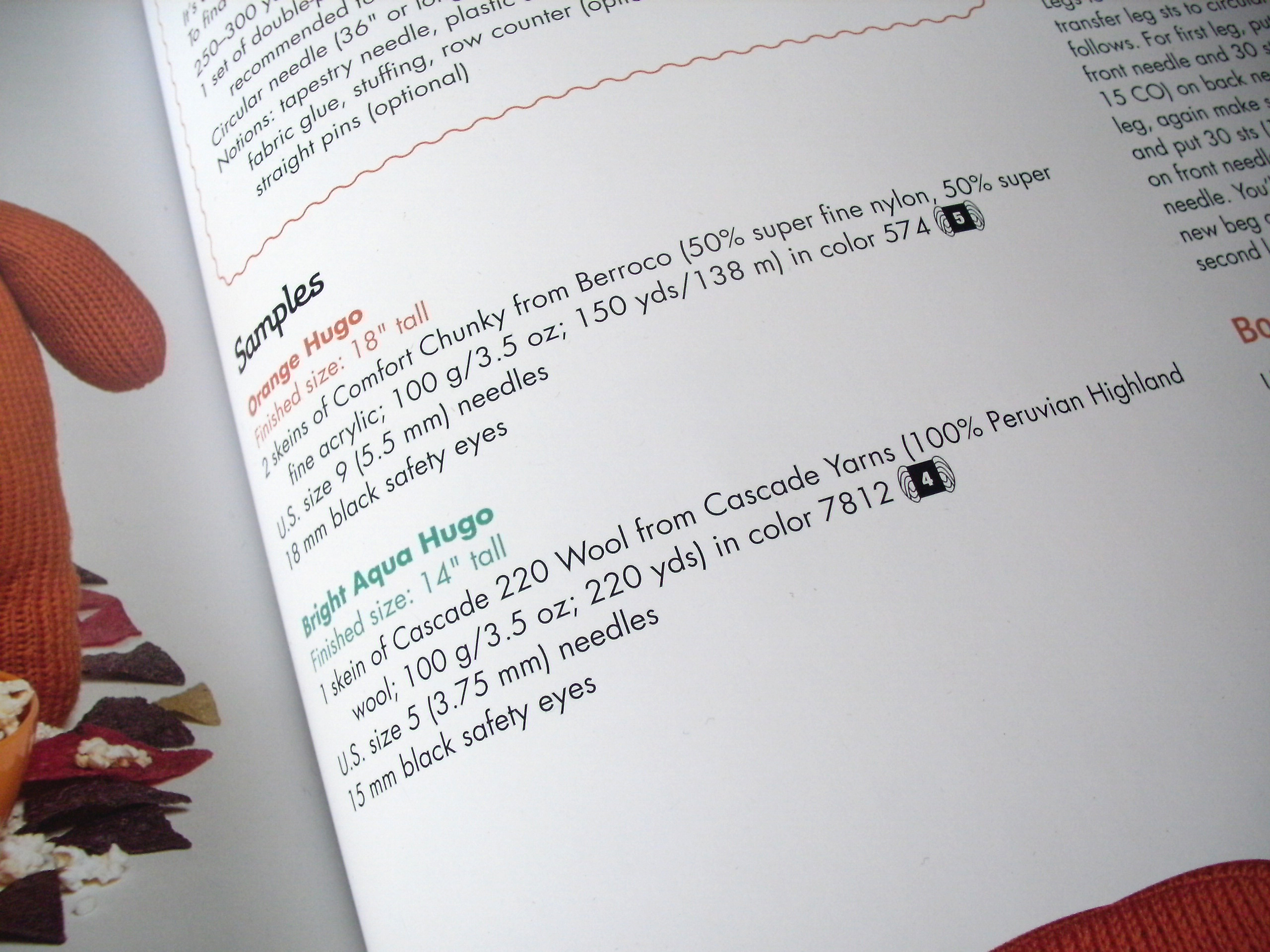
Besides the cuteness of the monsters, one of the big strengths of this book is the variety of yarns that are used to make the samples. Rebecca says in the introduction that the monsters can be knitted with any thickness yarn (and the appropriate sized needle), and she demonstrates the flexibility of her patterns throughout the book. Every monster in the book is knitted in at least two yarns: often a bulky yarn and a worsted weight yarn. It’s really great that you’re able to see how the pattern works up in different yarn choices… gets your creativity flowing!

One of the weaknesses of this book is the lack of detailed introductory and finishing information. I know why there isn’t: Martingale (the publisher) imposes an 80 page limit on its books. So of course, if you have a book with 20 different patterns, there isn’t much room for details. There are very helpful photographs sprinkled throughout the book, which I appreciate… but there are a few spots where you’re left to fill in the gaps. You’ll be instructed to ‘sew the arms on using a whipstitch’, but the exact positioning of the arms is up to you to sort out from the photograph (or maybe, your own creativity!).

Pros

  • The writing in the book is whimsical, playful and enjoyable to read.
  • The monsters are adorable.
  • Each pattern can be knitted in a variety of yarn thicknesses and colorways, so there’s lots of options!
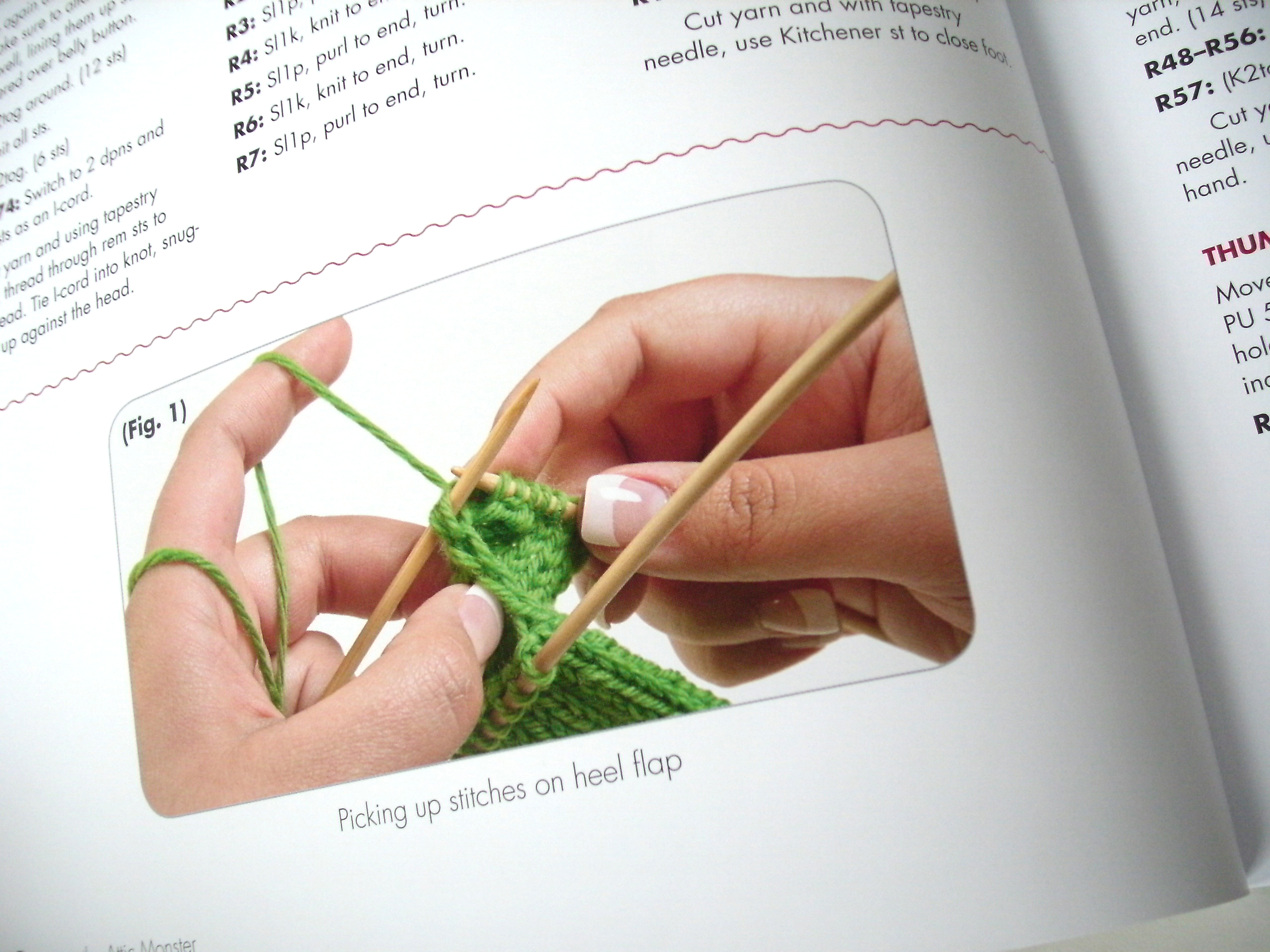
  • Tricky knitting techniques are demonstrated through photographs: which are much clearer than an illustration.
  • If you can knit on double points (or two circulars, or magic loop), you can do almost any of the patterns in this book. Most of the monsters are fairly simple to knit.

Cons

  • The introduction is sparse. It contains information about how to do the magic loop technique, but you’ll need to look at an outside resource if you need help with other knitting techniques.
  • Other reviews I’ve read have been disappointed in the similarity between the various monsters in the book. I, personally, am not too bothered by this… they’re knitted in Rebecca’s signature style, and each one demonstrates a different shape/feature. However, each monster has a glued-on mouth, and I would have liked to have seen one that doesn’t- since glued-on mouths aren’t safe for small children to play with. She mentions in the introduction that the monster would be just as cute with an embroidered mouth, but we don’t ever see one knitted up.

So, if you like monsters and are comfortable with basic knitting techniques (or, at least, feel confident looking for outside help if you need it), then this book is for you! Happy monster knitting!

Swell Stockings – FREE Pattern!

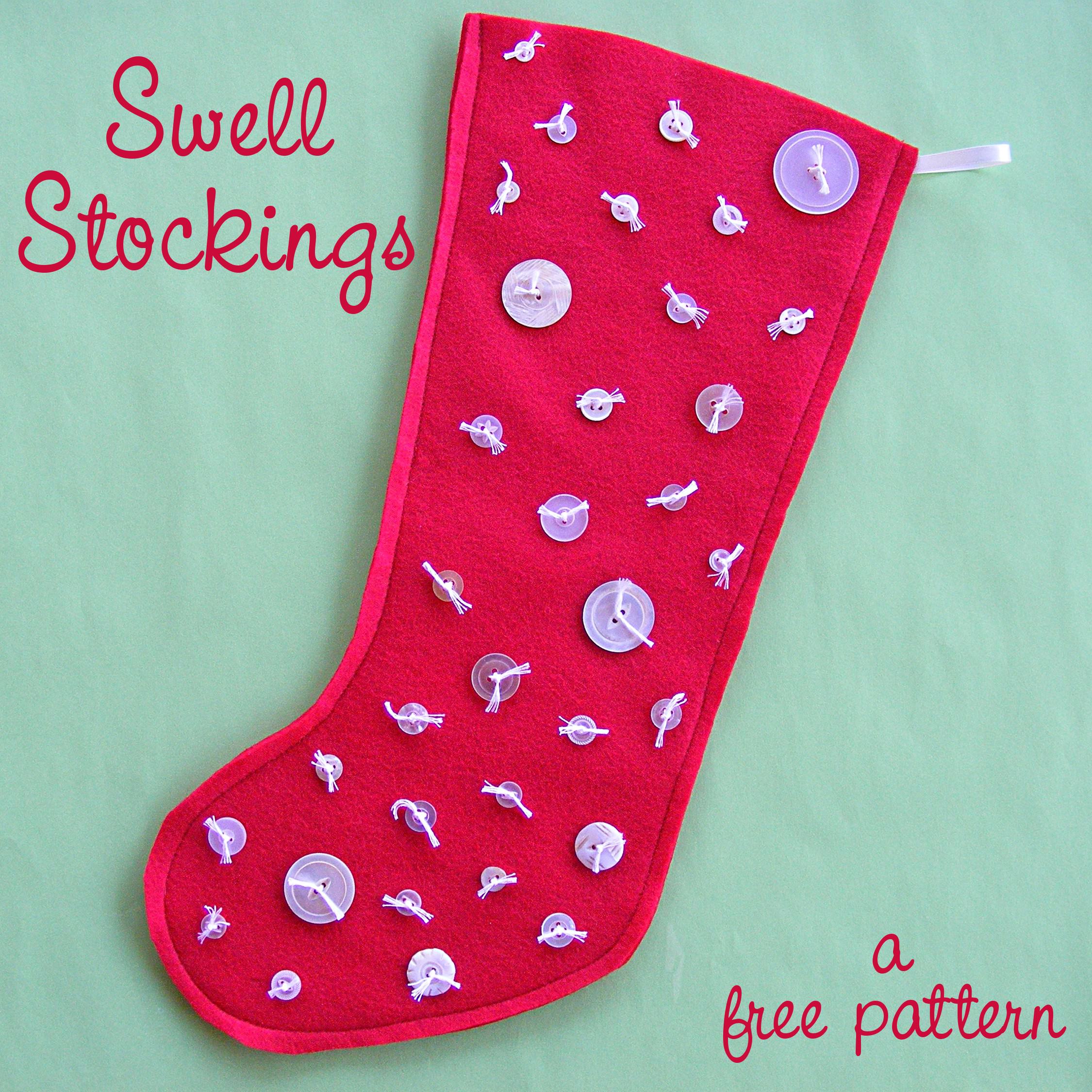
Planning to make any holiday stockings this year? Here’s an easy peasy pattern – and it’s free! Click here to download.

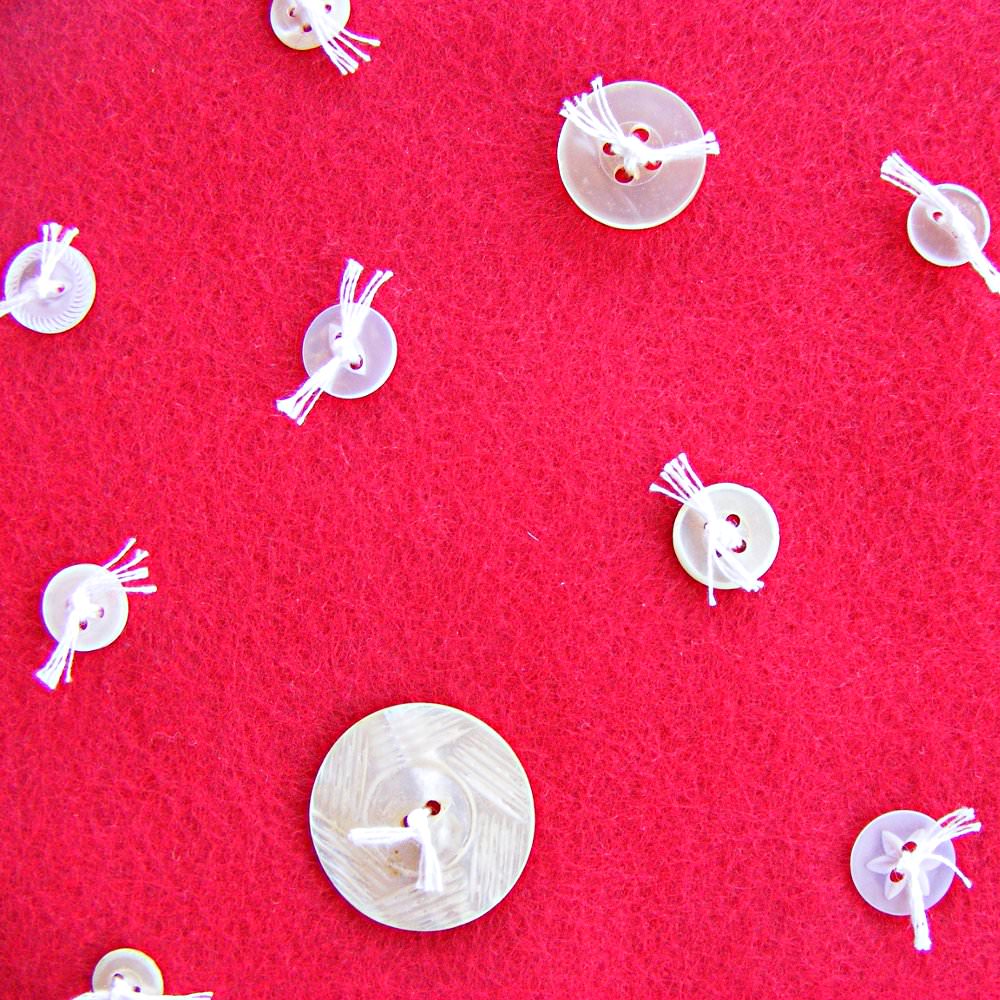
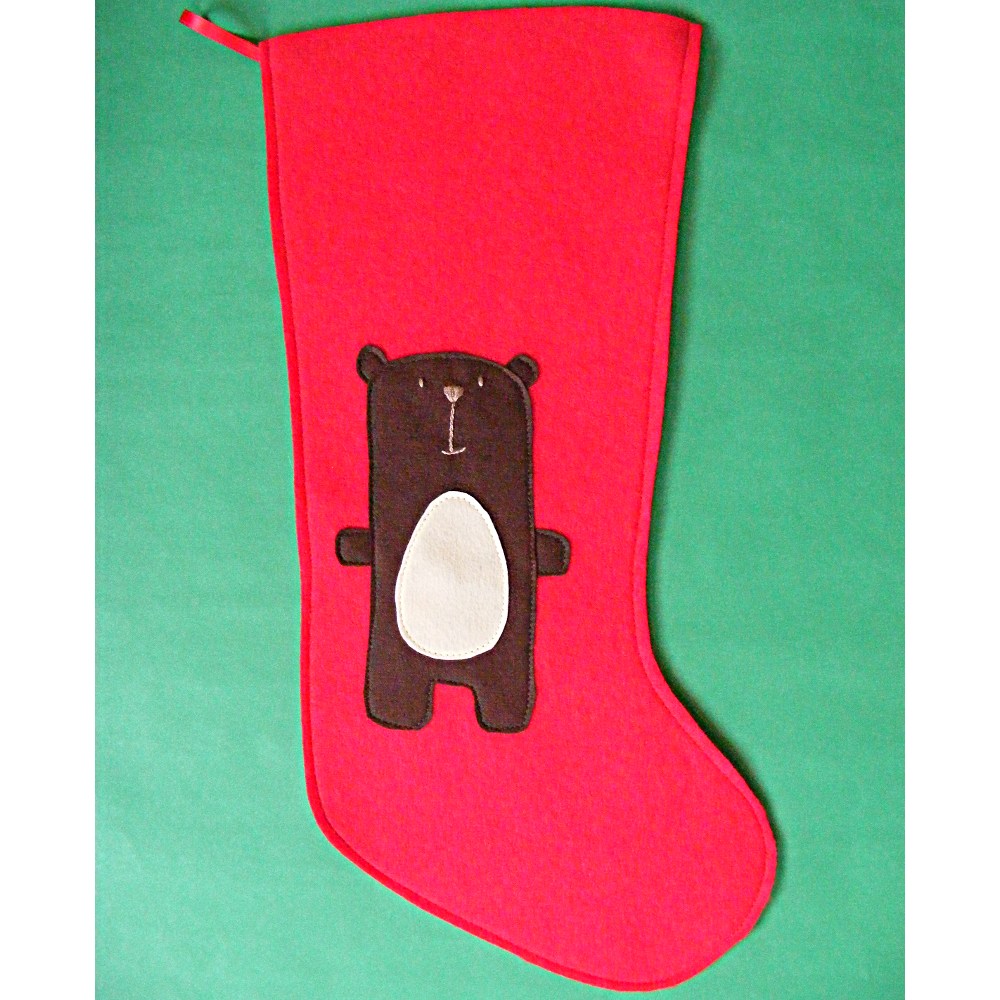
The pattern is for a basic stocking made from felt and takes less than an hour to make. But (of course) you’ll want to fancy it up a bit. πŸ™‚ The one on the pattern cover just has a bunch of inexpensive pearly buttons stitched on it – with the thread tails visible.

White buttons with decorative tassels on bright pink felt background.

See?

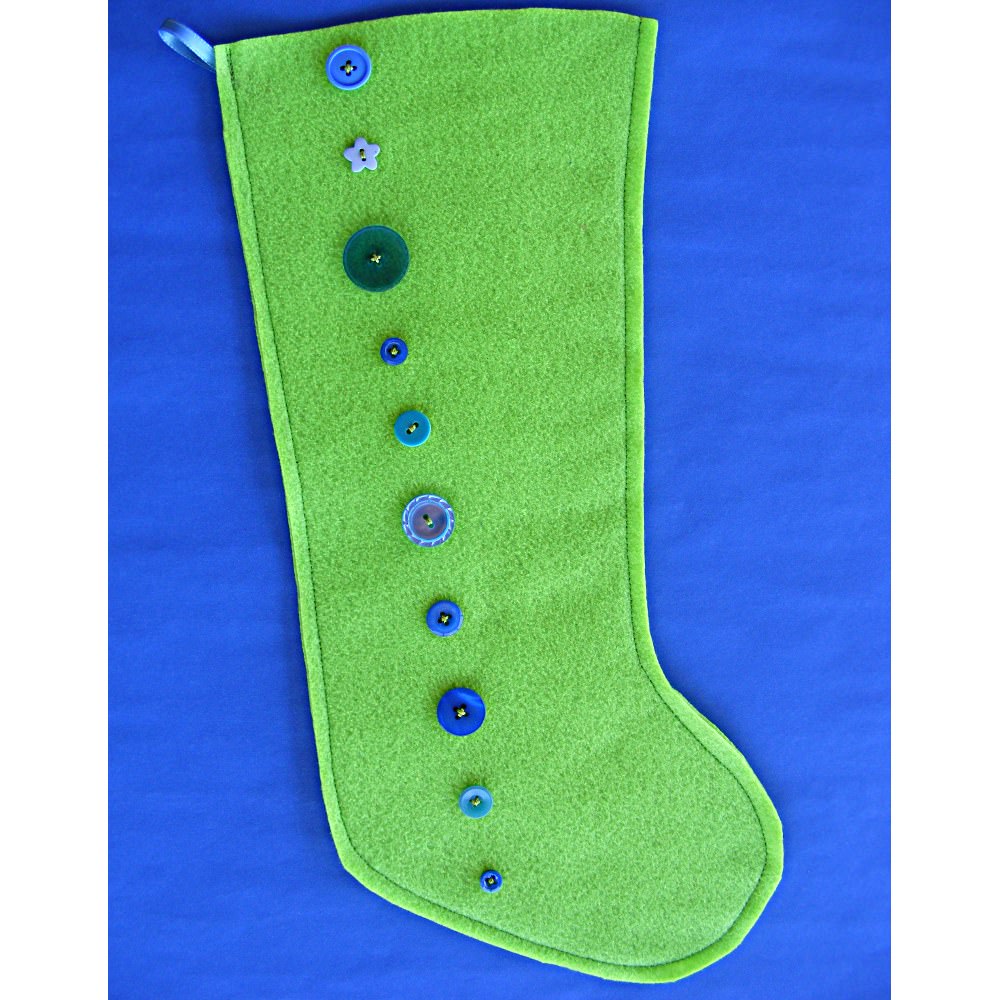
Colorful felt Christmas stocking decorated with various blue buttons and flower embellishments.

Or use just a handful of buttons in a vertical stripe.

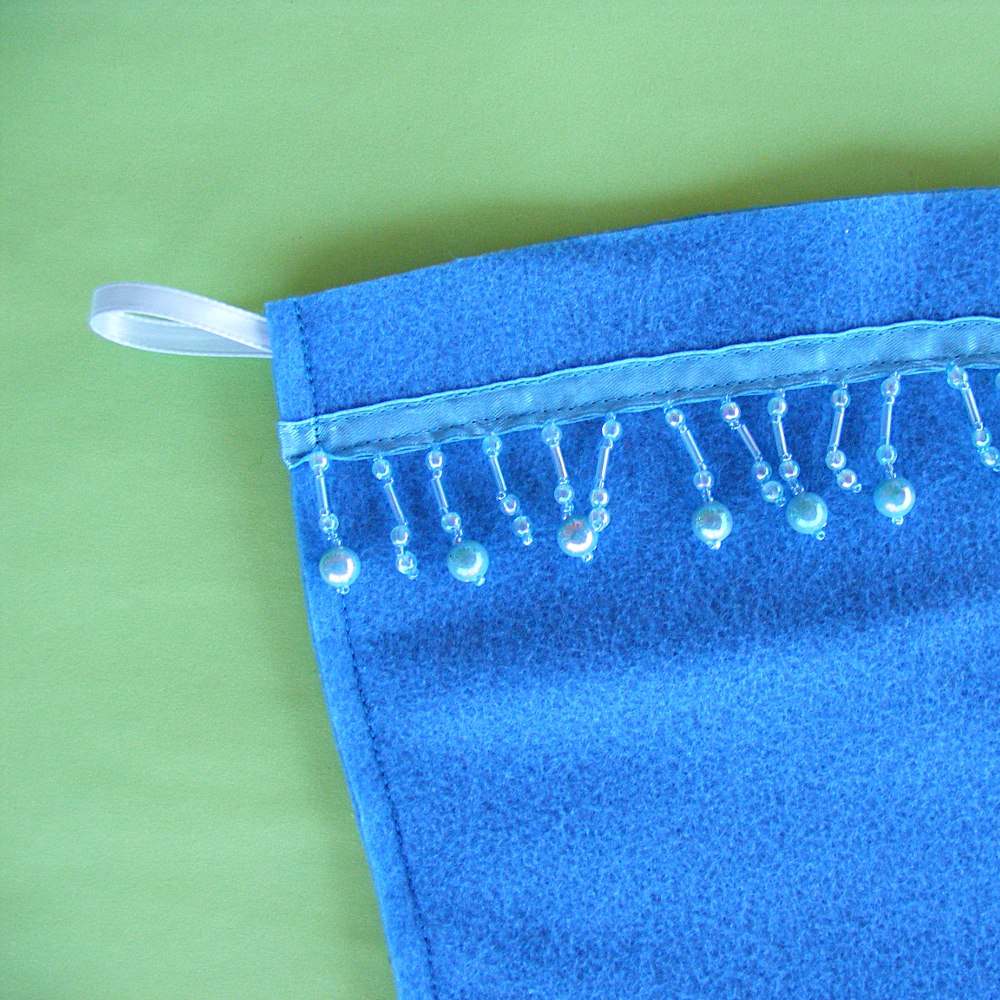
Bright blue felt bag with pearl bead embellishments and a satin loop handle.

Beads are always nice – and beaded trim is super easy. You’ll still finish this one in under an hour.

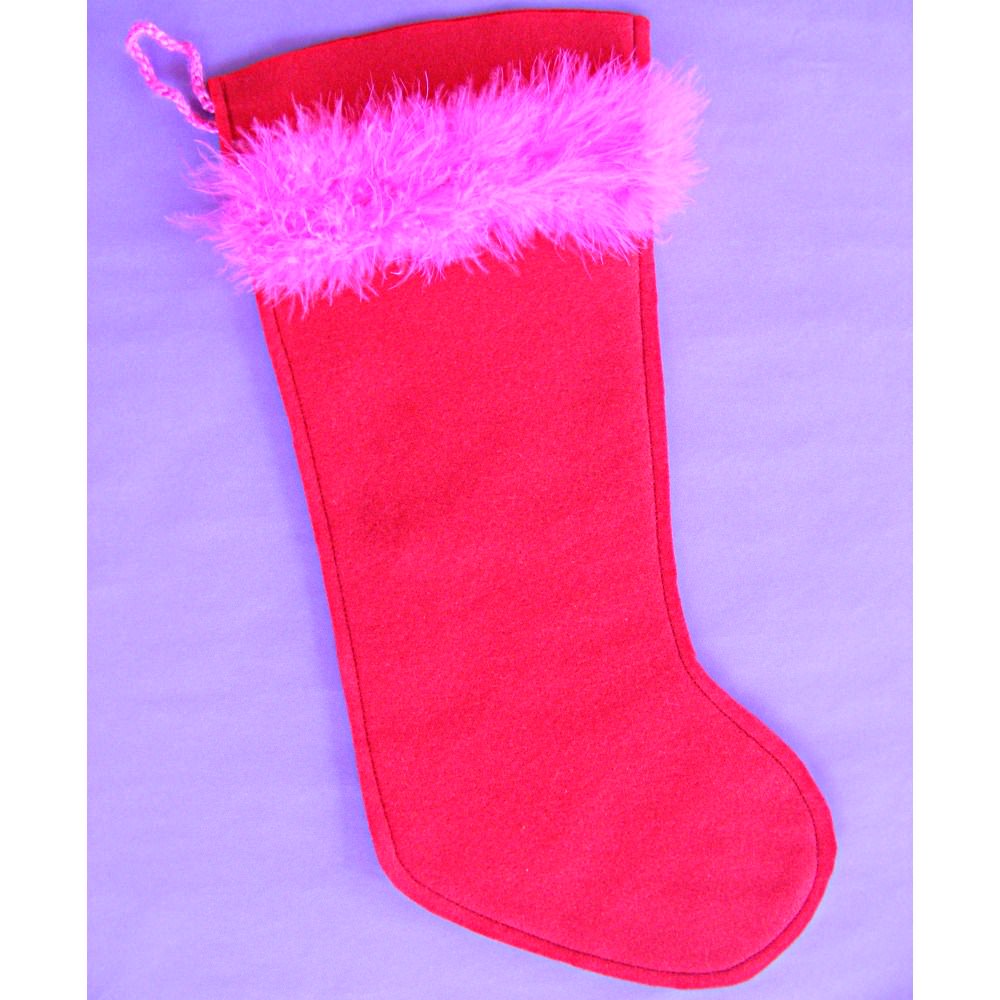
Red Christmas stocking with pink feather trim, festive holiday decor.

This one has a strip of feather boa across the top. Ooh la la!

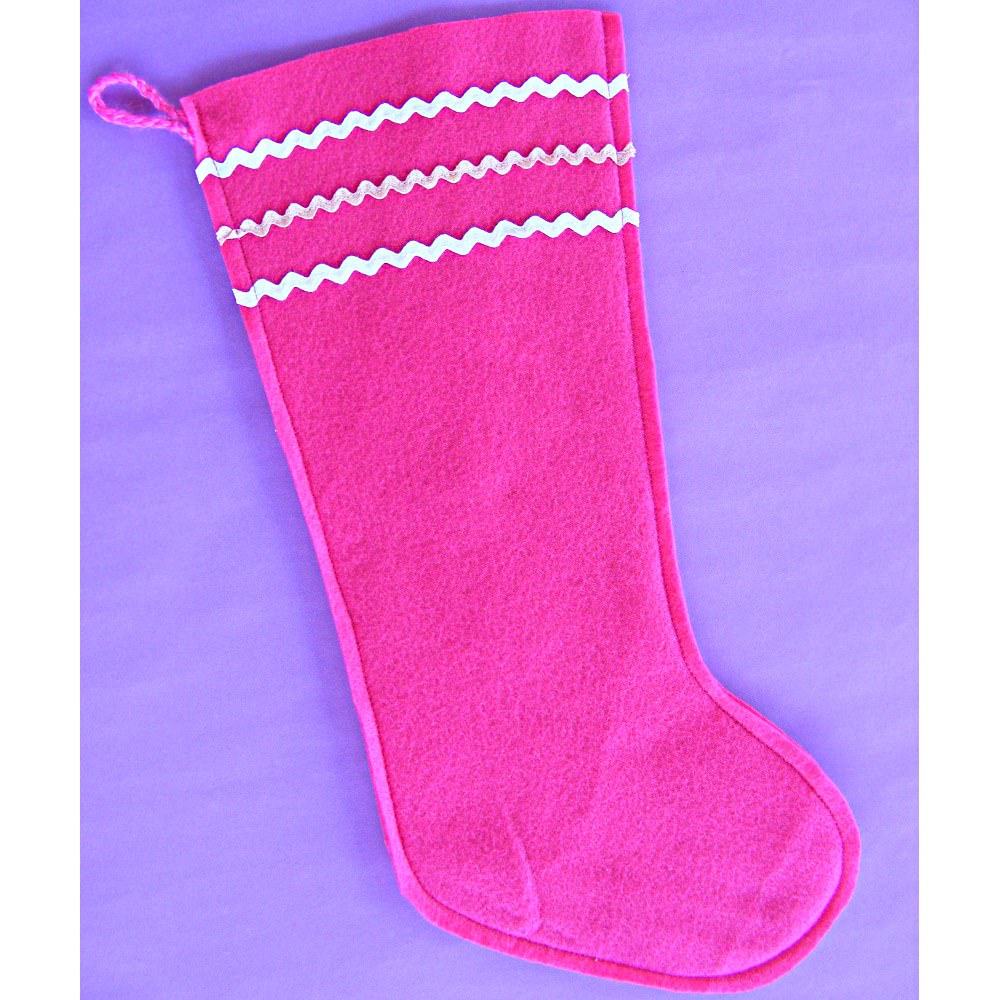
Pink felt Christmas stocking with white wavy trim, perfect for holiday decor and DIY craft projects.

How about some rickrack? A couple of bands across the top are nice. . .

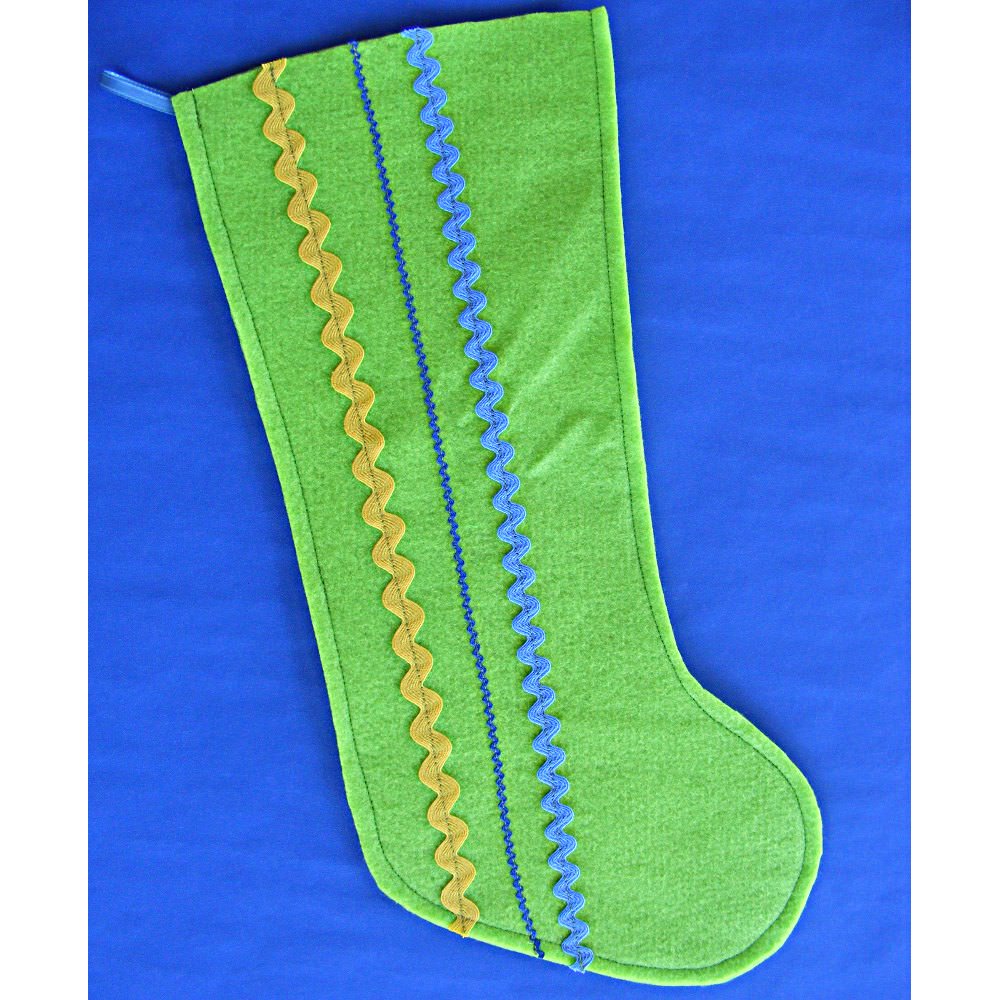
Bright green felt Christmas stocking with colorful rickrack trim for holiday craft projects.

But vertical stripes are good too.

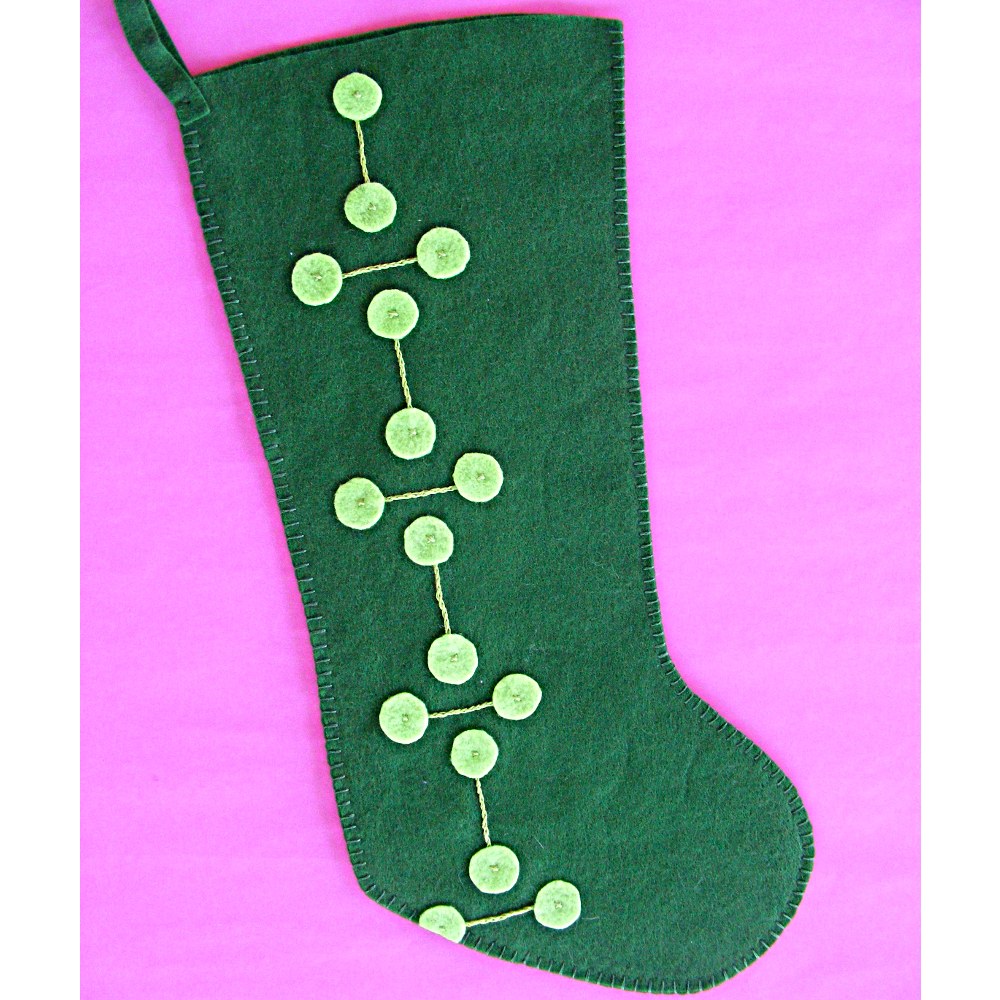
Green felt Christmas sock decorated with pom-pom garland.

For this one I cut some dots out of felt (traced around a quarter for the size) and then laid them out and embroidered lines between them.

And here’s one with fancier applique (but still easy). You could do the same thing, using one of my appliqued animals quilt block patterns. How about embroidering on a stocking? One of the puppies or kitties would be really cute! So would one of the Rainbow Girls! Or one of the birds from the Bird Sampler! And did you know you can turn any embroidery pattern into an applique pattern?

The finished stocking is just a smidge over 17″ tall – a good basic size.

So there you have it – a bunch of swell stockings! Download the pattern and make one this year.

Get a free felt ornament pattern here.

See some fun ways to use the ornament and stockings together here.

Happy sewing!

Best,
Wendi
Applique Wendi (with fabulous hat)

How to Clean Amigurumi

Happy Tip Tuesday! I get asked pretty often, ‘how do you wash your amigurumi, especially if you use non-machine washable yarn?’ Well, that’s today’s topic!

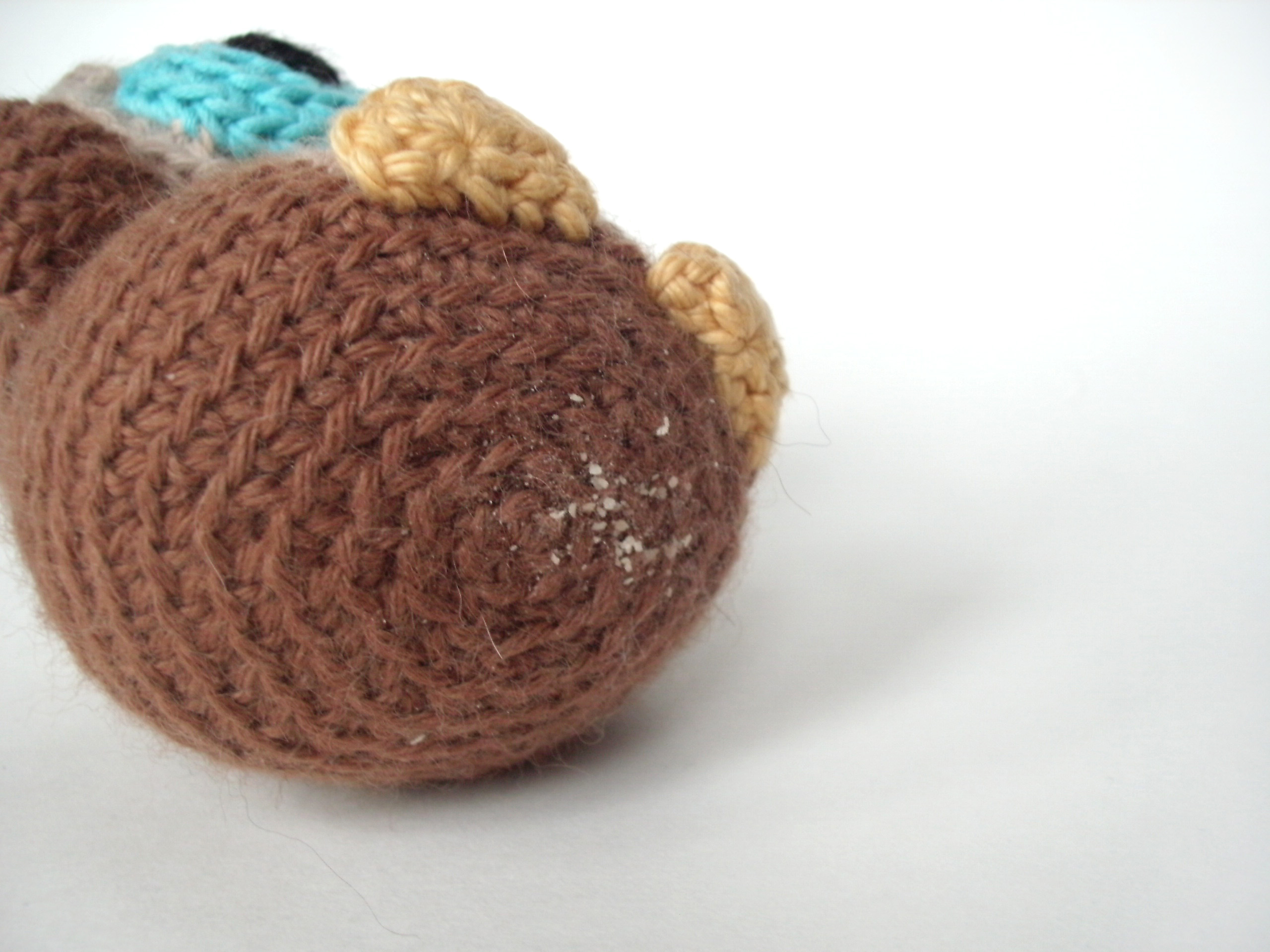
I crocheted two owls that I used as cake toppers. Even though the icing was pretty hardened, one owl inevitably ended up with icing on his owl-butt. Ooops.

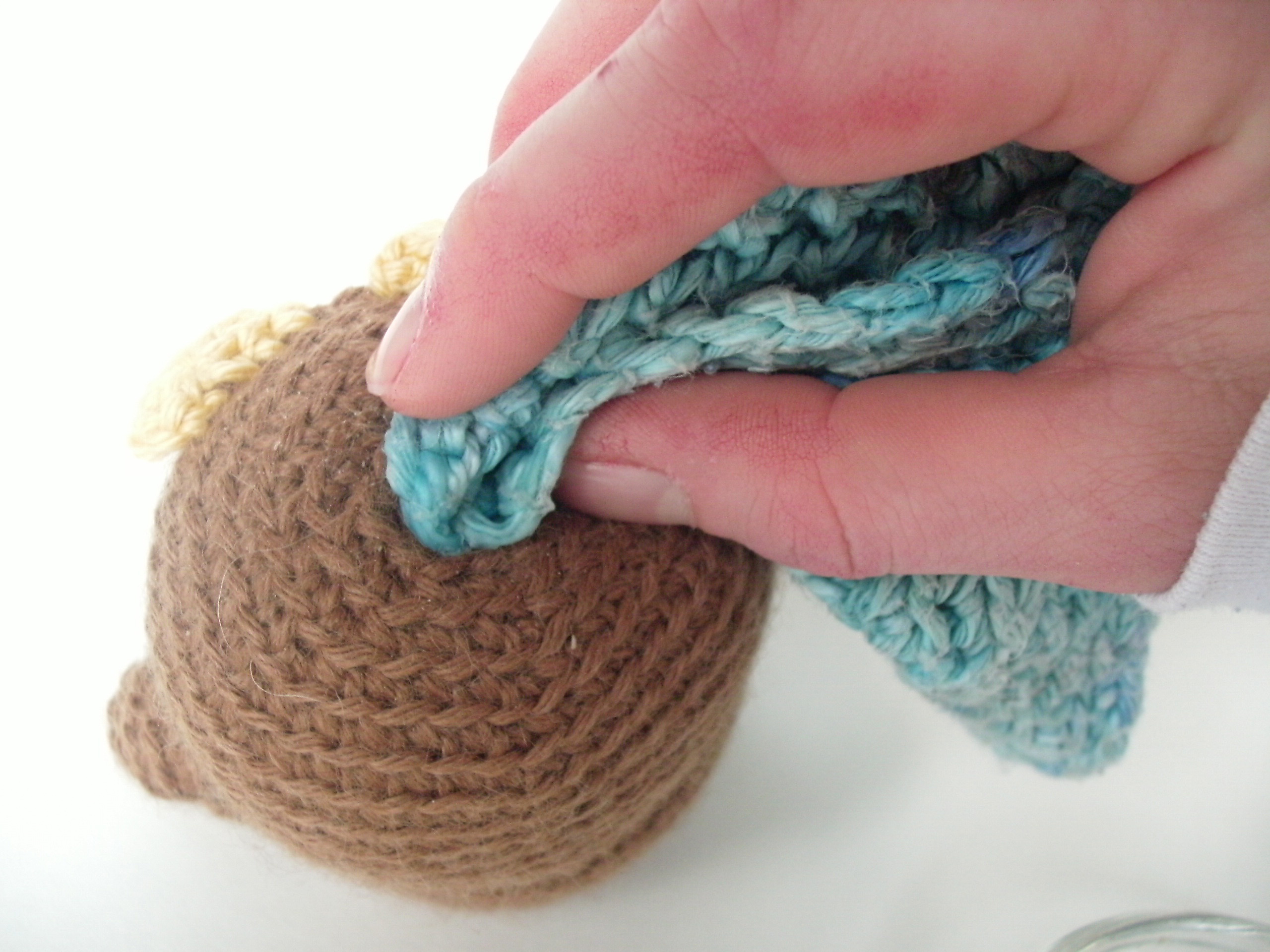
Even though this owl is crocheted with a hand-wash-only yarn… there’s no problem! Almost all messes can be ‘spot cleaned’ using water and a cloth (that is, unless you drop an amigurumi in a mud puddle… then he may need an all-over wash). I just dip a washcloth in a little bit of water:

And dab at the spot:

… until it’s clean!

Hooray!

Now, what if your amigurumi is really dirty? Here are a couple of suggestions:

  • Try using a little bit of soap in your water for smaller (but hard to get out) spots
  • Soak your amigurumi in a sink of water and wool-wash (like Eucalan). Gently squeeze all of the water out, and let dry completely.
  • Animals made from non-machine-washable yarns can be machine washed without felting completely. The stuffing keeps the yarn from felting as much as loose fabric would. Of course, you may see some felting (due to agitation and hot water), but not as much as you may expect. Try machine washing on delicate with cold water… your amigurumi will come out clean as a whistle!
Vibrant handmade crochet toys and patterns from Shiny Happy World.

Here are handy links to all the crochet troubleshooting posts. . .

Return to the main table of contents for Let’s Learn to Crochet Amigurumi.

Happy stitching!

Vibrant handmade crochet toys and patterns from Shiny Happy World.
Handmade crochet Pippi & Pippa amigurumi toys for beginners.