Free Pattern – Make a Gizmo Cozy

free felt pattern - gizmo cozy

Keep your electronic gizmos from getting scratched up – and also keep them warm and cozy (and cute!) with a super-easy felt cozy.

In this free pattern I teach you how to measure and fit any device – so you can make cozies for your MP3 players, your cell phone, your tablet, your e-reader – even a laptop!

You can sew by hand or by machine. You can embellish with embroidery, or applique, or beadwork, or anything else you know how to do.

It’s a totally open-ended project, perfect for playing and experimenting. Have fun with it!

What You’ll Need

Difficulty

The measuring and construction of the cozy is super easy – just simple running stitches. You can make the embellishment as fancy as you like.

Measure Your Device

First we need to do a little math. All these gizmos are different sizes so you’ll have to customize the pattern for each device.

Width

Measure the width of your gizmo. You’ll need to account for the thickness of it too – so measure up one edge, across the surface, and down the other edge. I use a flexible tape measure so I can do this all in one step, but you can use a regular ruler and add the three measurements together.

To the width measurement you’ll need to add some seam allowance. I like 1/4 inch on each side, so add a total of 1/2 inch to your width. Write it down.

______________________ = cutting width

Length

Now measure the length of your device. It won’t need to wrap around the top, so this time measure up the bottom edge (to get the thickness) and then across the surface to the top edge. This will be your length measurement.

You won’t be sewing the top or bottom edge, so no need to add seam allowance to this measurement. But we do need it to cover the front AND the back of your device. So multiply your length measurement by 2. Write it down.

_____________________ = cutting length

Cut and Decorate

Cut a single rectangle of felt that is the cutting width x the cutting length.

Now – decorate it if you want to!

Remember – the front of the cozy will be the top half of the rectangle you cut. You can, of course, decorate both the front and the back. But if you want an image centered on the front, fold your felt rectangle in half and center your image on the top half.
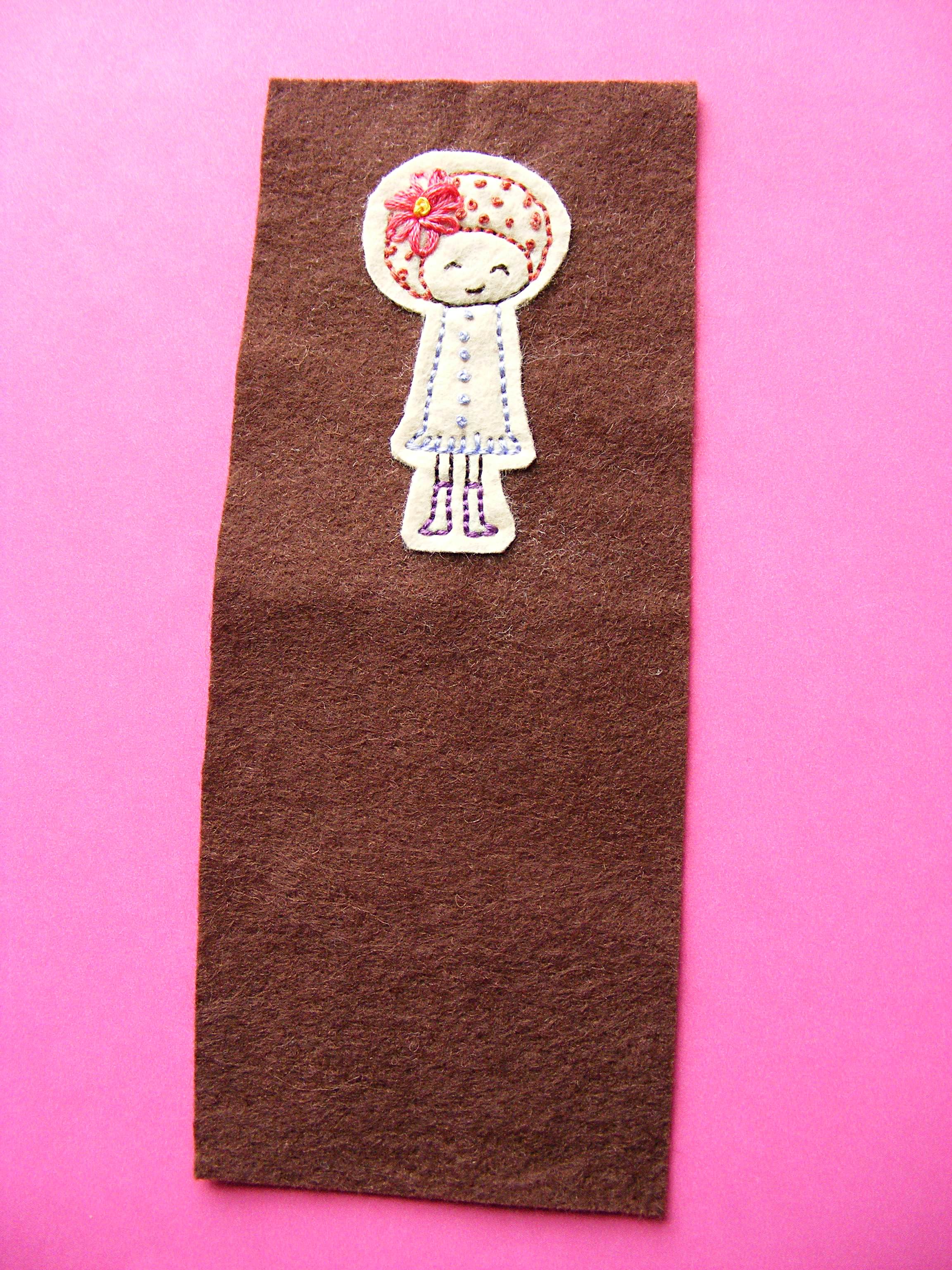
Cute embroidered girl patch on brown felt background. Perfect for sewing or decorating children’s clothing or accessories.

See where I put the image on my rectangle?

If you want to embroider on your cozy, here’s how I did mine. . .

Step 1

Choose an image to embroider. I used one of the Rainbow Girls, but anything will do. Find all my embroidery patterns  here.

Transfer the image onto a second piece of felt.

Step 2

I like my embroidery to sink in around the edges and make the felt more three-dimensional, so I started by embroidering just the inside of the design on the small felt piece. For this design I stitched the French knots in her hair and on her dress, her eyes and her mouth. Nothing else – yet.

Step 3

After I finished the “inside stitching” I centered the scrap of felt on the top half of the rectangle of felt I cut in Step 5 above.
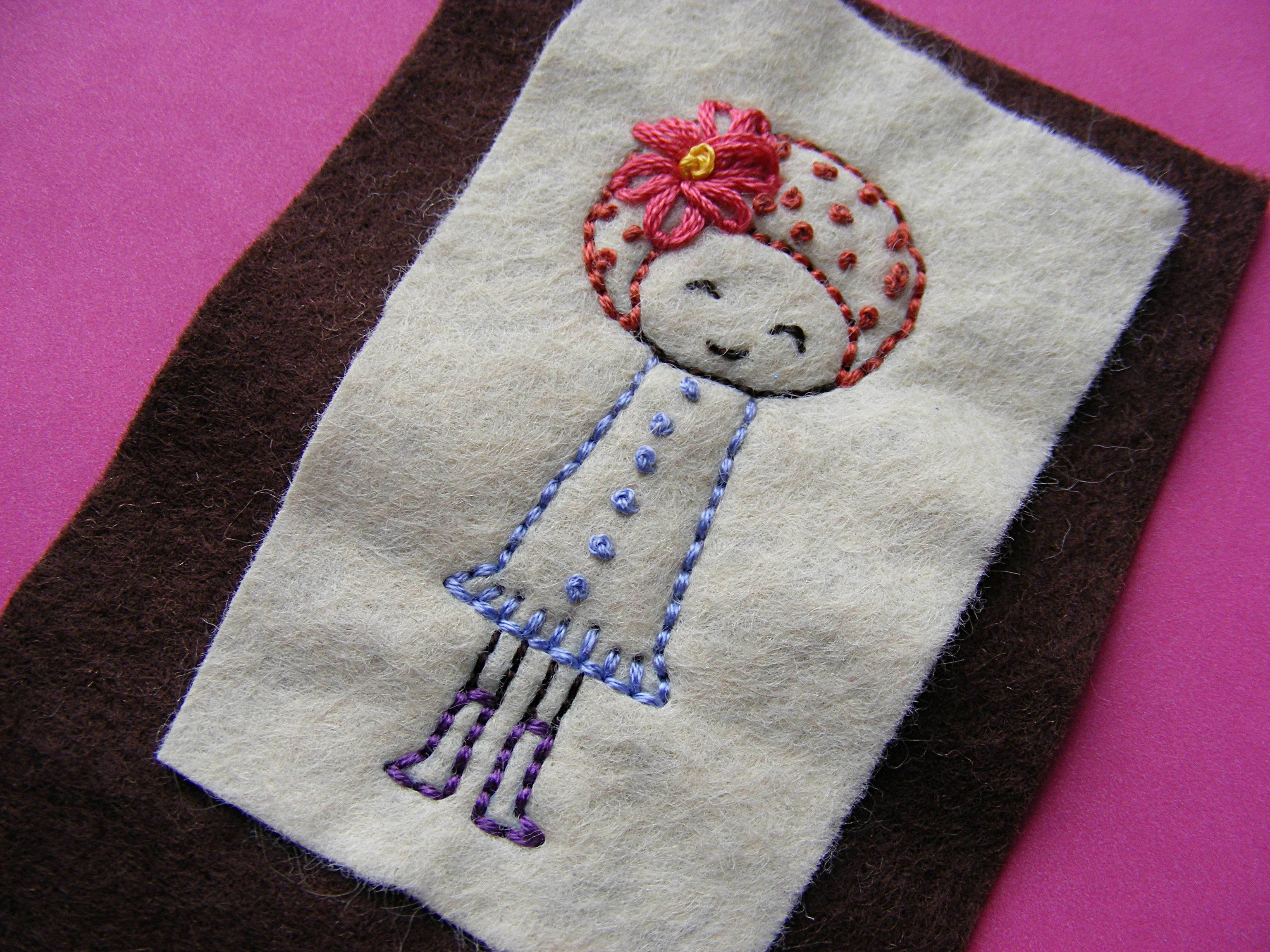
Embroidery art of a girl with a flower in her hair on felt fabric.

I attached the design to the cozy by embroidering the outline of the Rainbow Girl (the outline of her hair, her chin, the outline of her dress, and her legs and boots) through both layers of felt.

Going through both layers for the outline makes her hair, face and dress all look slightly puffy and rounded – and it also attaches the two layers together. If you want to do all the embroidery before you attach the design to the cozy – you can do that. Just use a glue stick to attach them together after you’re done stitching, or whipstitch all around the edge.

If you want to do all the stitching through both layers – that’s good too. It just gives you a subtly different look. Play around and experiment!

Step 4

Use a sharp pair of scissors to trim around the design, leaving a little extra around the edge.
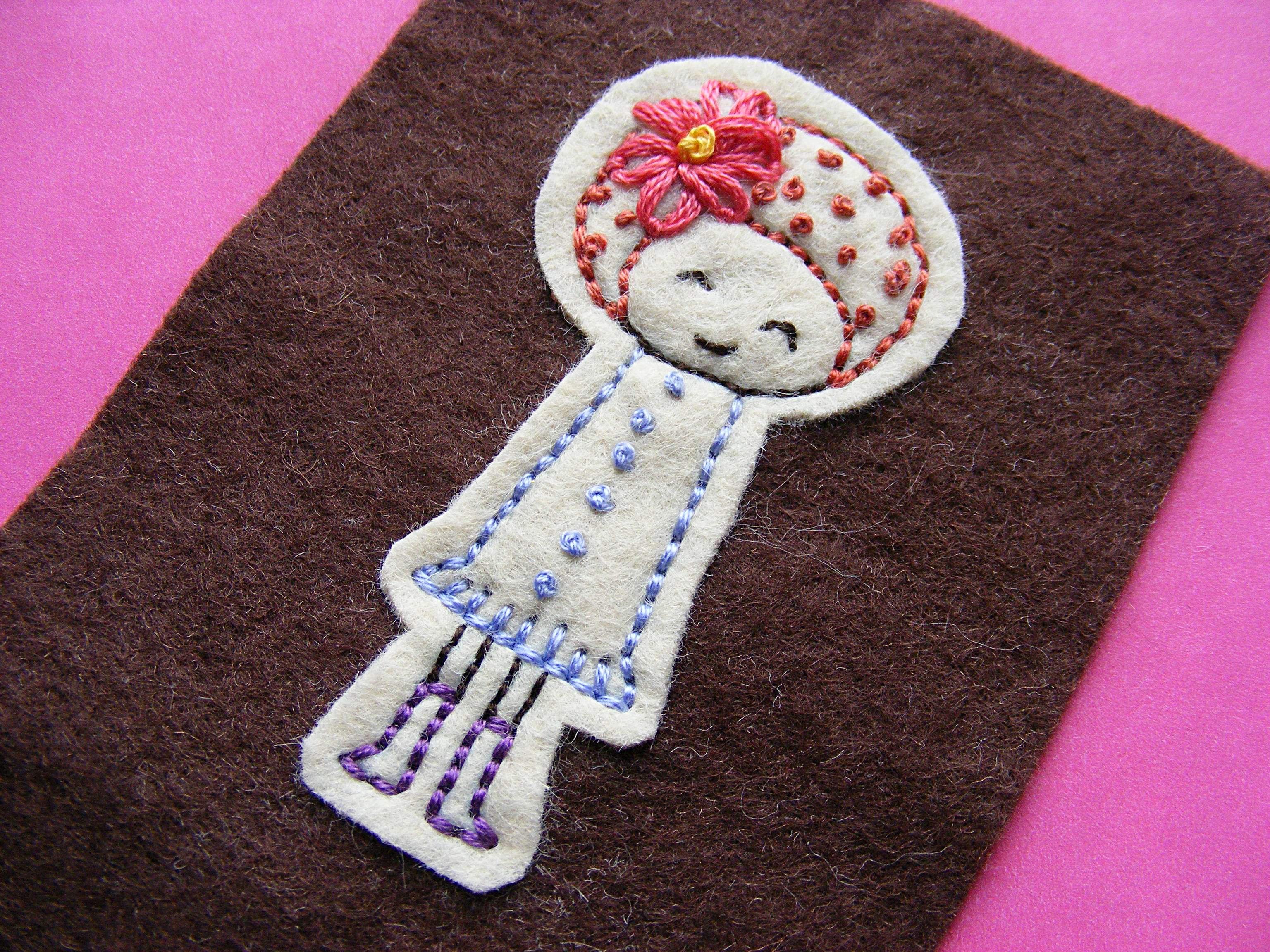
Colorful embroidered felt doll with a floral headband on a brown felt background.

One of these days I’ll get myself a pair of applique scissors (the bottom blade has a rounded tip so you can’t accidentally cut through the bottom fabric) so I can do this without having a nervous breakdown, but for now I just go very slowly and very carefully.

Sew It Up!

Fold the cozy in half, carefully lining up the edges. Pin it together on each side, 1/4 inch in from the edge.
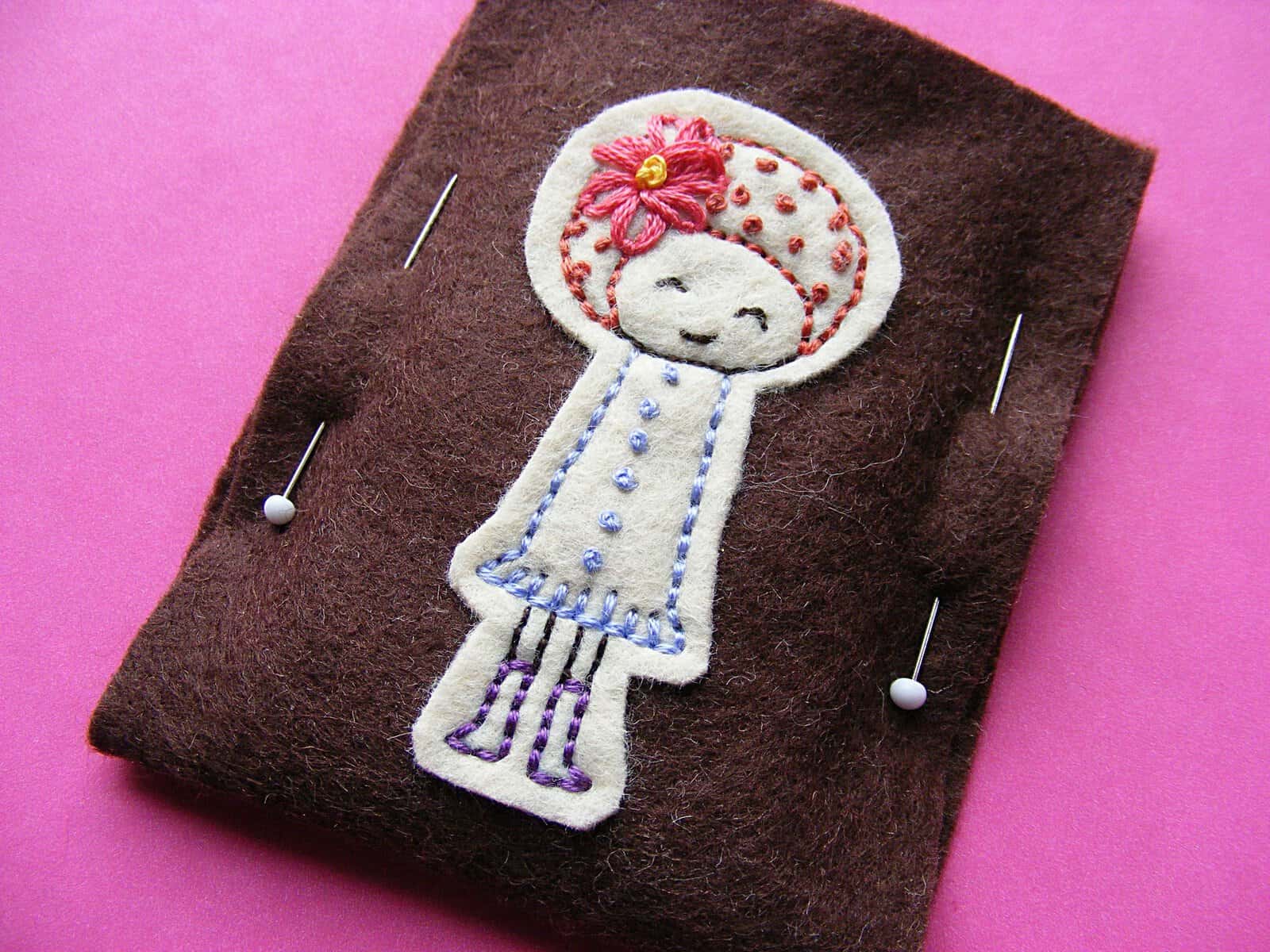
Colorful embroidered doll on dark pink felt, handcrafted with sewing and needlework techniques.

Slide your gizmo in to make sure it fits. Fuss with the placement of the pins until you’re happy with the fit on your device. You want it snug – but not too tight. The device should still slide in and out easily.

Stitch up one side. I wanted big, chunky, visible stitches so I used fat embroidery thread and a running stitch by hand. Blanket stitch would look nice too. You could also use a sewing machine instead – with matching or contrasting thread.

Check the fit one more time before you sew up the other side. Make any necessary adjustments – and sew.
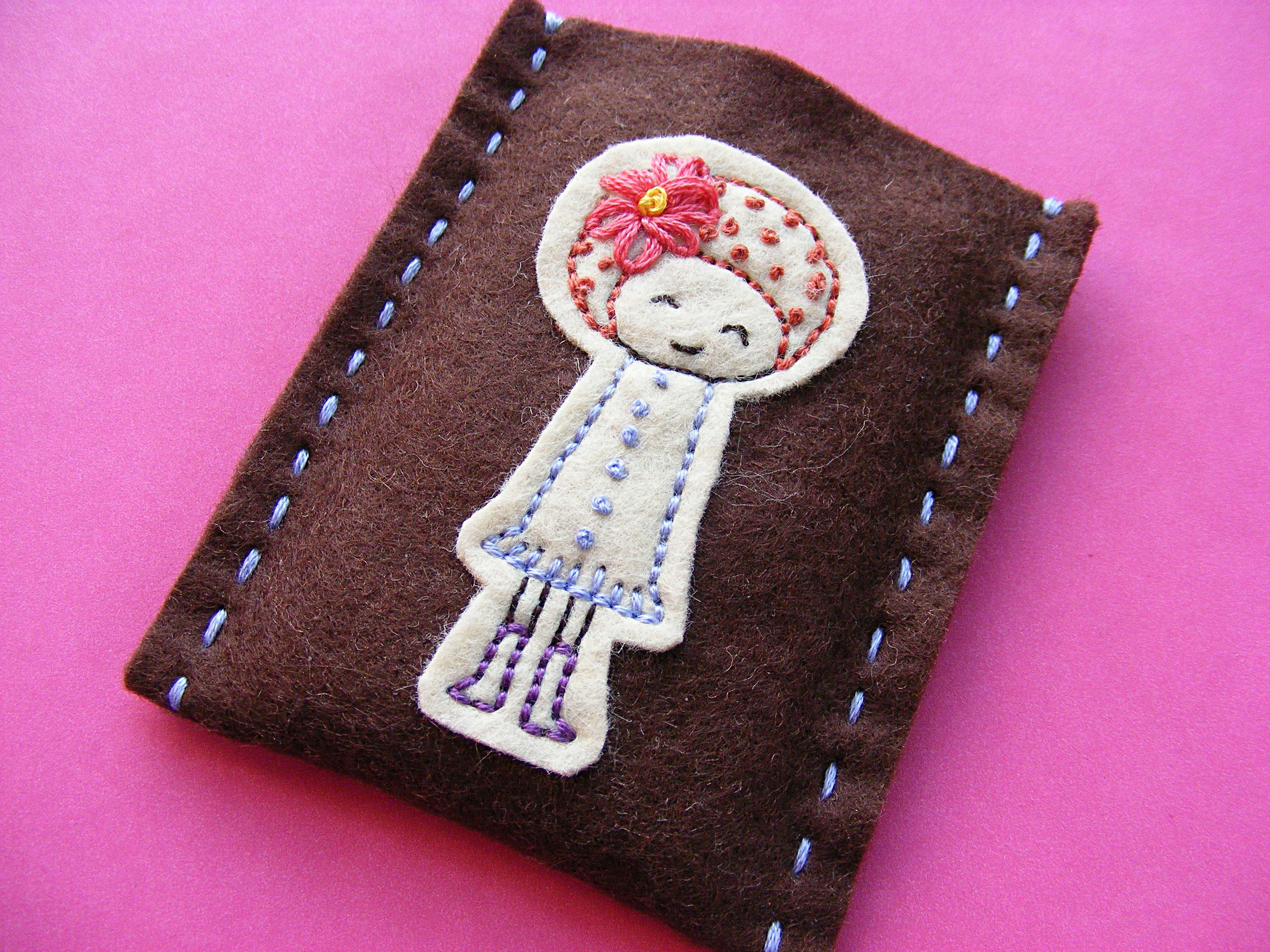
Cute embroidered girl doll on brown felt wallet, handmade craft accessory.

Trim away some of the seam allowance if you want to – but don’t get too close to the stitching or your seam won’t hold.

Finished!
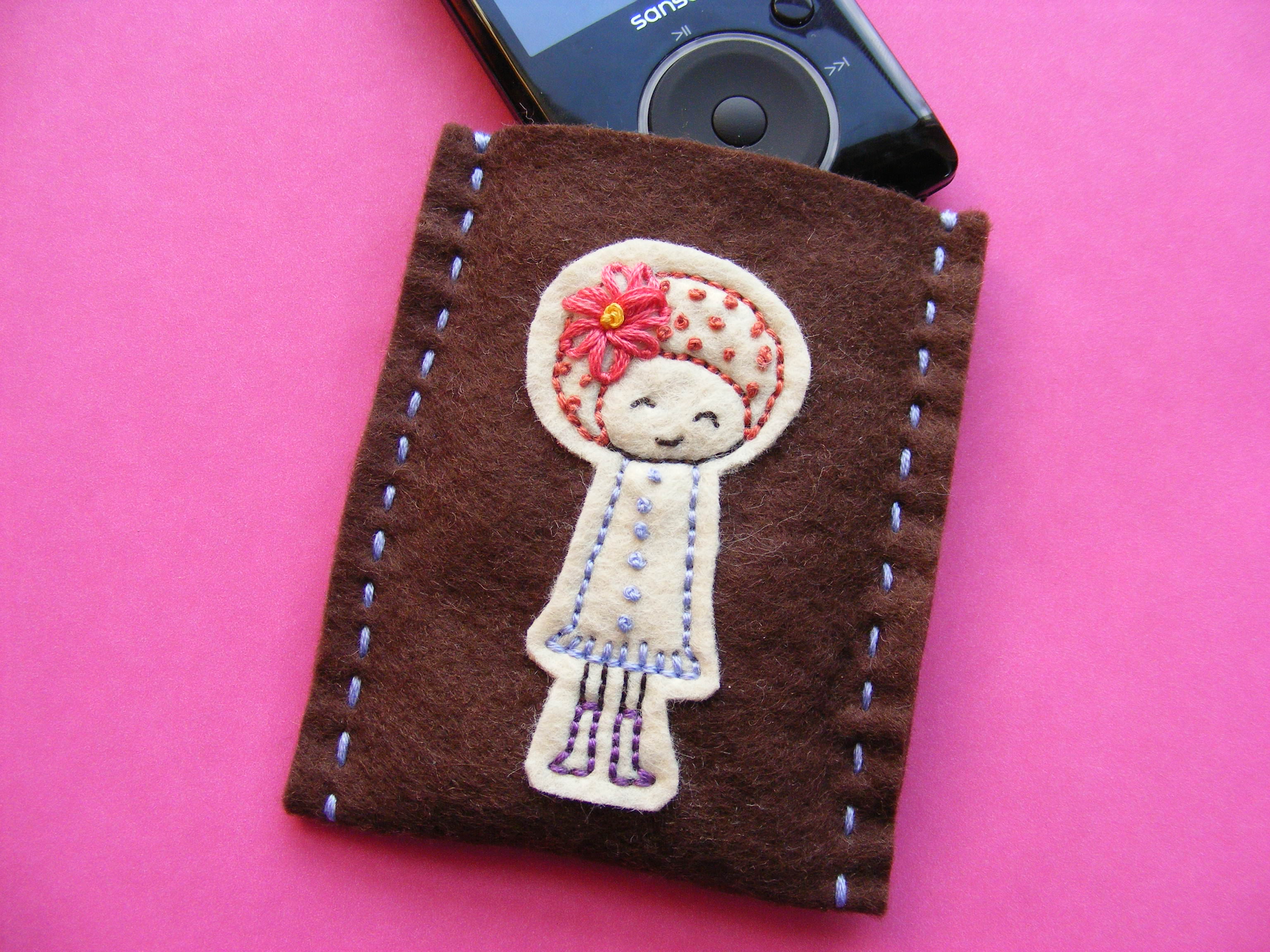
Felt phone sleeve with embroidered girl character on pink background.

Happy stitching!
Best,
Wendi

Applique Wendi (with fabulous hat)

How to get great-looking stripes!

How to get Great-Looking Stripe Patterns - tips from Shiny Happy World and FreshStitches

Welcome to ‘Technique Tuesday’! Every Tuesday, my blog post will feature a new tip/technique that will help you with your crocheting! Be sure to join me ever week!

I’ve been on a stripe-kick recently… I just can’t get enough of them! Stripes are a great way to use up leftover yarn: you can mix together half-used skeins into a beautiful finished project- if you pick a good color combination and pick a pleasant striping pattern! In this post, I’m going to share a few tips I’ve learned for making beautiful-looking stripes. I’m going to share tips for striping with 2 colors, striping with 3 colors, and striping with a whole bunch of colors.

The key to a good stripe is a little bit of randomness. We want to develop patterns that are a bit beyond “2 rows green and 2 rows of yellow, repeat”.

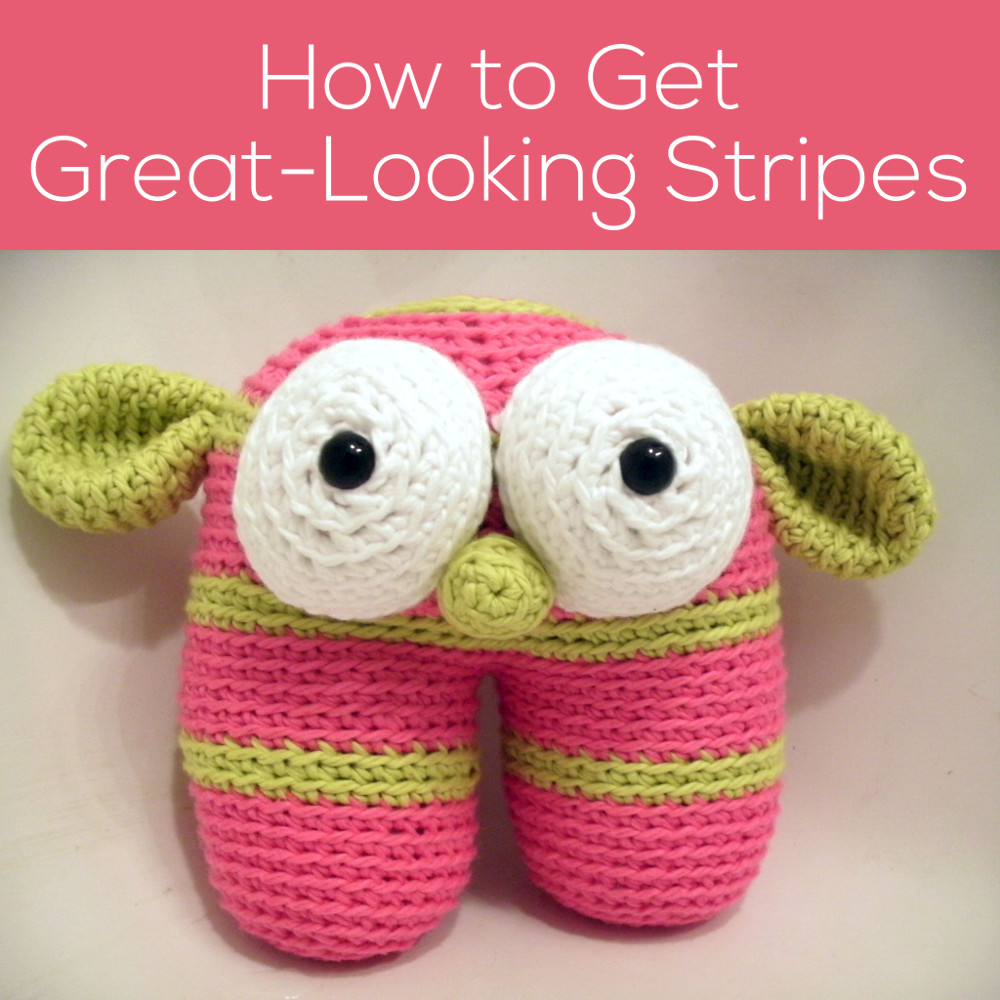
An easy way to insert a little bit of randomness into your stripe pattern is to make one band of color thicker than the second band. This is a simple, 2-color stripe that still has a bit of pizazz! Check out monster’s stripe pattern, below:

This monster is crocheted with a 5 round-thick stripe of pink, and a 2 round-thick stripe of yellow. This is a very simple pattern to follow, but is still a little unexpected!
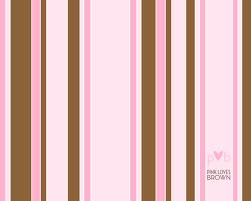
Okay, now let’s move to using stripes with 3 colors effectively. As before, we want to keep a little bit of randomness going… so let’s look at an example where 3 colors were used really well:

This striping pattern uses brown, light pink, and dark pink. There are two things to note: one, all three colors go together well. Even though the brown is a contrasting color, it matches well with the pink. Two, the stripes are not of even thickness. Thick stripes occur with thinner stripes. Try writing out a pattern that uses these principles. For example: 4 rounds brown (medium stripe), 2 rounds light pink (thin stripe), 2 rounds dark pink, 6 rounds light pink (thick stripe), and repeat. It’s not a very long pattern, but will give a look of variety.

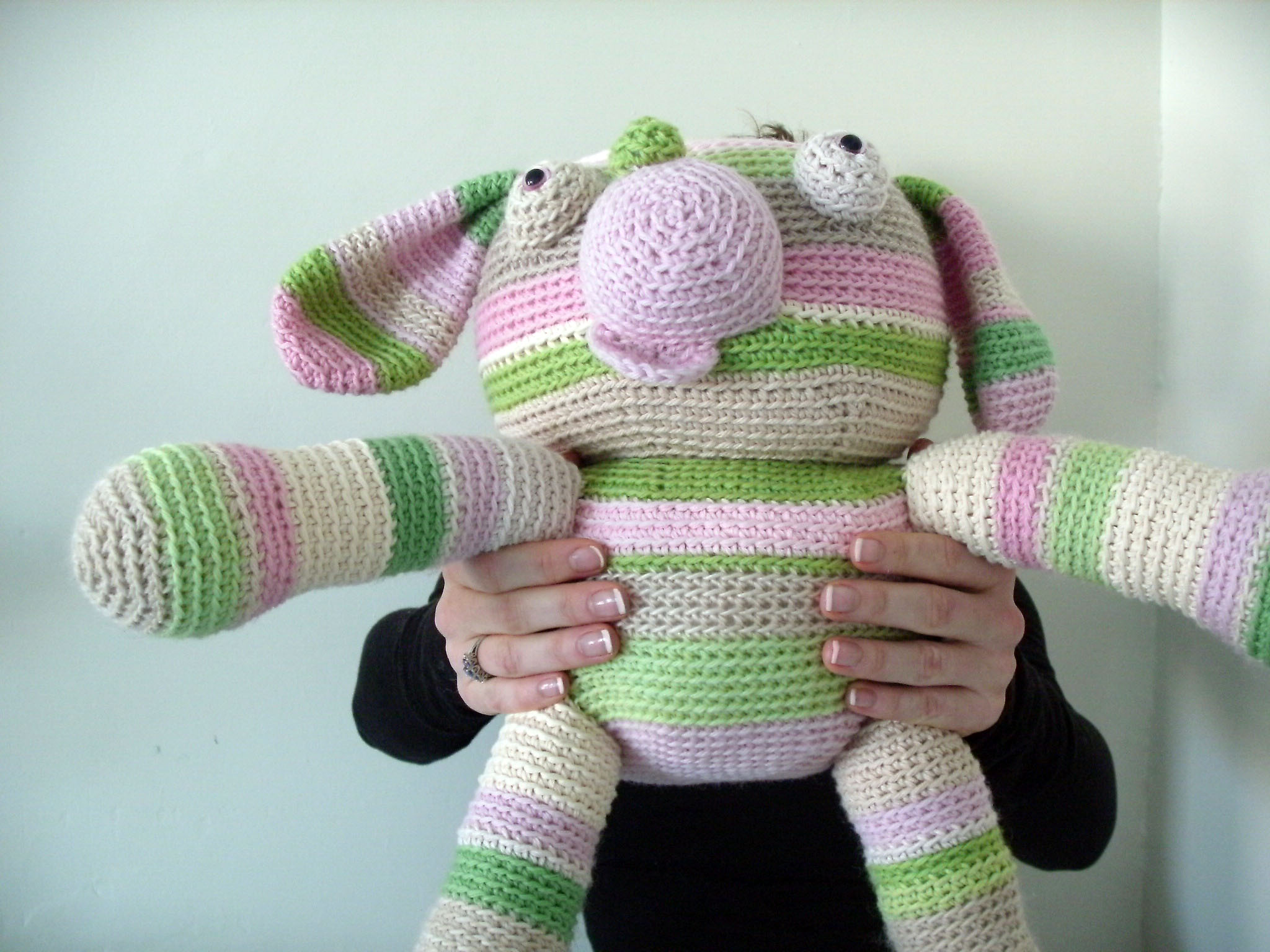
Now, what if you have a lot of yarns in your stash, and want to use up a whole bunch of colors in a striping pattern? The key to doing this effectively is to select three color families. Put each color family in a pile, and stripe according to the 3 color scheme- treating each family as a color. This is the technique I used with my striped pup:

I gathered all of my spare yarn that fit into one of the following color families: cream/white, light-medium green and light to medium pink. Then, I striped: 6 rounds of family one, 4 rounds of family 2, 1 round of family 1, and 3 rounds of family 3. This resulted in the pattern that looks so great on the pup!

I’ve loved this technique so much, that I’m doing a second pup, with three different color families: pinks, burgundy and orange-y/pink. The result (I’ve only finished the pup’s head, so far) is below:

Because all of the colors complement each other, it’s going to turn out fine!

So, next time you’re feeling adventurous, try some stripes… see what great combinations you can come up with!

Ladder Stitch – The Invisible Way to Stitch up Softies

There are two common ways to sew up stuffed animal openings – whipstitch and ladder stitch.

Whipstitch is super easy – it’s what I do with the youngest stitchers, as young as four. Here’s a video showing how to whipstitch.

The drawback is that the stitching is visible.

Ladder stitch is preferable because it’s totally invisible.

It isn’t exactly tricky, but it does require a little more skill with the needle than the whipstitch method. So if you’ve never done much handwork, try the whipstitch a few times – until you get comfortable with it. Then give ladder stitch a try. It really is invisible and once you get the hang of it, it doesn’t take any longer than whipstitching the opening closed.

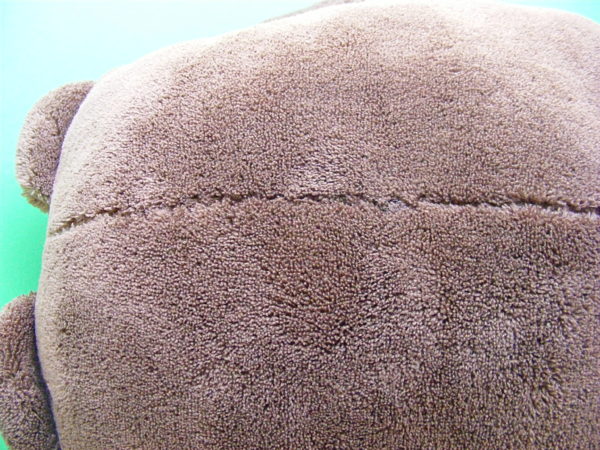
In the top photo (and in the video) you see what ladder stitch looks like when it’s used with woven fabric. Here’s a photo showing how it looks with fleece – which I use for a lot of softies.

the back side of a stuffed animal showing how invisible the ladder stitch is

See? Just about invisible!

Update – There’s an excellent question in the comments about when to iron. I iron after I turn it right side out and poke out the corners – but before I stuff it. It’s really easy to turn those raw edges in and press them nicely while the softie is still flat.

Ladder stitch is perfect for stitching up those stuffing holes. It also works really well for sewing up pillows, patching and mending clothes, sewing in linings, and more. I also use ladder stitch for the hand-sewing step every time I bind a quilt.

Give it a try. 🙂

Happy sewing!

How to Stitch a French Knot – video

Oooh la la! French knots – so very fancy – and so very frustrating. When you don’t know the trick to them, that is.

For years I had a love/hate relationship with them. I loved the effect – there’s nothing quite like it for teeny polkadots and nubbly texture. But I hated their unpredictability. Sometimes they worked, but most of the time they didn’t. Every time I stitched one I held my breath to see if it would hold. If it did, I did a little happy dance. If it didn’t. . . well, let’s just say there was swearing while I picked out the bad stitch and rethreaded my needle.

For a long time I thought it was just a French knot thing. They have a reputation for being tricky. But then one day I had an epiphany. I realized the problem wasn’t the French knot – it was me. I blame it on my inability to read those cryptic stitch diagrams. You know – the ones with NO ACCOMPANYING TEXT to tell you about things to be careful of/look out for. All this time I simply had my needle pointed the wrong way during the thread-wrapping part of the knot. That’s it! Once I figured it out I was set and I haven’t had a failed French knot since.

Right now some of you are probably laughing at me because you’ve been successfully doing French knots since you were a kid. But I guarantee that some of you have a certain light in your eyes and you’re staring at the screen thinking, “Is it really that simple? Is that really what I’ve been doing wrong all this time?” And you’re itching to grab a hoop and see if it really works. I know this because that’s been the response in every class I’ve ever taught. Go grab your hoop, my friends. Watch the video. You’ll see. And you will LOVE French knots. There’s nothing else quite like them.

Want some practice?

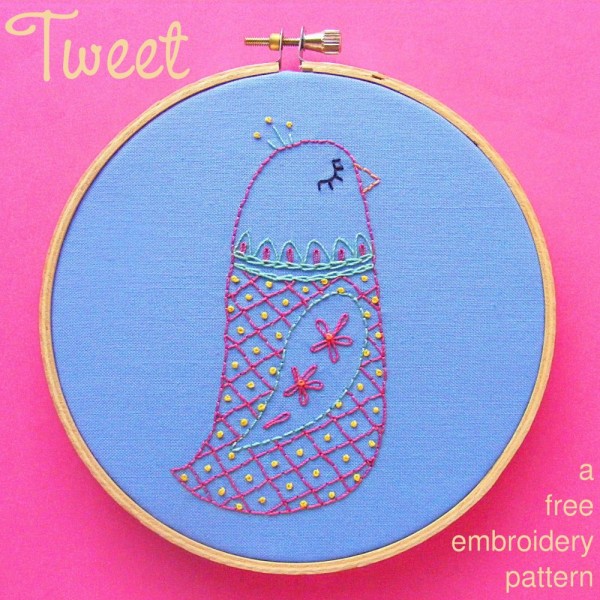
There are a few French knots decorating this pretty bird.

Blue embroidered bird in hoop, playful embroidery design, free pattern for crafting enthusiasts, colorful stitch art, bird embroidery craft, nursery decor embroidery, sewing and embroidery project.

Click here for that free embroidery pattern.

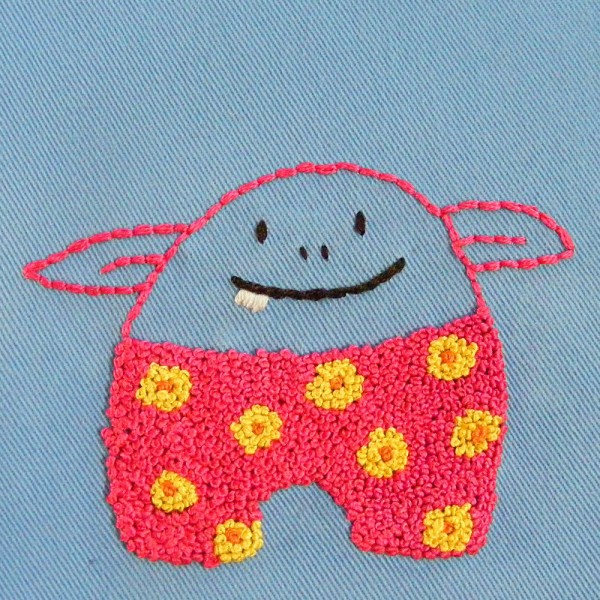
And here’s a totally insane practice project.

Colorful embroidered sheep with floral dress, adorable cartoon design, perfect for children's decor.
Daisy the Misfit

Yep – those flowers pants are all French knots. She’s from the Misfits monster embroidery pattern.

Vibrant handmade crochet toys and patterns from Shiny Happy World.

Here are my lessons for the four most basic embroidery stitches I recommend for beginners.

Return to the Learn to Embroider main Table of Contents.

Move on to the lessons teaching other options for outline stitches.

Vibrant handmade crochet toys and patterns from Shiny Happy World.

Embroidery Tools

One of the great things about embroidery is that you don’t need many tools at all to get started..

Needles, thread, and some fabric and you’re good to go. Here’s a bit more info on each tool.

Needles
Sewing needles are called sharps. Quilting needles are called betweens. Tricky, no?

But embroidery needles are easy. They’re just called embroidery needles and you can find them in any fabric or craft store. They’re sharp and they have a slightly larger eye than a sewing needle – to hold the thicker thread you use for embroidery.

Start off with a pack of assorted sizes and use the smallest needle you can easily thread. You’ll probably find that you gravitate toward mostly stitching with a certain number of strands and so always use the same size needle. That’s the size you’ll end up buying more of later on.

To give you a bit of a guideline about sizes, I use a size 5 needle for four strands of floss, a size 8 needle for 2 strands of floss or Sulky Petites 12-wt. thread.

Read this post for even more info about needles.

Thread
I mostly use your basic 6-strand embroidery thread. There are a few different brands, but they all reference the DMC color numbers and DMC is the brand I usually buy. It’s easy to split strands off to make the thread just the right thickness for the effect you want.

All of my patterns include a complete color and stitch guide – where I also tell you how many strands I used. If you’re doing your own designs just do a little experimenting. I’ll often stitch an inch or so of a design and then decide that my thread is a touch too thick or too thin.

There’s a post here with more info about deciding how many strands of thread to use.

Don’t be afraid to pick out your stitches and start over if you need to. I do it all the time.

Hoop
For most fabrics you’ll want to use a hoop to hold it stretched tight while you stitch. I have several hoops in all different sizes – some are plastic and some are wood – all are fine.

Some people use square “hoops” made of PVC pipe but I find that they don’t hold the fabric as tight as I like. These are called Q-snap frames and I use them for hand quilting.

If the fabric is heavyweight and fairly stiff – like denim or thickish felt – you can probably stitch it without a hoop.

That’s it! You can set yourself up with plenty of embroidery supplies for less than ten bucks.

One thing that’s not necessary but that I won’t stitch without is Sulky Sticky Fabri-Solvy (also sometimes called Stick & Stitch). It’s a fabulous product that’s a rinse away pattern transfer and stabilizer all in one. I love it! It’s great for transferring patterns to difficult fabrics (like dark colors and napped surfaces) and it also does a super job of stabilizing stretchy fabrics – but I use it for everything I stitch. Everything.

If you use Sulky Sticky Fabri-Solvy in a hot or humid climate, you’ll also want to get in inexpensive little tub of Thread Magic. It’s a thread conditioner that completely eliminates the “sticky needle” you can get when you leave your embroidery in a hot car.

Vibrant handmade crochet toys and patterns from Shiny Happy World.

Here are links to all my posts about embroidery tools and supplies.

For Beginners

Specialty Fabrics

Threads

Stabilizers and Pattern Transfer Tools

Return to the Learn to Embroider main Table of Contents.

Move on to the posts about working with patterns.

Vibrant handmade crochet toys and patterns from Shiny Happy World.

How to Stuff a Pillow or Softie – video

How to Stuff a Softie - video

Stuffing a softie is a little more involved than you would think. It often takes me as long to stuff a softie as it took me to sew it! It’s not hard to do it right – it just takes some patience. And a TON of stuffing. Seriously!

The number one problem I see with handmade softies is not enough stuffing. Pack it in there people! And watch this video to see how to get it smooth and even and in all the nooks and crannies.

Happy stuffing!

Best,
Wendi
Colorful embroidered mushroom design on fabric, vibrant and detailed art piece.

How to Stitch a Lazy Daisy – video

How to Stitch a Lazy Daisy - embroidery video

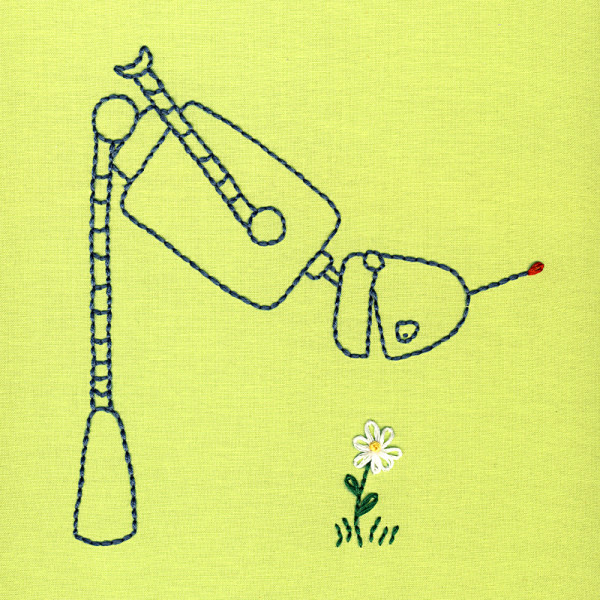
Today I’ll show you how to stitch a lazy daisy – perfect for making teardrop shapes. Of course they make terrific daisies – like in this robot pattern.

Blue embroidered fishing pole with fish, green grass and white flower on lime background.

I also used a single lazy daisy stitch for the glowing red light at the tip of his antenna. 🙂

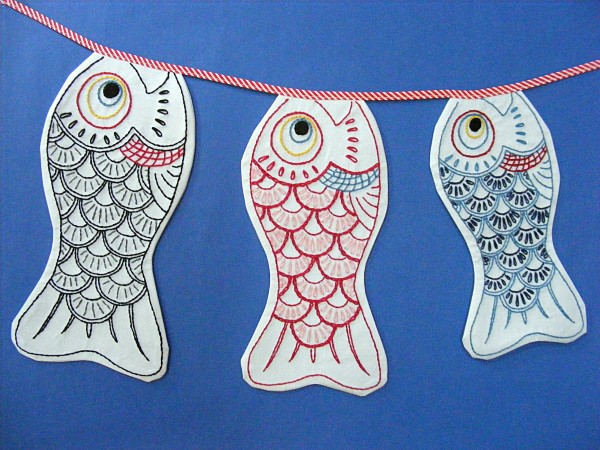
I also used lots of them in the scales and gills of the carp in this koi banner.

Koinobori Carp Banner - embroidery pattern showing traditional Japanese carp flags in three sizes

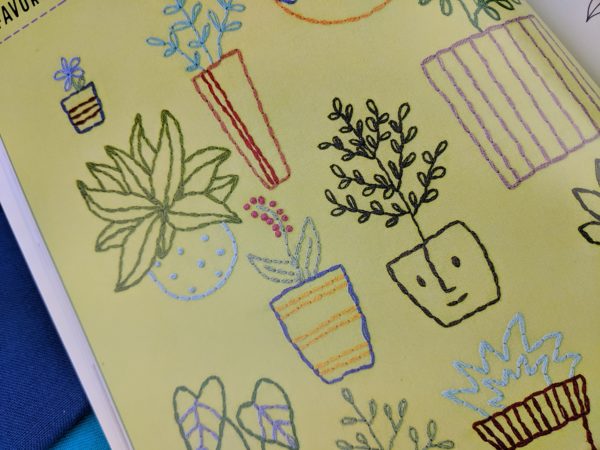
Of course, since they make great leaves I used lots of lazy daisy stitches on the houseplants page of my book How to Embroider Almost Everything.

collection of embroidered houseplants - detail of page from the book How to Embroider Almost Everything

I love that plant in the smiling flowerpot. Alas, I’m only good with embroidered plants. All the real ones in my house die. 🙁

You’ll see lazy daisy is very similar to the chain stitch that works great for lovely textured lines. Lazy daisy is also called detached chain stitch – so that makes perfect sense!

The video has a bonus lesson on how to pull out those pesky loops that sometimes form on the surface of your fabric while you stitch!! I’ve been waiting for that to happen while I was filming and it finally did. 🙂

Want to practice your lazy daisy stitches? This tree pattern has a ton of them!

Firefly Tree embroidery pattern - stitched with lots of lazy daisy stitched and fly stitch for the fireflies

Each leaf is a lazy daisy stitch. Each firefly is a fly stitch. And I stitched both using glow in the dark thread, so the whole tree glows. Fun!

Vibrant handmade crochet toys and patterns from Shiny Happy World.

Here are my lessons for the four most basic embroidery stitches I recommend for beginners.

Return to the Learn to Embroider main Table of Contents.

Move on to the lessons teaching other options for outline stitches.

Vibrant handmade crochet toys and patterns from Shiny Happy World.

How to Chainstitch – embroidery video

how to chain stitch - video tutorial for hand embroidery

This is the last of the outline stitches we’ll be doing for a little while – and it’s definitely the fanciest so far.

Chain stitch is one of my favorite hand embroidery outline stitches, but it’s not the first one I teach.

I generally start with running stitch because that’s the easiest stitch there is. (This video shows how to do running stitch.)

Then I move on to back stitch. That’s the most versatile outline stitch and also really easy. Here’s the video showing how to back stitch.

Then I usually teach split stitch. It’s almost as easy as back stitch, and has a nice texture – almost as nice as chain stitch. Here’s the video showing how to split stitch.

Then I finally teach how to chain stitch. So here’s the video!

I just adore this stitch!

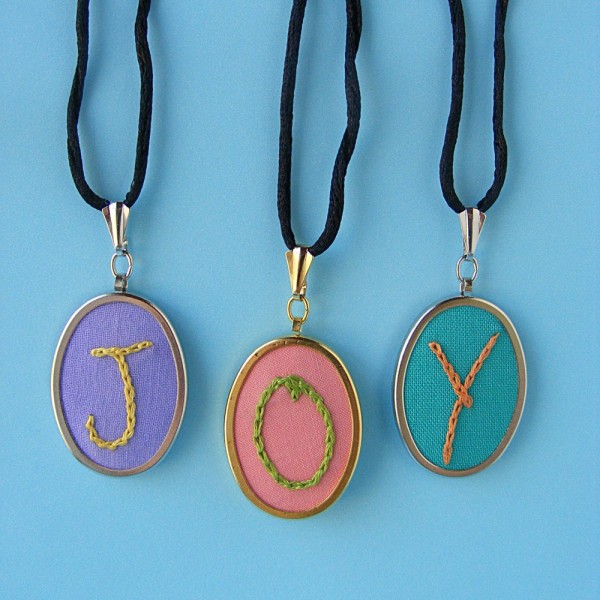
I especially like to use chain stitch for cursive letters – you can see that in this alphabet embroidery pattern.

Three pendants showing the letters JOY - showing how to chain stitch for letters. Uses the Joy ABC embroidery pattern

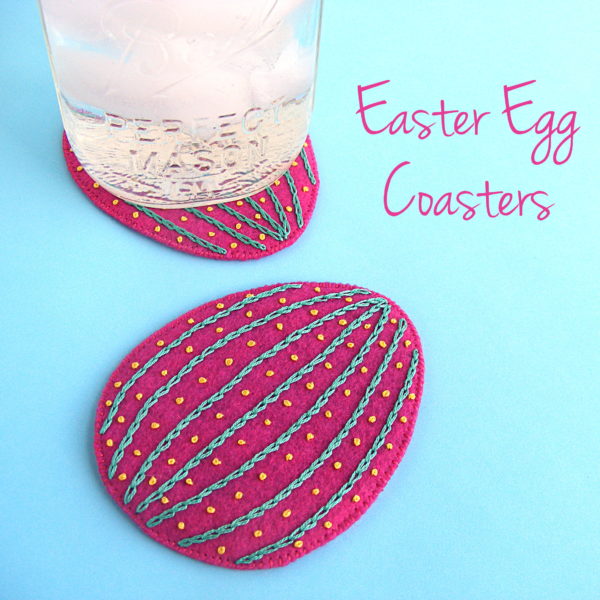
I also like to use it for really lovely decorative lines, like on this felt Easter Egg coaster found in this pattern.

felt Easter egg coasters embroidered with stripes - used as an example of how to chain stitch

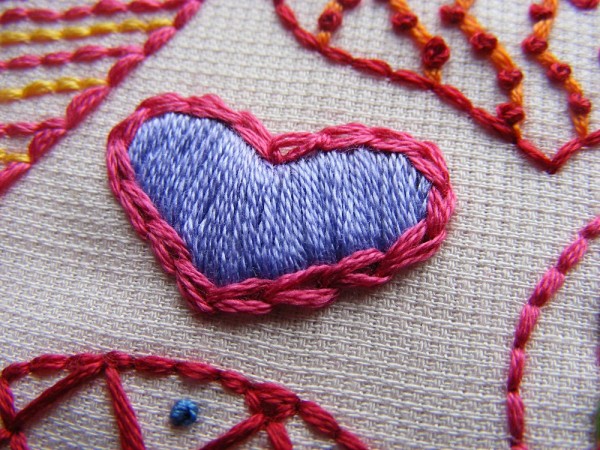
Here’s a super close up showing how I used chain stitch to outline a satin stitched heart from this pattern.

hand embroidered heart showing purple sating stitched heart outlined with chain stitch

Want to fancy it up even more?

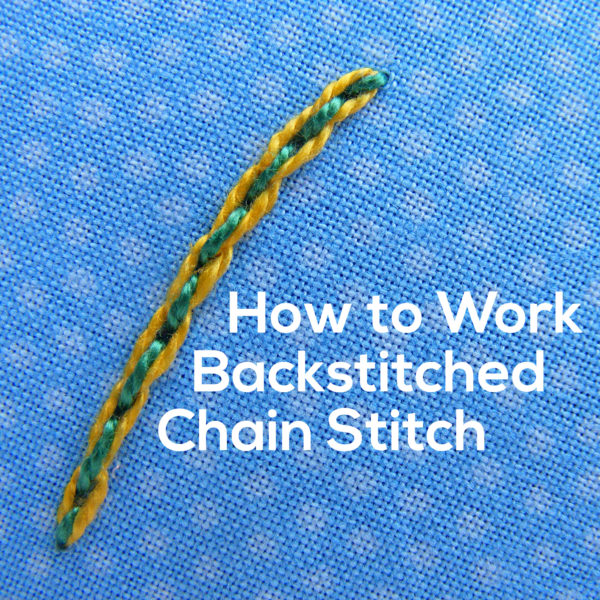
Here’s a stitch called backstitched chain stitch. So very fancy!

Bright blue fabric with embroidered yellow and green chain stitch for sewing tutorials.

There’s a video here showing how to do it.

Vibrant handmade crochet toys and patterns from Shiny Happy World.

Here are all my lessons for outline embroidery stitches.

Return to the Learn to Embroider main Table of Contents.

Move on to the lessons teaching fill stitches.

Vibrant handmade crochet toys and patterns from Shiny Happy World.

Free Pattern – Five Stones Game

Five Stones Game - a free pattern
Way back in the early eighties we played a game called Chinese Jacks.

Everyone had a set of jacks – customized in your favorite colors, of course – and if we had five free minutes we plopped down on the floor wherever we were and played a few rounds.

Chinese Jacks was an American eighties version of a very old game called Five Stones (or Knucklebones, or Jackstones, or a kajillion other variations). You can find some “official” rules here, and I like this video for showing it in action.

Part of the fun of Chinese Jacks was making your own set of jacks, in your own favorite color combinations. Five Stones is also a game where you can (and should) make your own set. It’s easy and pretty fast and uses just scraps.

What you’ll need

  • 5 scraps of fabric – each at least 2 1/4 x 4 inches
  • small amount of rice, plastic beads, or other small filler
  • sewing machine
  • thread
  • basic sewing tools
  • about an hour

Difficulty

Very easy – great for beginners of all ages.

Step 1

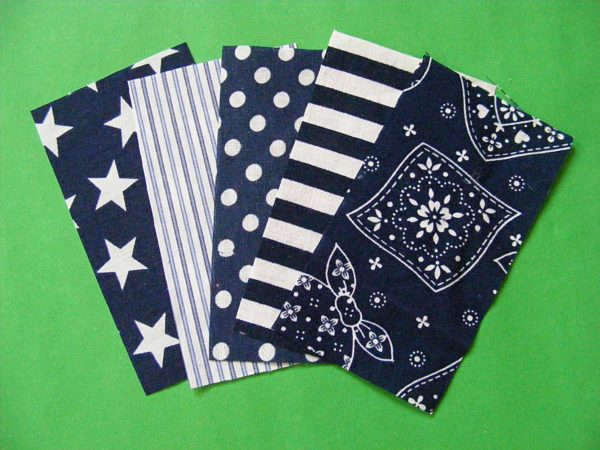
Iron your fabric so it’s nice and smooth. Cut 5 rectangles – each 2 1/4 x 4 inches.

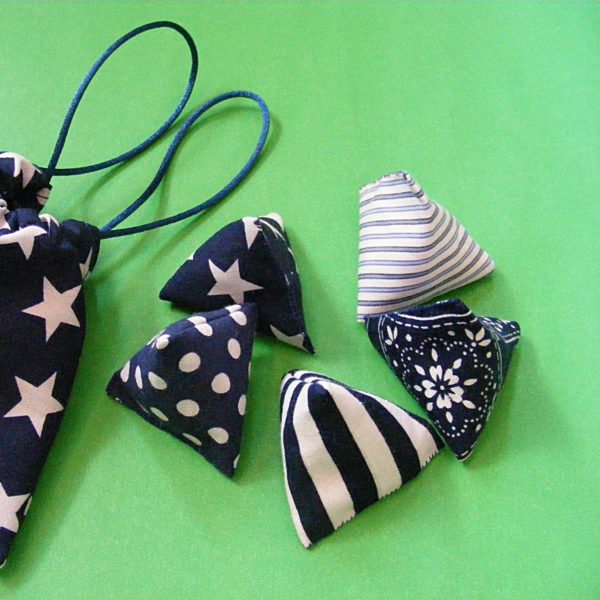
Blue bandanas with white stars, stripes, polka dots, and floral patterns.

Step 2

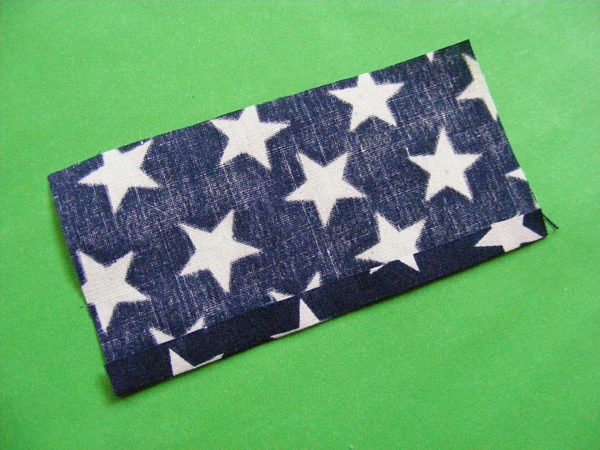
Choose one rectangle to start with. Turn ONE long edge under 1/4 inch.

Stars pattern fabric headband, patriotic American style, Handmade hair accessory, Shiny Happy World craft material, Blue and white star design.

Press to set the fold, then open it back up. You won’t be stitching this down yet, but the piece is so small that it will be almost impossible to measure and press this fold after you sew so we’re doing it now.

Step 3

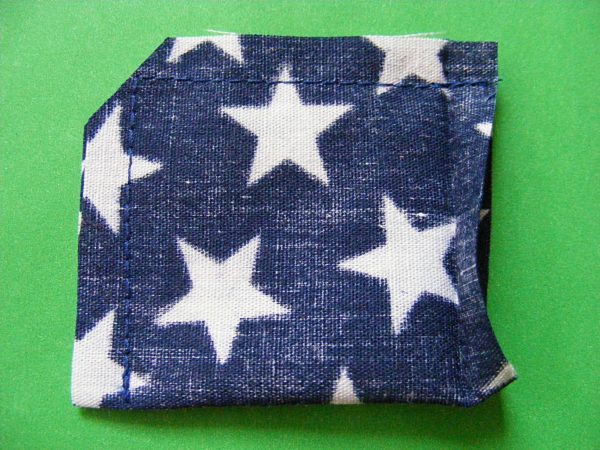
Fold the rectangle in half (with right sides together) so that it’s almost a square.

Using 1/4 inch seam allowance, stitch two of the open sides of the square. Remember to backstitch at the beginning and end of your stitching.

Stars patterned fabric in navy and white on a sewing project.

Clip the corner close to – but not into – your stitching.

Step 4

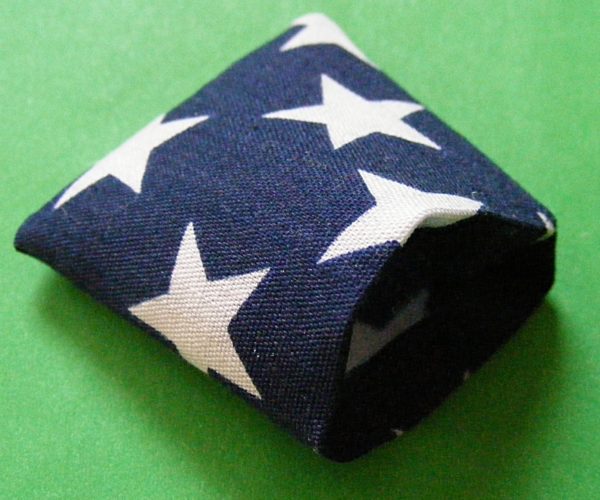
You should have a little pouch. Turn it right side out and turn under the fold that you pressed in place in step 2.

Star patterned fabric keychain, patriotic blue and white stars, American flag inspired accessory.

Step 5

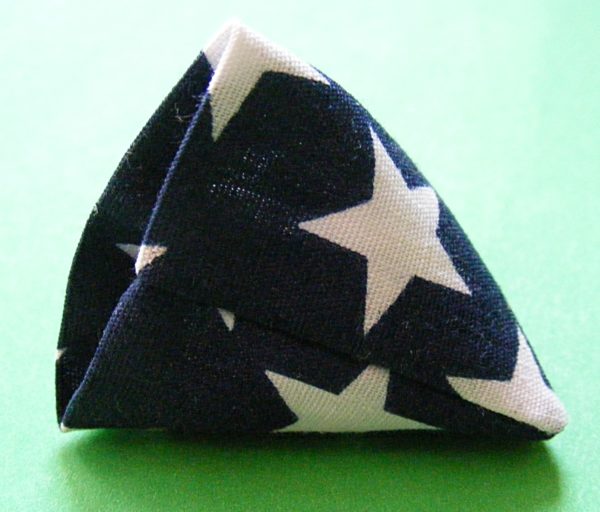
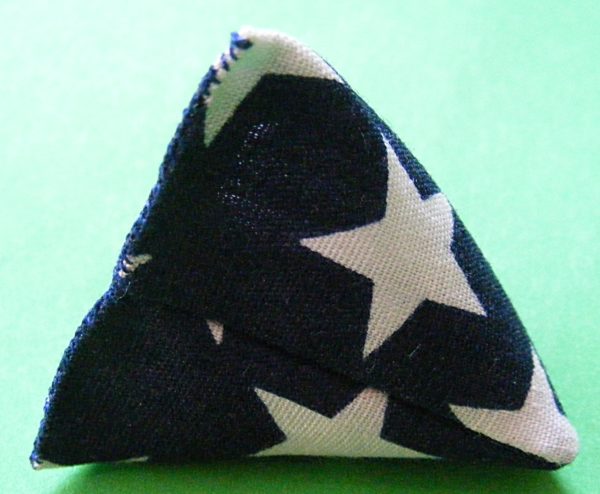
Now here’s the trickiest part – and it’s really not tricky at all – just very clever. Refold the opening so that the seam is running up the center instead of along one of the sides. It should reshape the flat pouch into a teeny little pyramid.

Star-spangled fabric pyramid, patriotic handmade fabric decorative toy, patriotic home decor, American flag themed craft.

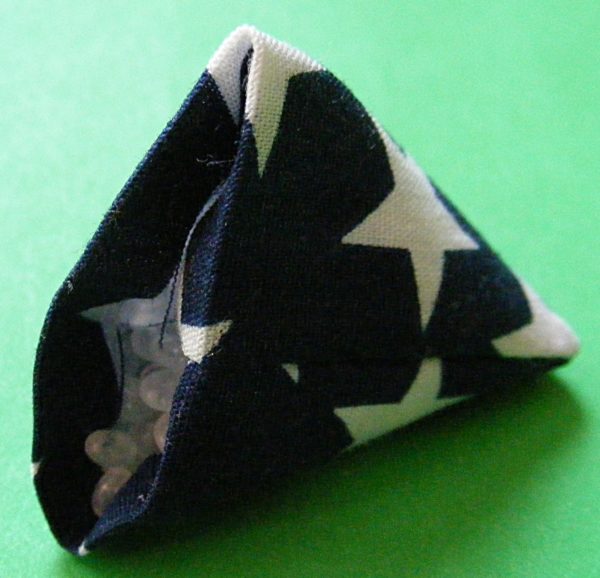
Fill the bag with 2 teaspoons of filler. For this project I used little plastic pellets because I KNOW they’ll get played with (and forgotten) outside. Rice or lentils would be nice, but they will clump and mold if the game gets wet.

Black and white star-themed fabric pouch with visible candies inside, on a bright green background.

Two teaspoons will fill it loosely – and that’s exactly what you want. Tossing and grabbing is easier when the “stones” have some give to them.

Step 6

Now stitch up that nice folded edge using a whip stitch or ladder stitch. Use small stitches spaced pretty close together so the filling doesn’t come out through the spaces.

Star-patterned fabric triangular pillow, black, white, soft textile, cozy decorative cushion.

Step 7

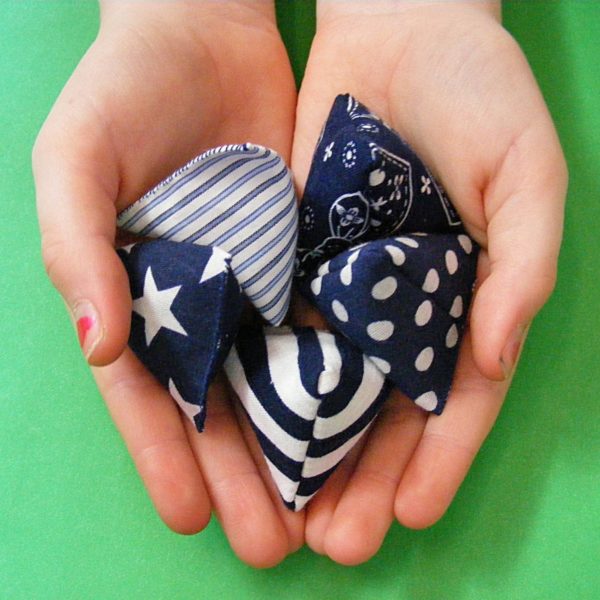
Done! Now repeat all the steps with the rest of the rectangles. You should end up with 5 squishy little pyramids. You’re ready to play!

You can find the rules a lot of places online but I like this video. Actually seeing the play makes it easier to understand.

It takes practice to get really good! Have fun!
Best,
Wendi

Applique Wendi (with fabulous hat)