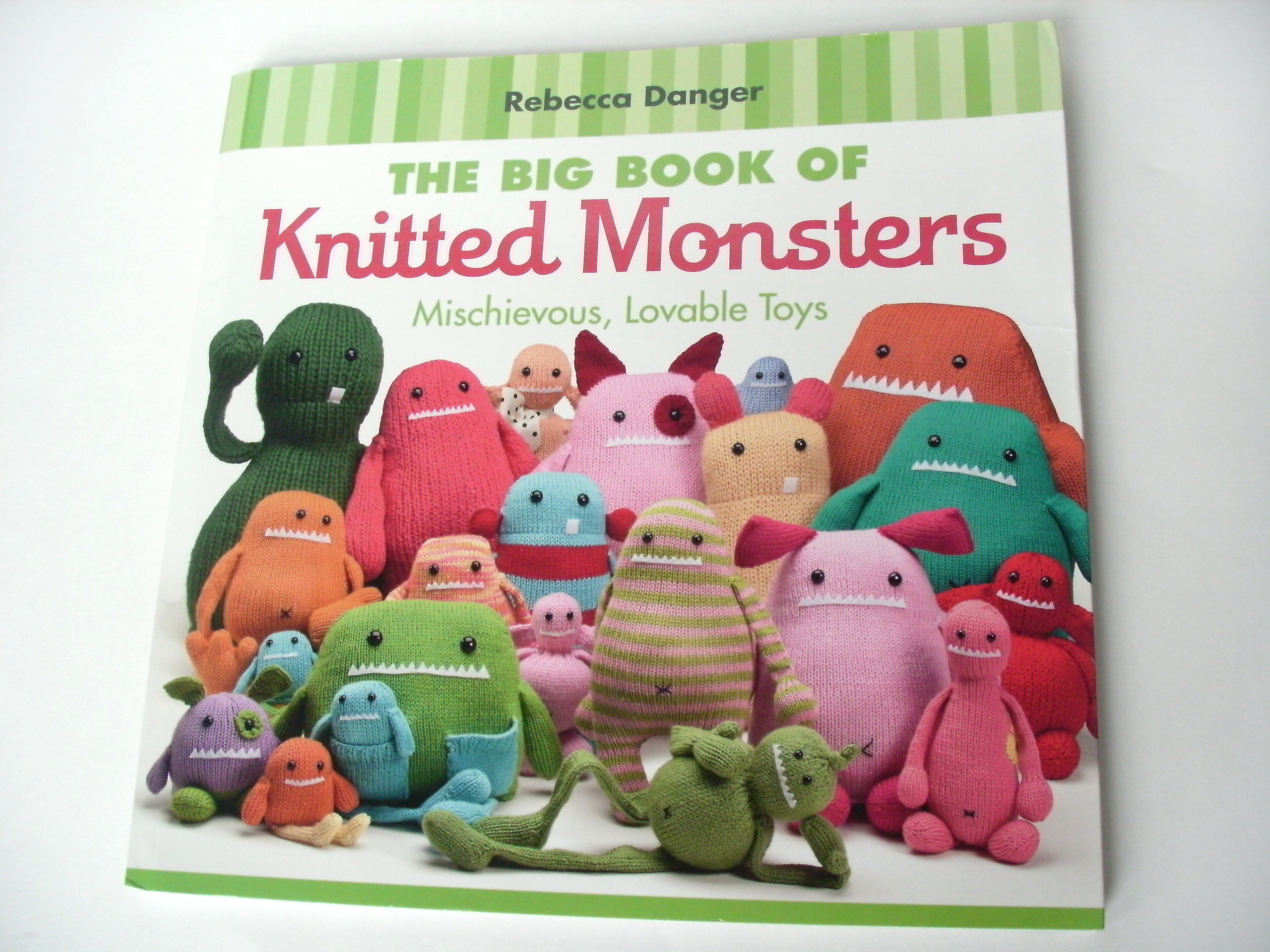
Review of The Big Book of Knitted Monsters by Rebecca Danger

Love knitting cute monsters? Rebecca Danger’s Big Book of Knitted Monsters has been on the wish-list of every monster-knitter I know! And for good reason: it’s packed full of adorable monster patterns. This book isn’t for every knitter out there, so you’ll want to skip down to reading my review to see if it’s for you. But first, I want to show off the cutie I knitted from the book!

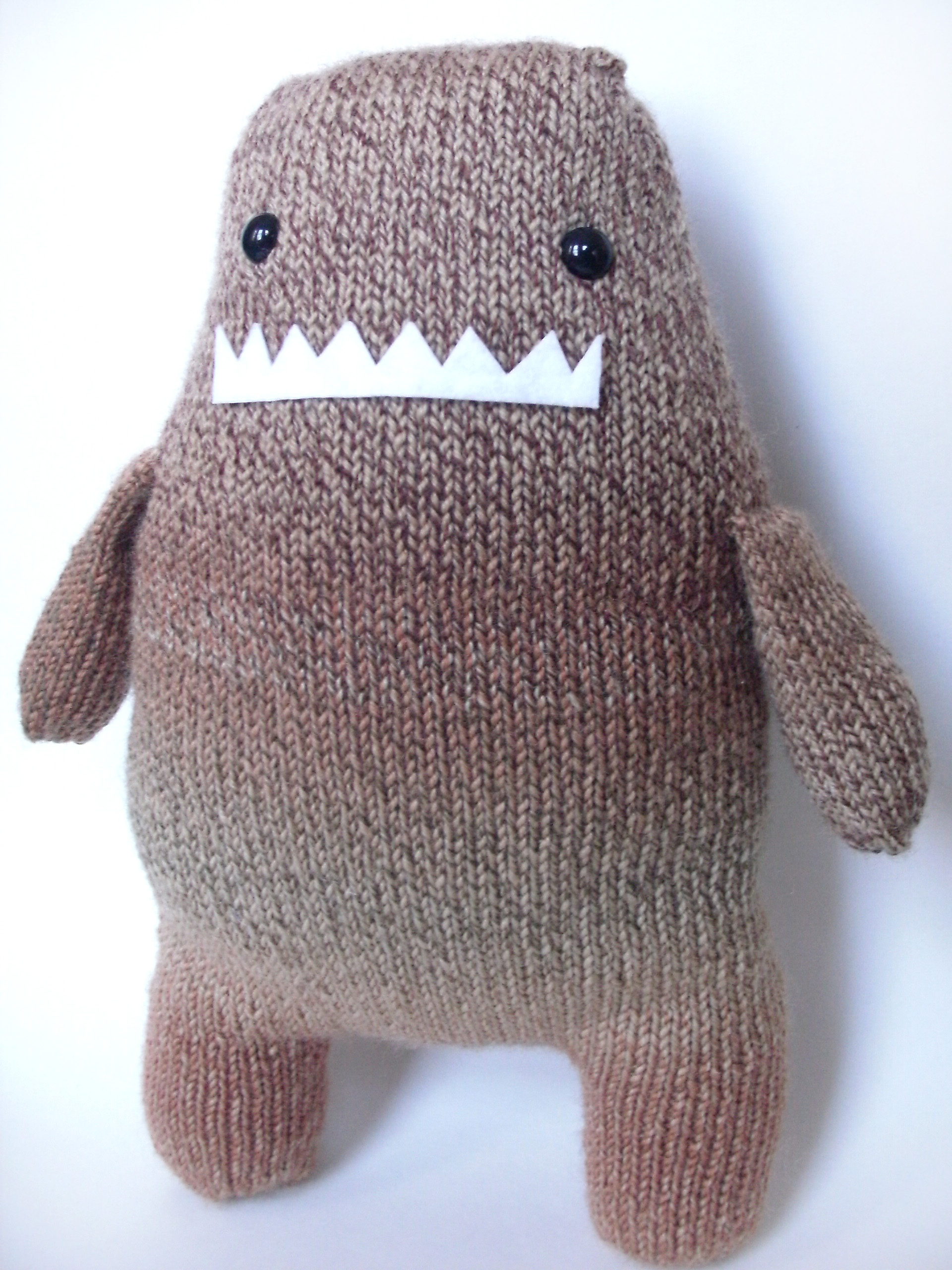
Hugo the Couch Monster

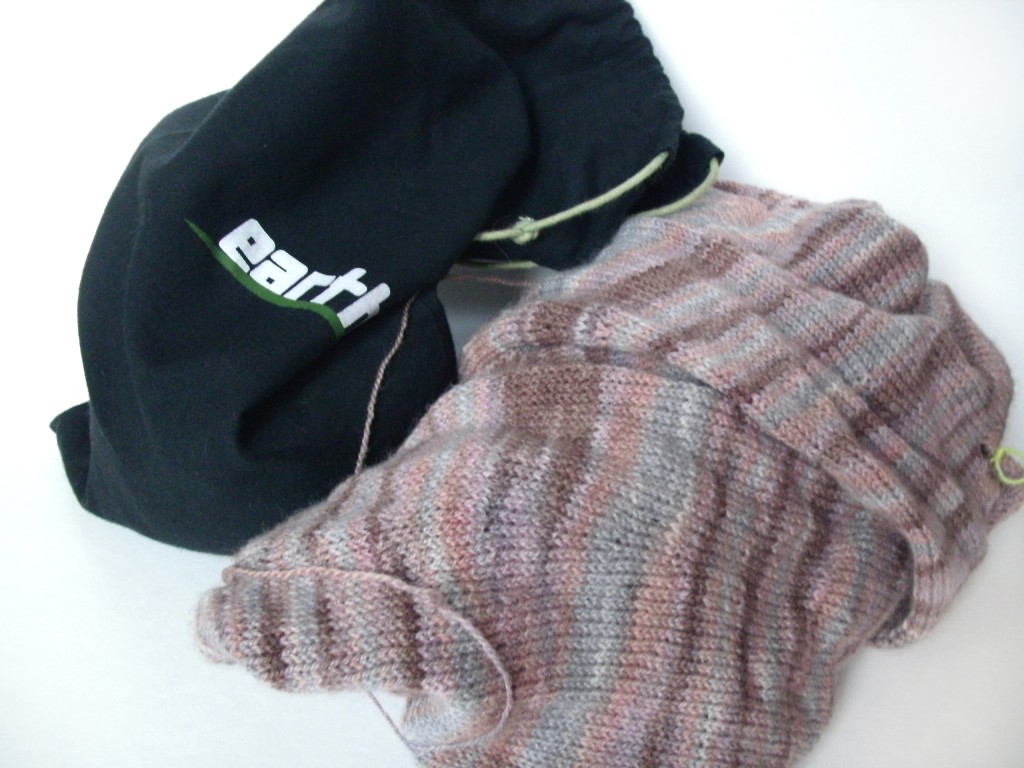
I couldn’t wait to break into the book and make a monster of my own! I chose Hugo the Couch Monster… he’s a real cutie! Since all of the patterns in the book are ‘any size, any yarn’ patterns… I was pleased to use up some of my stash! Hooray!

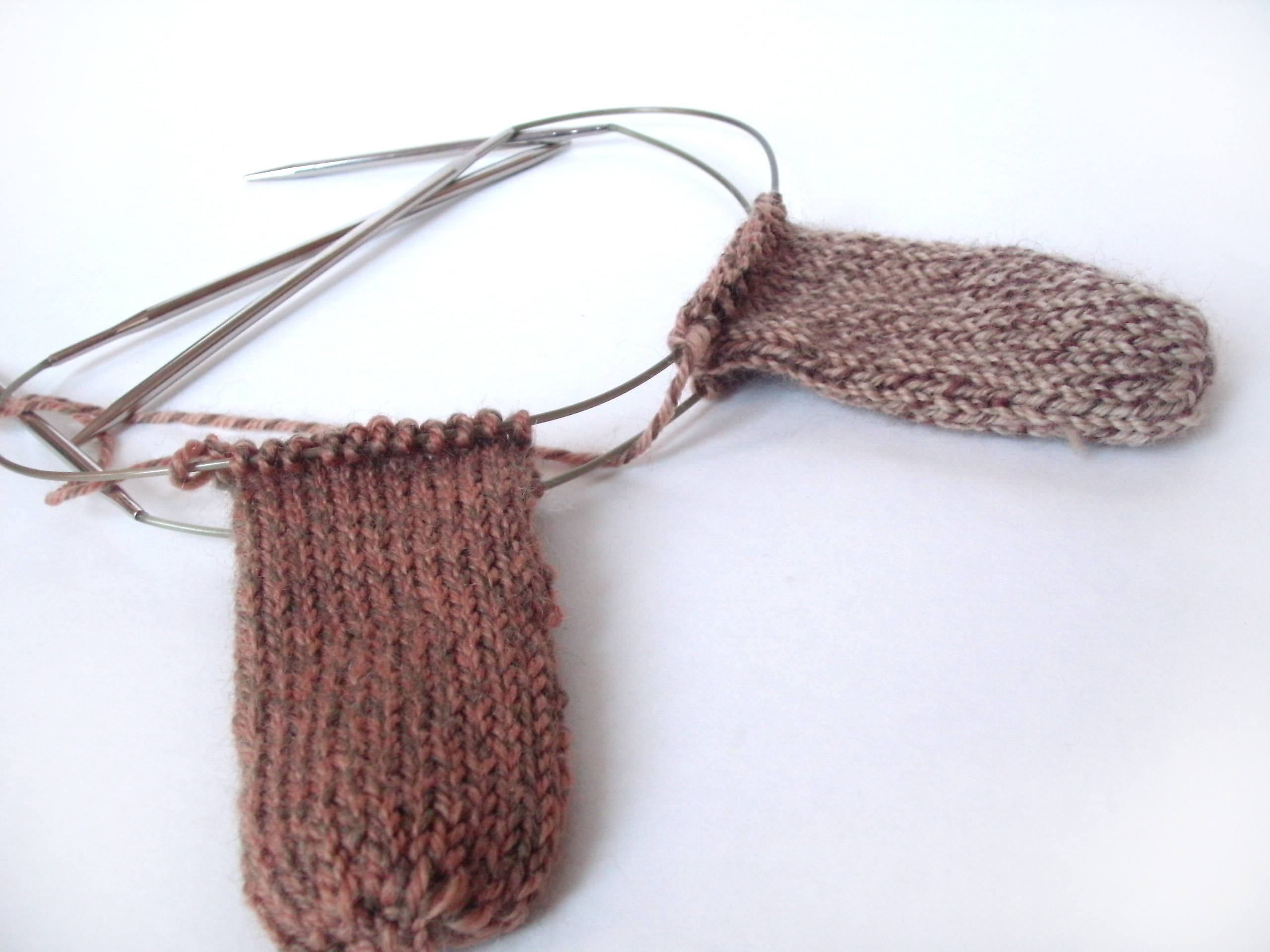
The book recommends using magic loop, but I’m a two-circulars sort-of-girl, and that technique worked out just fine!

And I’m very happy with my resulting cutie!

What do you think?

The Review

If you’re familiar with Rebecca Danger and her adorable monster patterns, then you know what this book is about! Big Book of Knitted Monsters contains 20 patterns for cuddly monsters that you can customize to be any size you’d like.

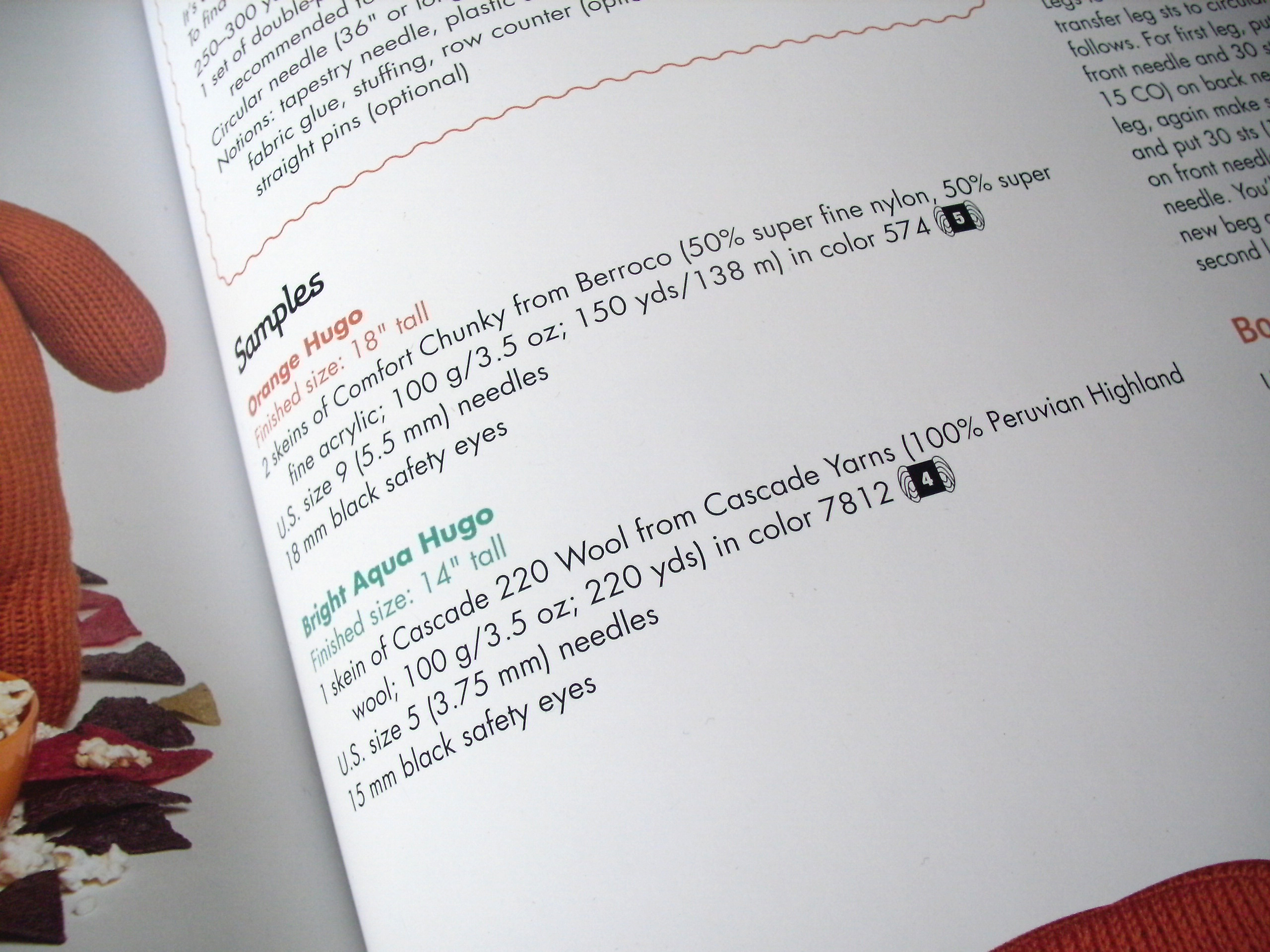
Besides the cuteness of the monsters, one of the big strengths of this book is the variety of yarns that are used to make the samples. Rebecca says in the introduction that the monsters can be knitted with any thickness yarn (and the appropriate sized needle), and she demonstrates the flexibility of her patterns throughout the book. Every monster in the book is knitted in at least two yarns: often a bulky yarn and a worsted weight yarn. It’s really great that you’re able to see how the pattern works up in different yarn choices… gets your creativity flowing!

One of the weaknesses of this book is the lack of detailed introductory and finishing information. I know why there isn’t: Martingale (the publisher) imposes an 80 page limit on its books. So of course, if you have a book with 20 different patterns, there isn’t much room for details. There are very helpful photographs sprinkled throughout the book, which I appreciate… but there are a few spots where you’re left to fill in the gaps. You’ll be instructed to ‘sew the arms on using a whipstitch’, but the exact positioning of the arms is up to you to sort out from the photograph (or maybe, your own creativity!).

Pros

  • The writing in the book is whimsical, playful and enjoyable to read.
  • The monsters are adorable.
  • Each pattern can be knitted in a variety of yarn thicknesses and colorways, so there’s lots of options!
  • Tricky knitting techniques are demonstrated through photographs: which are much clearer than an illustration.
  • If you can knit on double points (or two circulars, or magic loop), you can do almost any of the patterns in this book. Most of the monsters are fairly simple to knit.

Cons

  • The introduction is sparse. It contains information about how to do the magic loop technique, but you’ll need to look at an outside resource if you need help with other knitting techniques.
  • Other reviews I’ve read have been disappointed in the similarity between the various monsters in the book. I, personally, am not too bothered by this… they’re knitted in Rebecca’s signature style, and each one demonstrates a different shape/feature. However, each monster has a glued-on mouth, and I would have liked to have seen one that doesn’t- since glued-on mouths aren’t safe for small children to play with. She mentions in the introduction that the monster would be just as cute with an embroidered mouth, but we don’t ever see one knitted up.

So, if you like monsters and are comfortable with basic knitting techniques (or, at least, feel confident looking for outside help if you need it), then this book is for you! Happy monster knitting!

Swell Stockings – FREE Pattern!

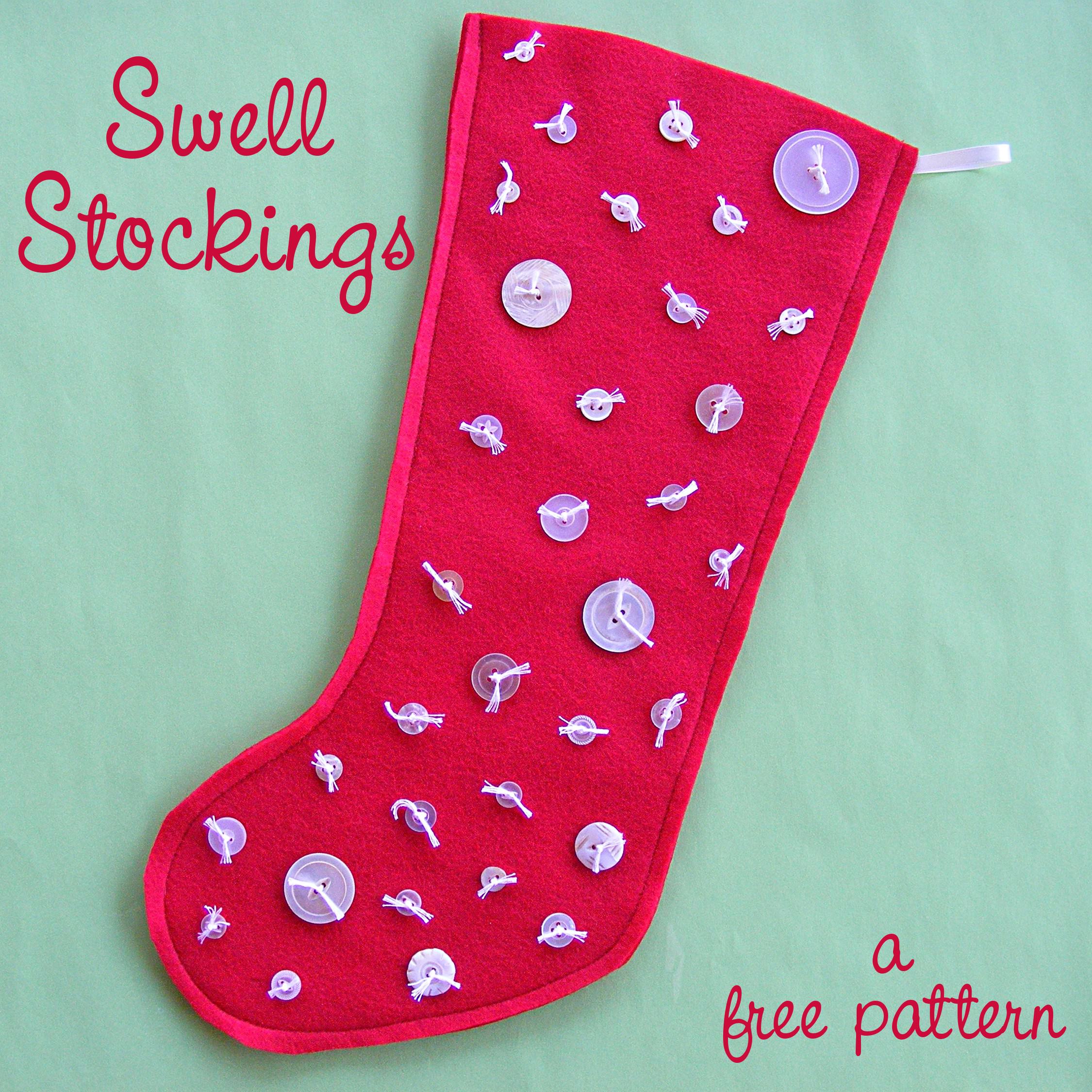
Planning to make any holiday stockings this year? Here’s an easy peasy pattern – and it’s free! Click here to download.

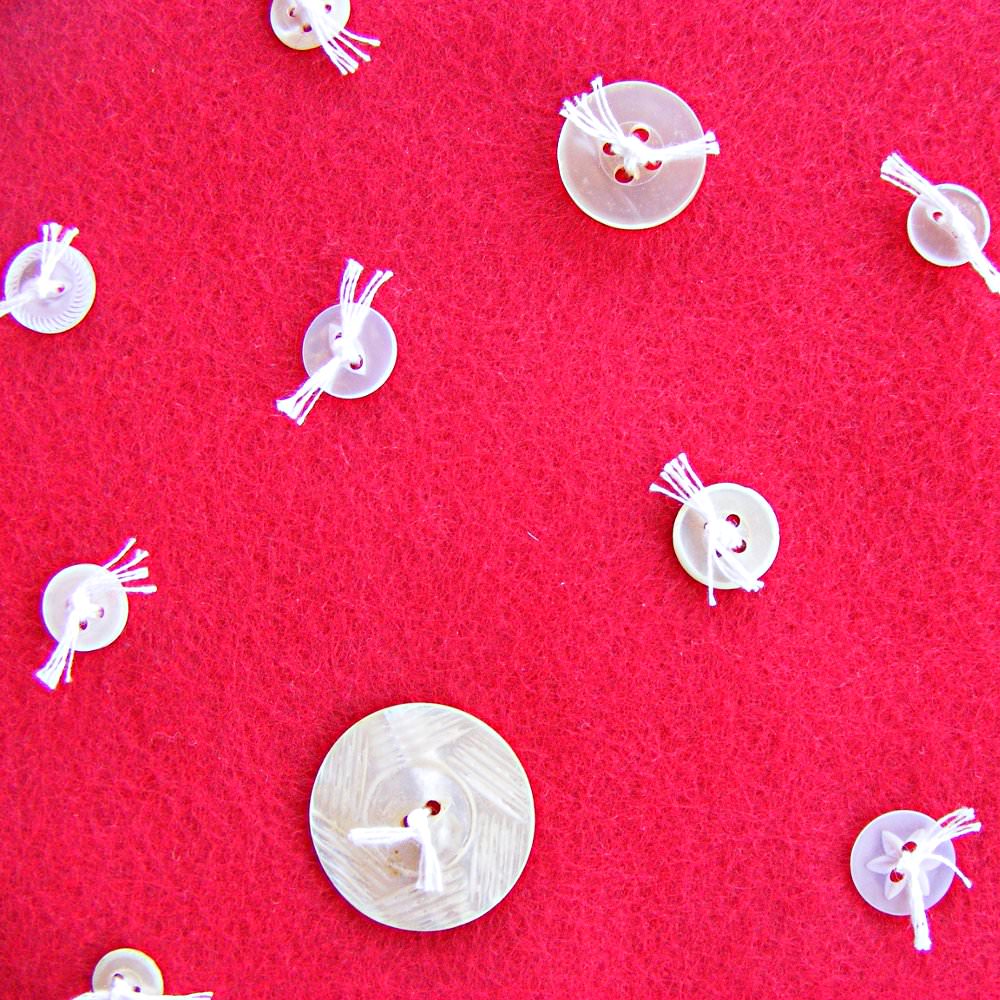
The pattern is for a basic stocking made from felt and takes less than an hour to make. But (of course) you’ll want to fancy it up a bit. 🙂 The one on the pattern cover just has a bunch of inexpensive pearly buttons stitched on it – with the thread tails visible.

White buttons with decorative tassels on bright pink felt background.

See?

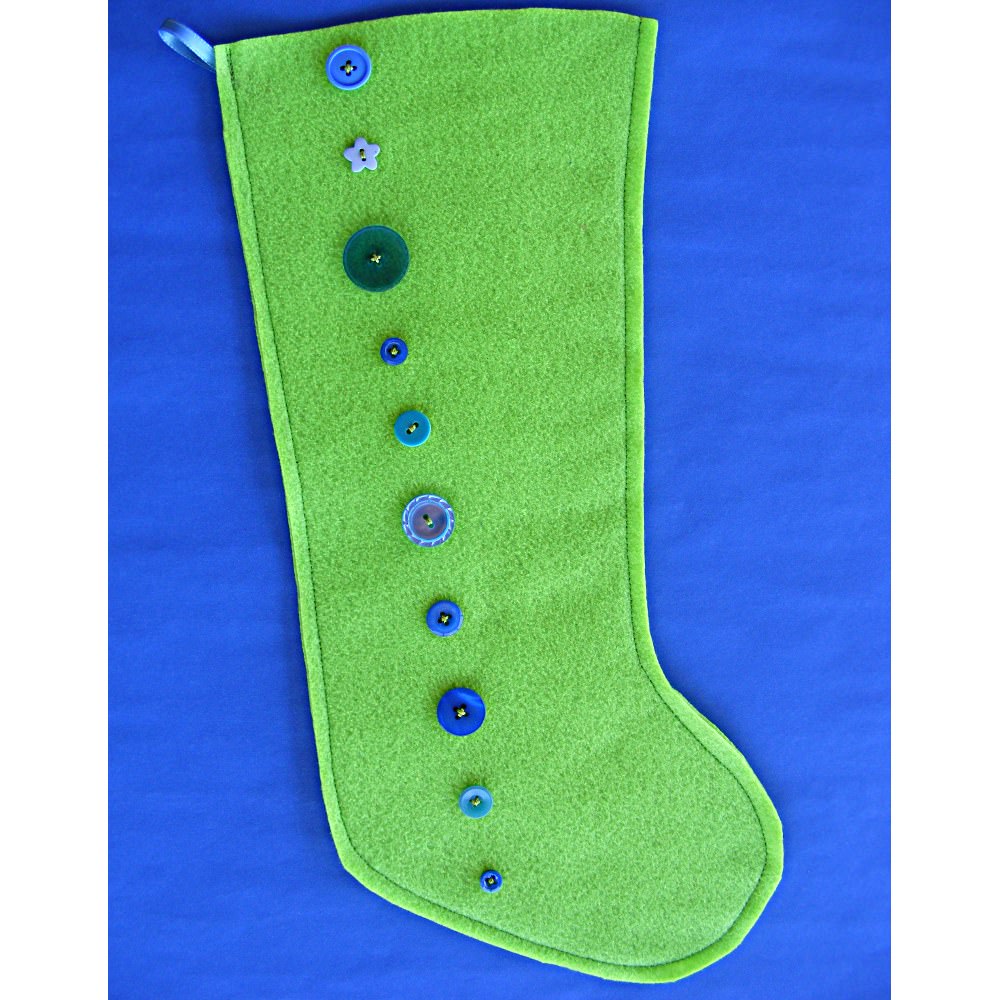
Colorful felt Christmas stocking decorated with various blue buttons and flower embellishments.

Or use just a handful of buttons in a vertical stripe.

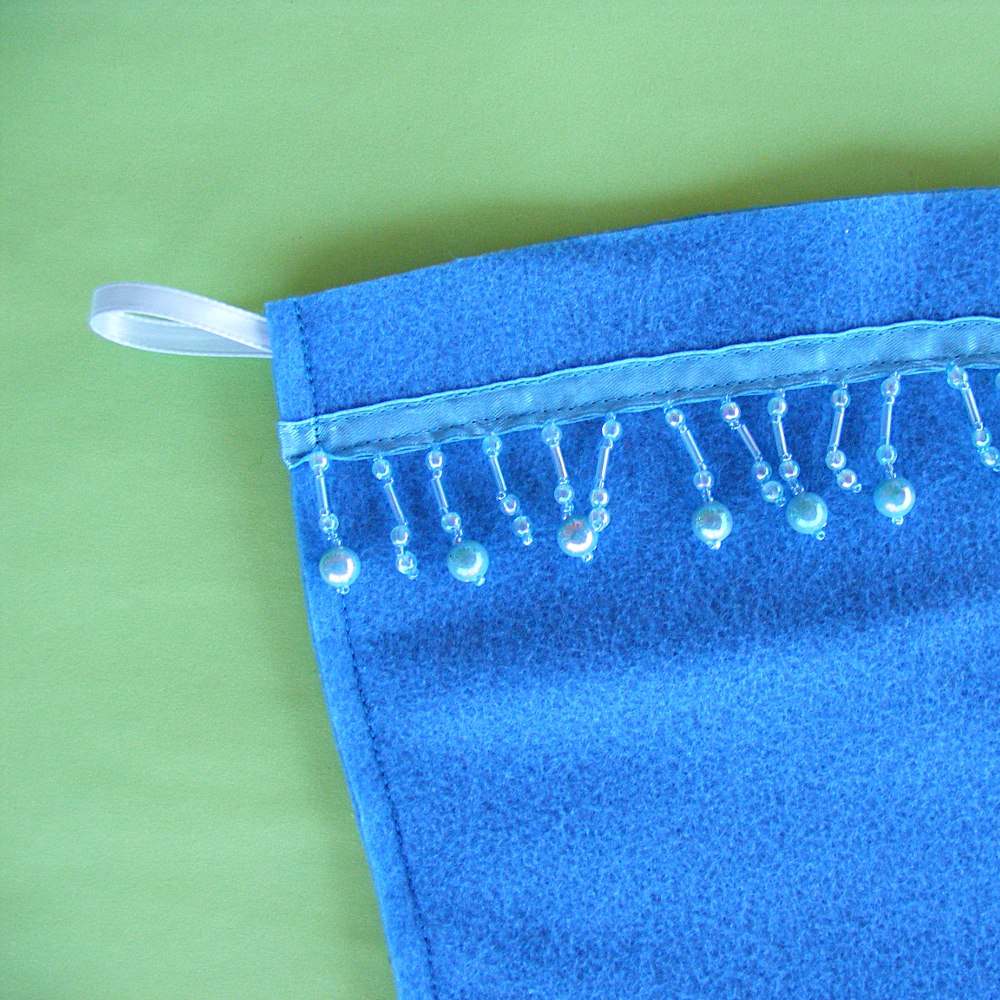
Bright blue felt bag with pearl bead embellishments and a satin loop handle.

Beads are always nice – and beaded trim is super easy. You’ll still finish this one in under an hour.

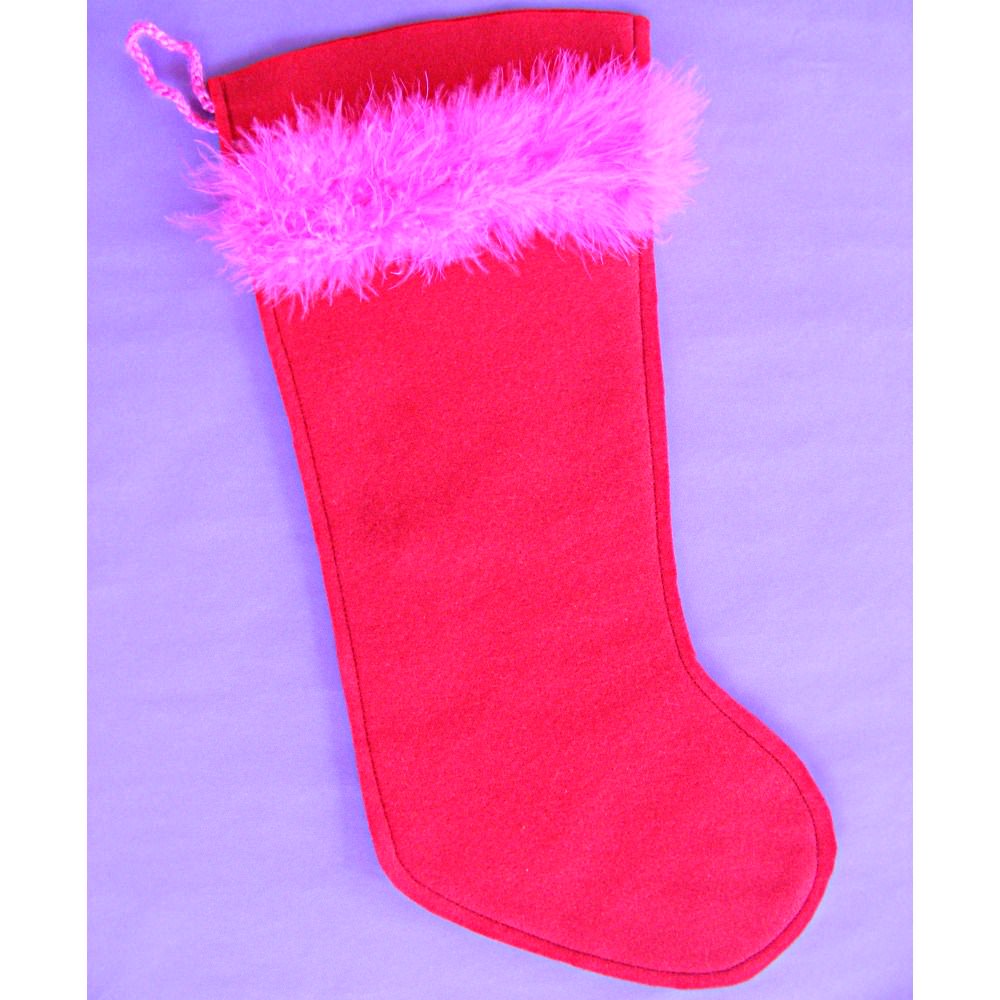
Red Christmas stocking with pink feather trim, festive holiday decor.

This one has a strip of feather boa across the top. Ooh la la!

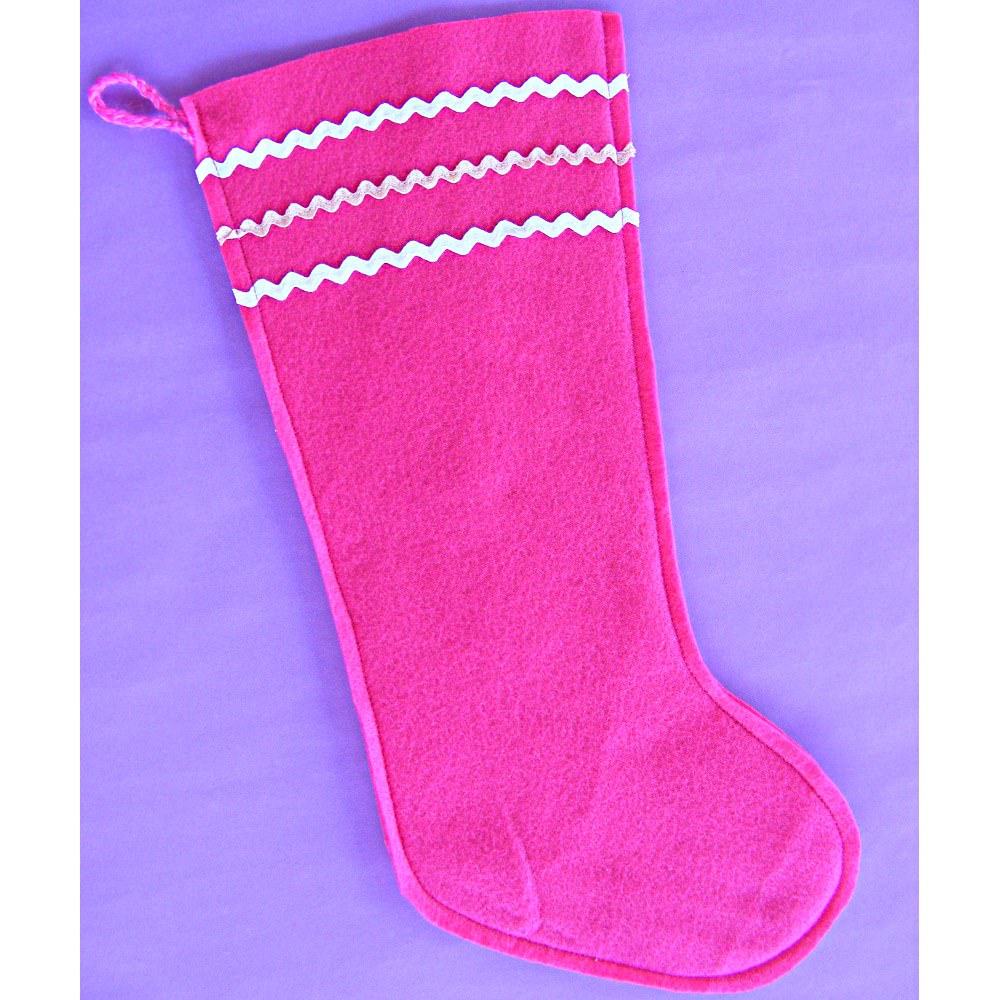
Pink felt Christmas stocking with white wavy trim, perfect for holiday decor and DIY craft projects.

How about some rickrack? A couple of bands across the top are nice. . .

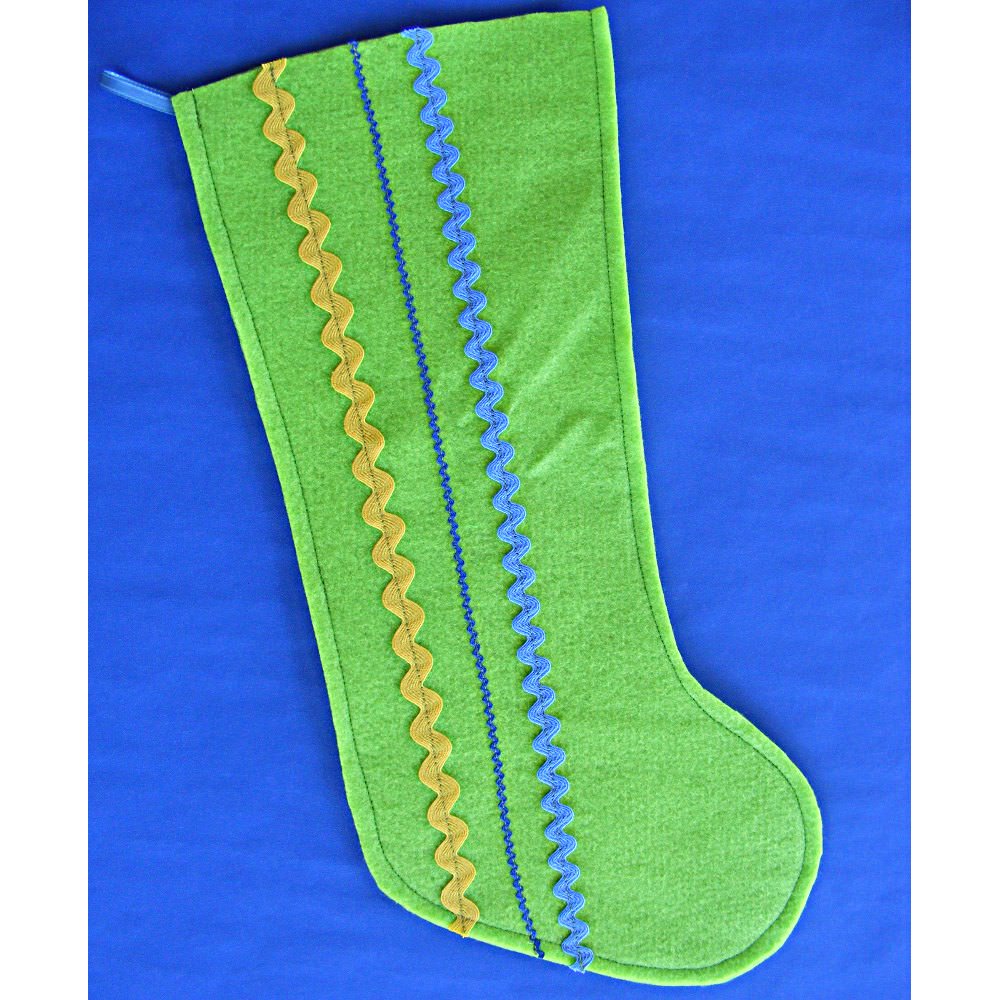
Bright green felt Christmas stocking with colorful rickrack trim for holiday craft projects.

But vertical stripes are good too.

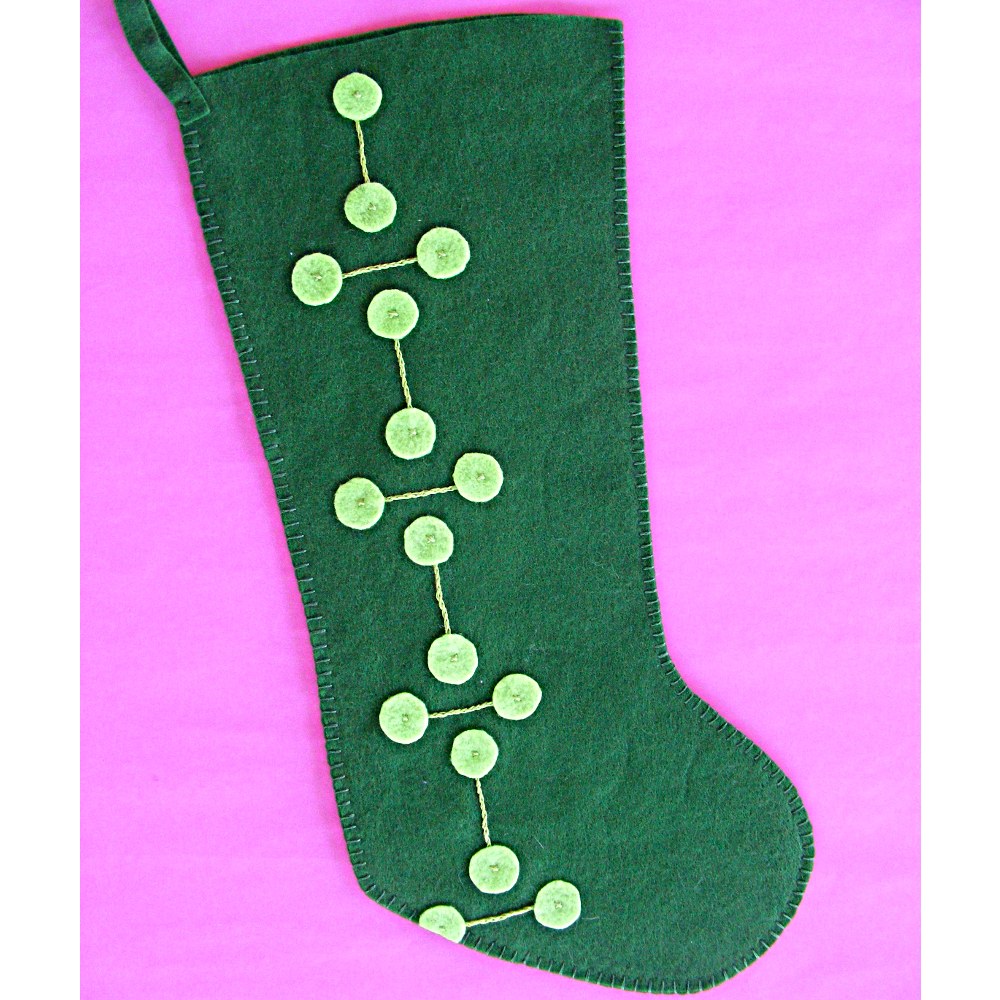
Green felt Christmas sock decorated with pom-pom garland.

For this one I cut some dots out of felt (traced around a quarter for the size) and then laid them out and embroidered lines between them.

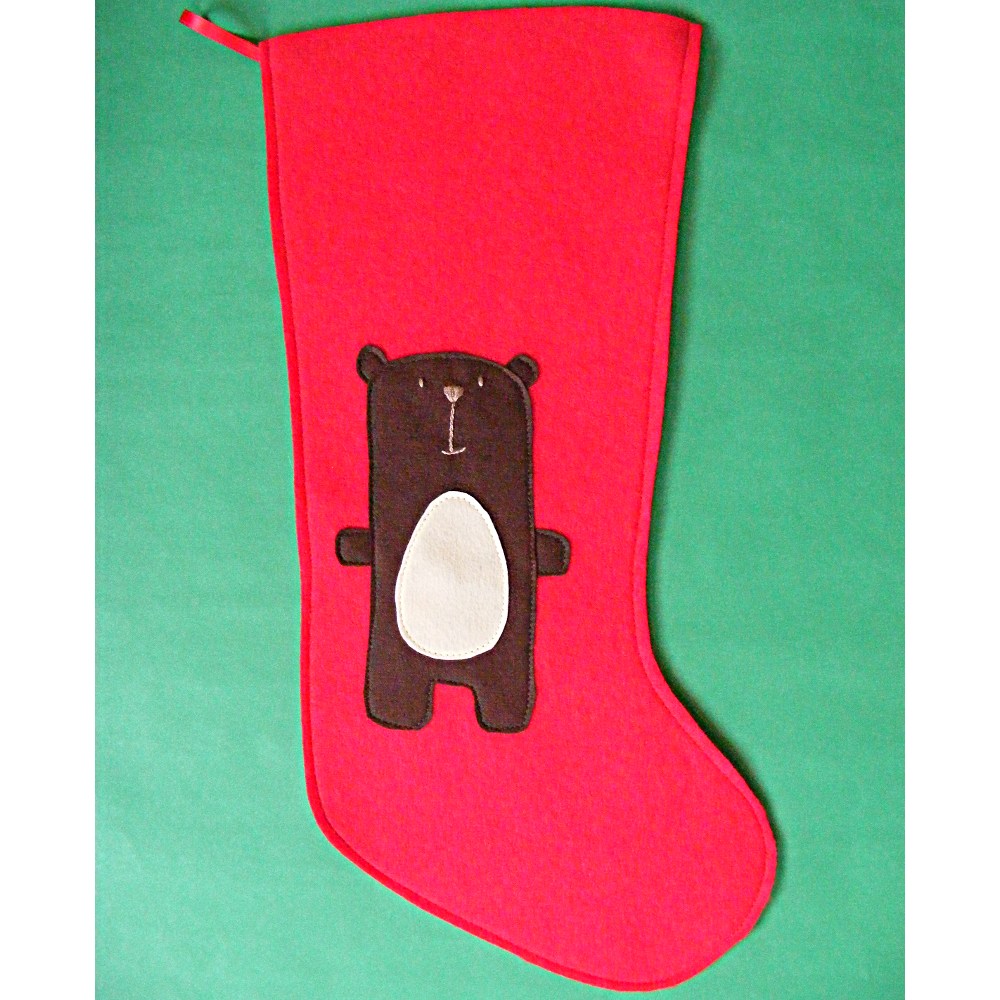
And here’s one with fancier applique (but still easy). You could do the same thing, using one of my appliqued animals quilt block patterns. How about embroidering on a stocking? One of the puppies or kitties would be really cute! So would one of the Rainbow Girls! Or one of the birds from the Bird Sampler! And did you know you can turn any embroidery pattern into an applique pattern?

The finished stocking is just a smidge over 17″ tall – a good basic size.

So there you have it – a bunch of swell stockings! Download the pattern and make one this year.

Get a free felt ornament pattern here.

See some fun ways to use the ornament and stockings together here.

Happy sewing!

Best,
Wendi
Applique Wendi (with fabulous hat)

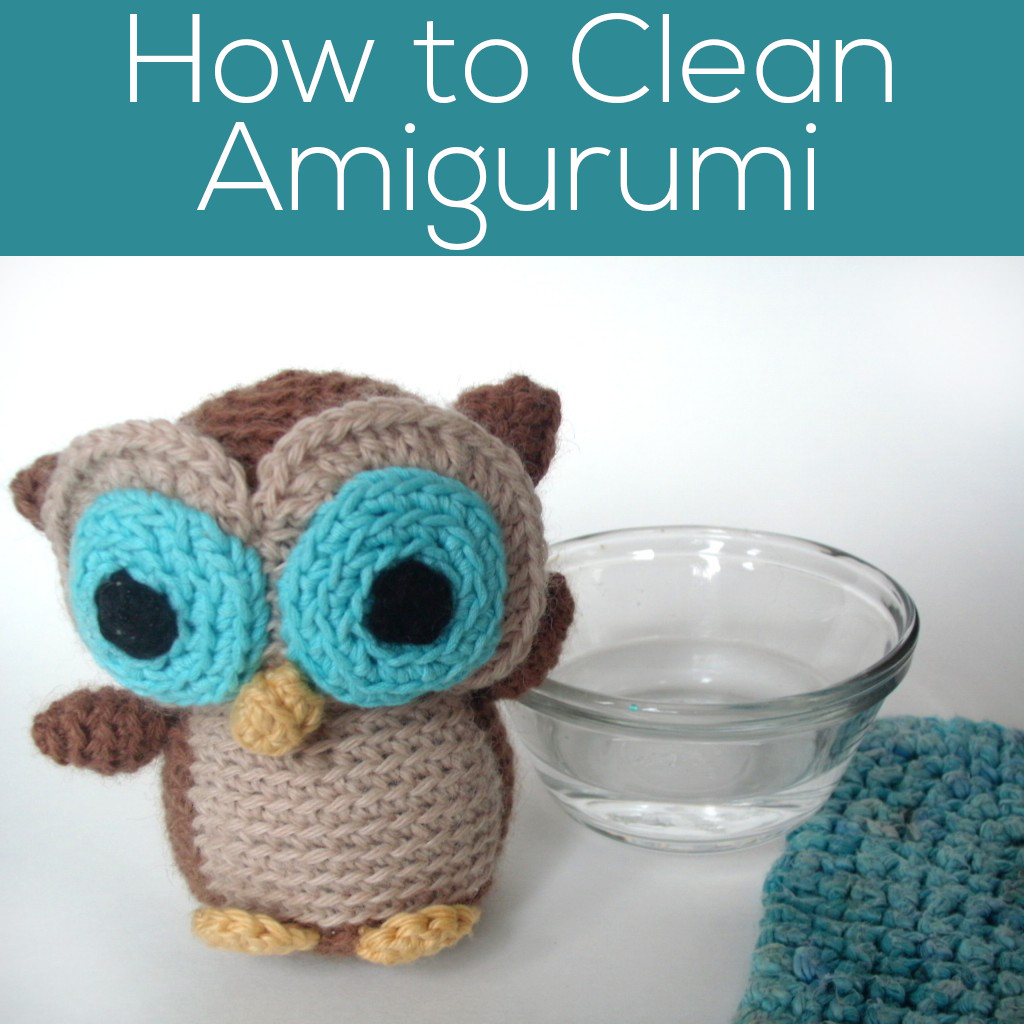
How to Clean Amigurumi

Happy Tip Tuesday! I get asked pretty often, ‘how do you wash your amigurumi, especially if you use non-machine washable yarn?’ Well, that’s today’s topic!

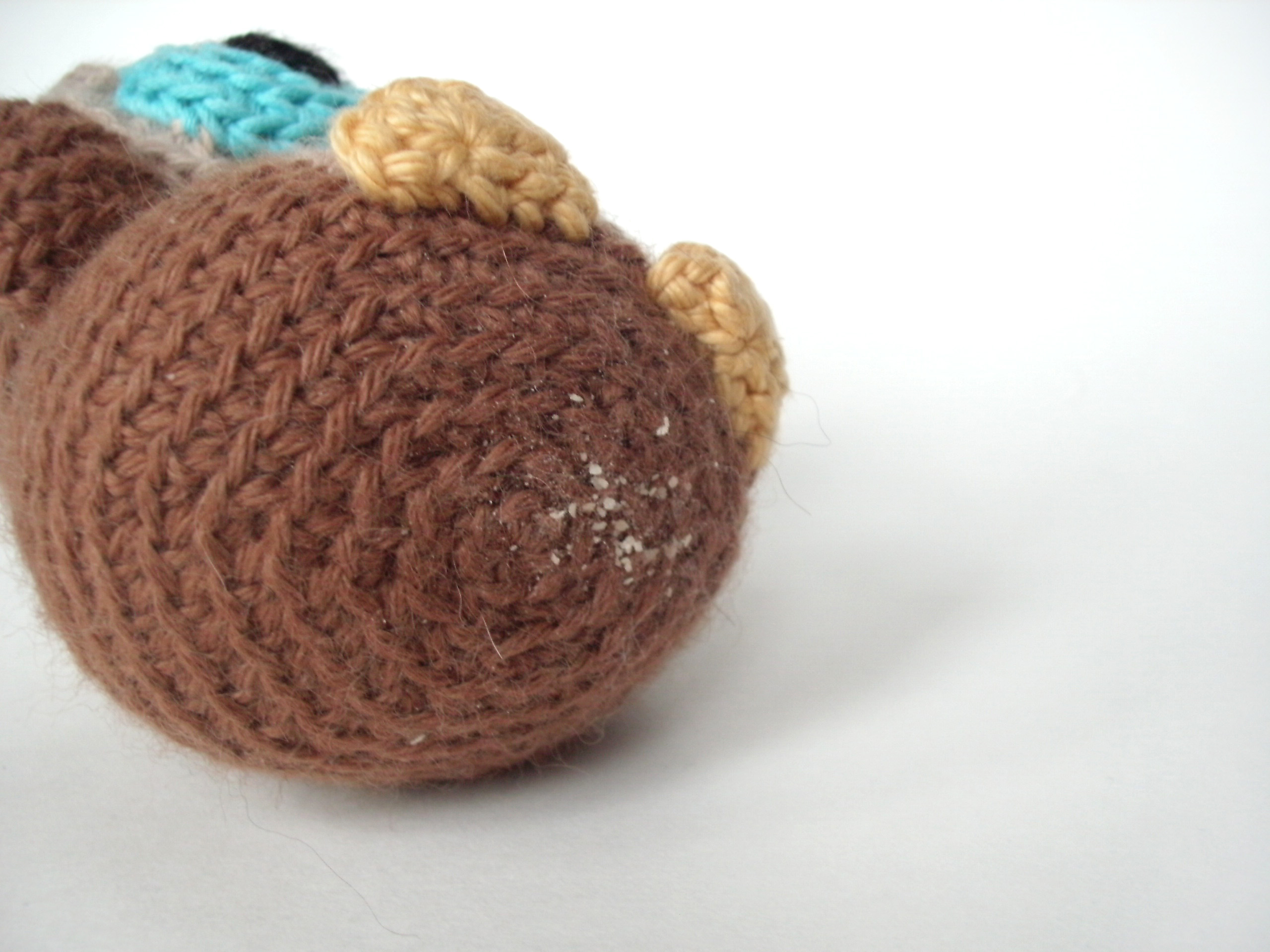
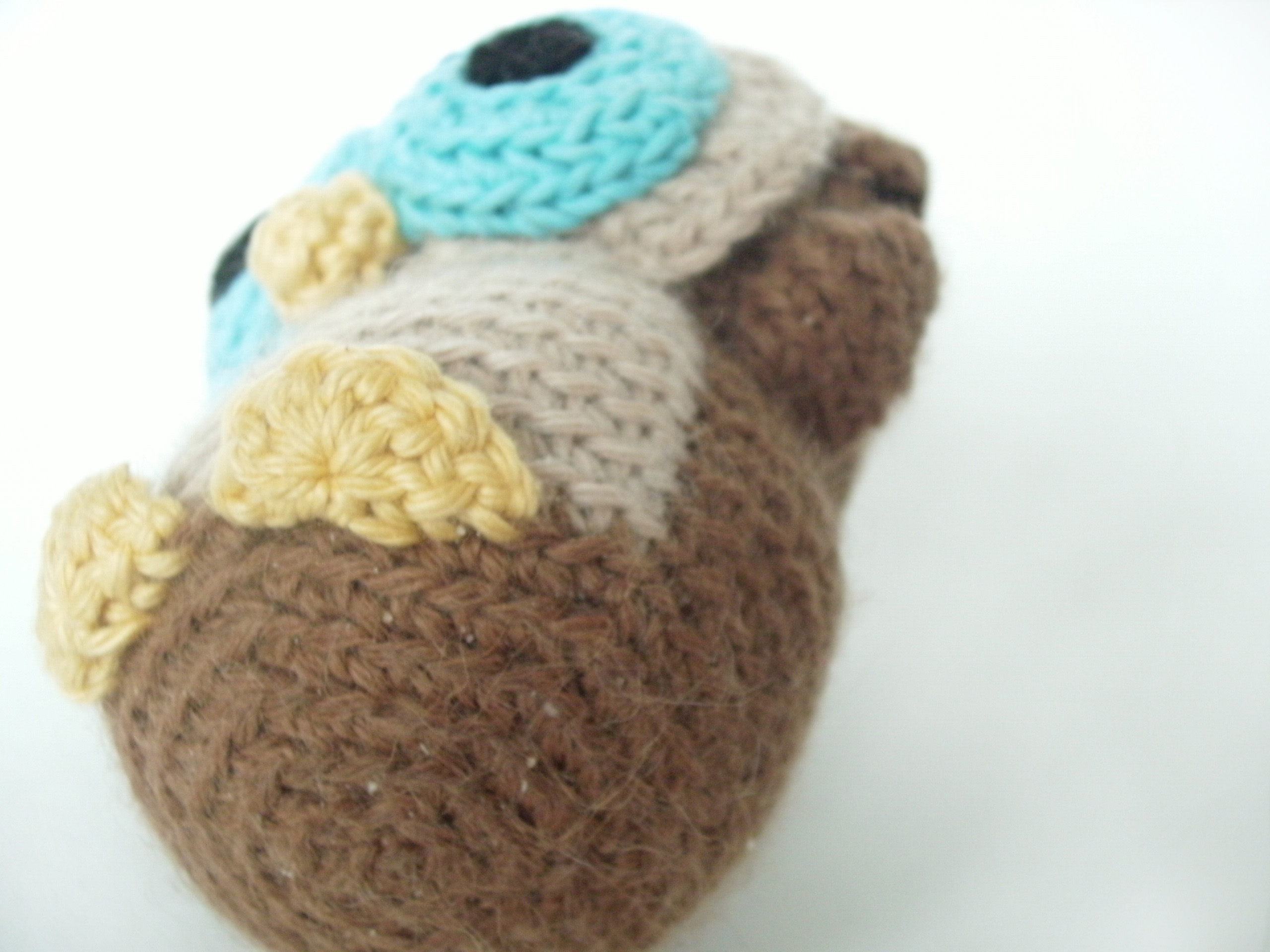
I crocheted two owls that I used as cake toppers. Even though the icing was pretty hardened, one owl inevitably ended up with icing on his owl-butt. Ooops.

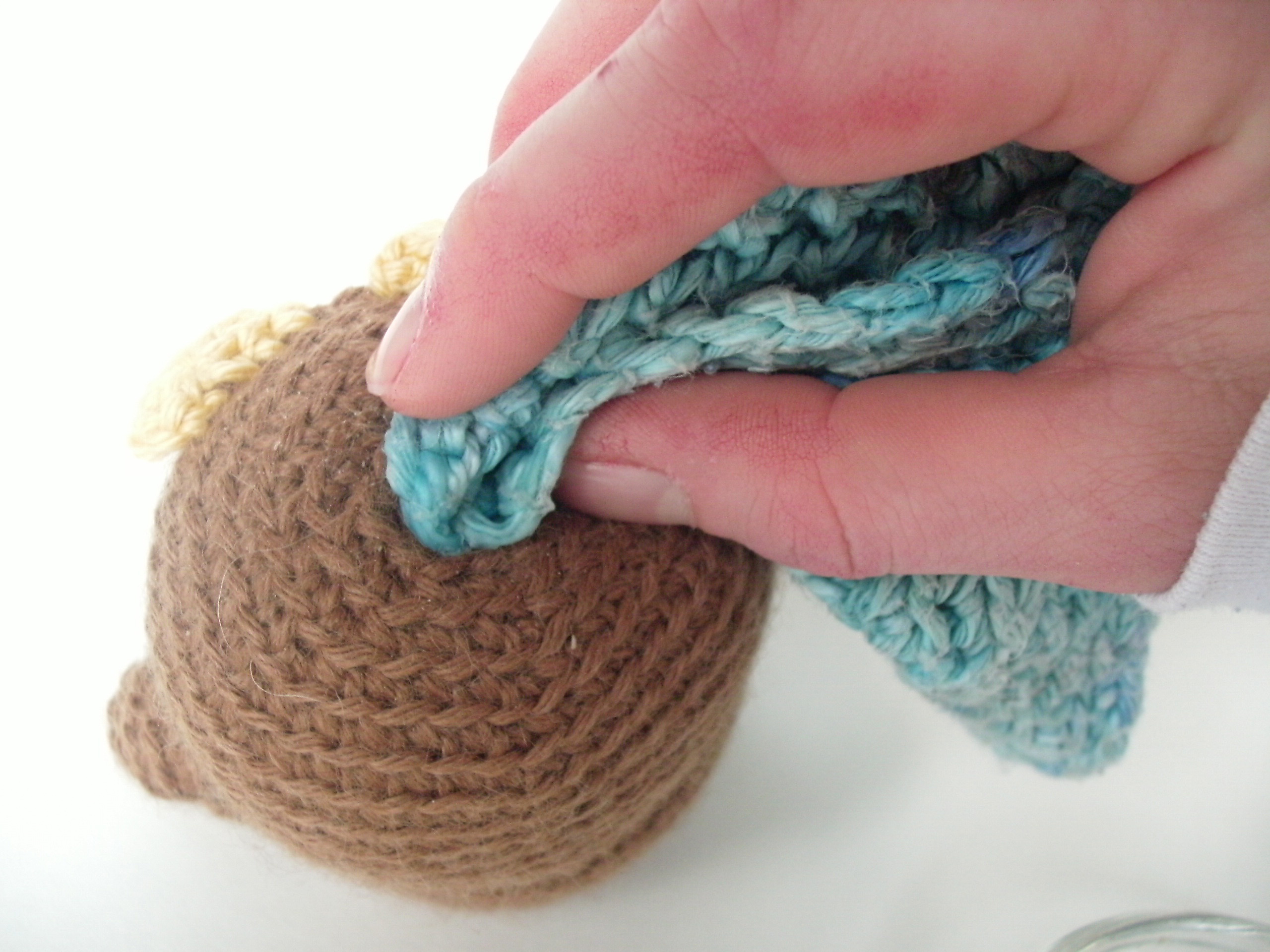
Even though this owl is crocheted with a hand-wash-only yarn… there’s no problem! Almost all messes can be ‘spot cleaned’ using water and a cloth (that is, unless you drop an amigurumi in a mud puddle… then he may need an all-over wash). I just dip a washcloth in a little bit of water:

And dab at the spot:

… until it’s clean!

Hooray!

Now, what if your amigurumi is really dirty? Here are a couple of suggestions:

  • Try using a little bit of soap in your water for smaller (but hard to get out) spots
  • Soak your amigurumi in a sink of water and wool-wash (like Eucalan). Gently squeeze all of the water out, and let dry completely.
  • Animals made from non-machine-washable yarns can be machine washed without felting completely. The stuffing keeps the yarn from felting as much as loose fabric would. Of course, you may see some felting (due to agitation and hot water), but not as much as you may expect. Try machine washing on delicate with cold water… your amigurumi will come out clean as a whistle!
Vibrant handmade crochet toys and patterns from Shiny Happy World.

Here are handy links to all the crochet troubleshooting posts. . .

Return to the main table of contents for Let’s Learn to Crochet Amigurumi.

Happy stitching!

Vibrant handmade crochet toys and patterns from Shiny Happy World.
Handmade crochet Pippi & Pippa amigurumi toys for beginners.

Organizing Embroidery Thread

Circular embroidery thread storage organizer with plastic bags and colorful floss.

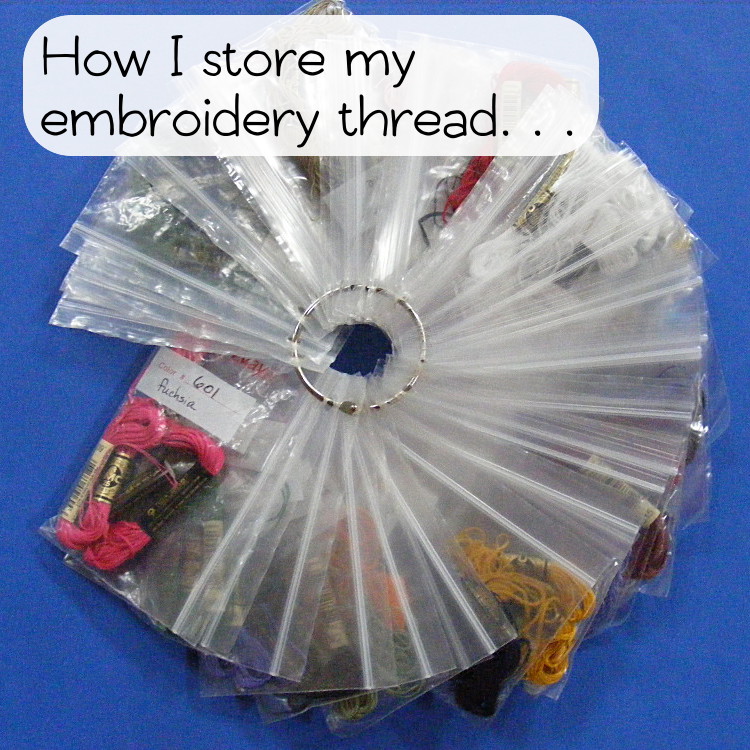
Way back in March I wrote a newsletter post and then a blog post about how I organize my embroidery thread. I had tried a few different methods – but none really gave me exactly what I was looking for so I asked you all for your advice. Wendi from Sew Cat Sew had a genius approach I had never tried before – and I pounced, with a tiny variation of my own because I couldn’t find the exact product she mentioned at any of the sewing or craft stores in my area.

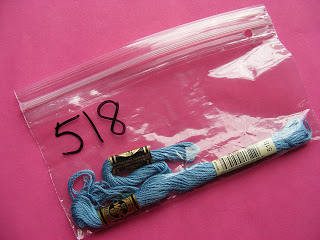
Each color thread goes in its own ziploc bag.

I couldn’t find the special bags Wendi used, so I just used snack-sized ziplocs from the grocery store. I punch a hole in the bag with a regular hole punch, then I write the DMC # on the bag with a fat Sharpie.

Blue embroidery floss thread for sewing and embroidery projects.

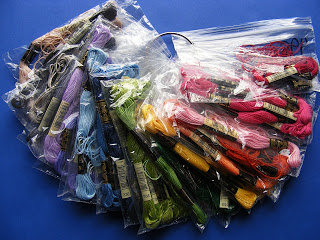
I put all the same colors together onto a binder ring (available at any office supply store). I have separate rings for red, orange, yellow, green, blue, purple, brown, white and off-white, black and gray. I dump all the bundles into a pretty basket. Easy peasy.

When I choose all the threads for a project, I pull them off their rings and create one ring with everything I need for that project. This makes it super-portable, which I love.

Colorful embroidery floss skeins in resealable plastic bags for craft projects.

I realized I was constantly pulling off the same colors over and over again, so I took a good hard look at my enormous thread collection and created a ring with all my favorite lights, mediums, darks, and neutrals. Now I start here and only pull from the other rings when I need something outside my normal range. 

Colorful embroidery floss in pink, beige, and red shades with a black needle.

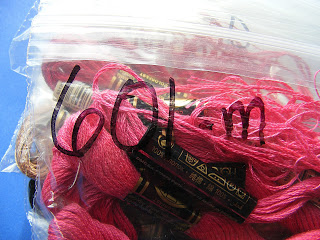
There was still one slightly annoying problem. Even though I wrote big, and with a nice fat black marker, the numbers on the baggies were sometimes difficult to read at a glance – especially if there were threads visible behind the number, which is usually the case when they’re all ringed together.

Red embroidery floss thread for crafts and sewing projects.

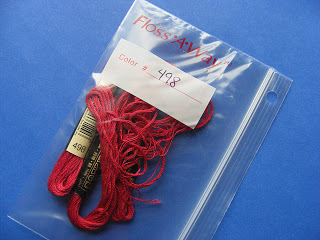
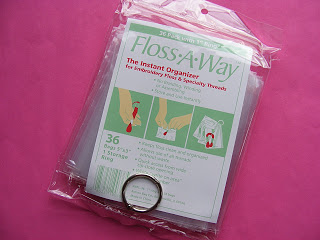
So I went back to Wendi’s note and found the baggies she used. Floss-A-Way. They have a handy little white area to write on. The bags are smaller (and therefore easier to schlepp around). And the holes are already punched. Handy!

Floss-A-Way instant floss organizer in clear plastic packaging on pink background.

Happy stitching!

Best,
Wendi
Applique Wendi (with fabulous hat)


Use a Teeny-Tiny Embroidery Pattern to Stitch a Great Big T-shirt

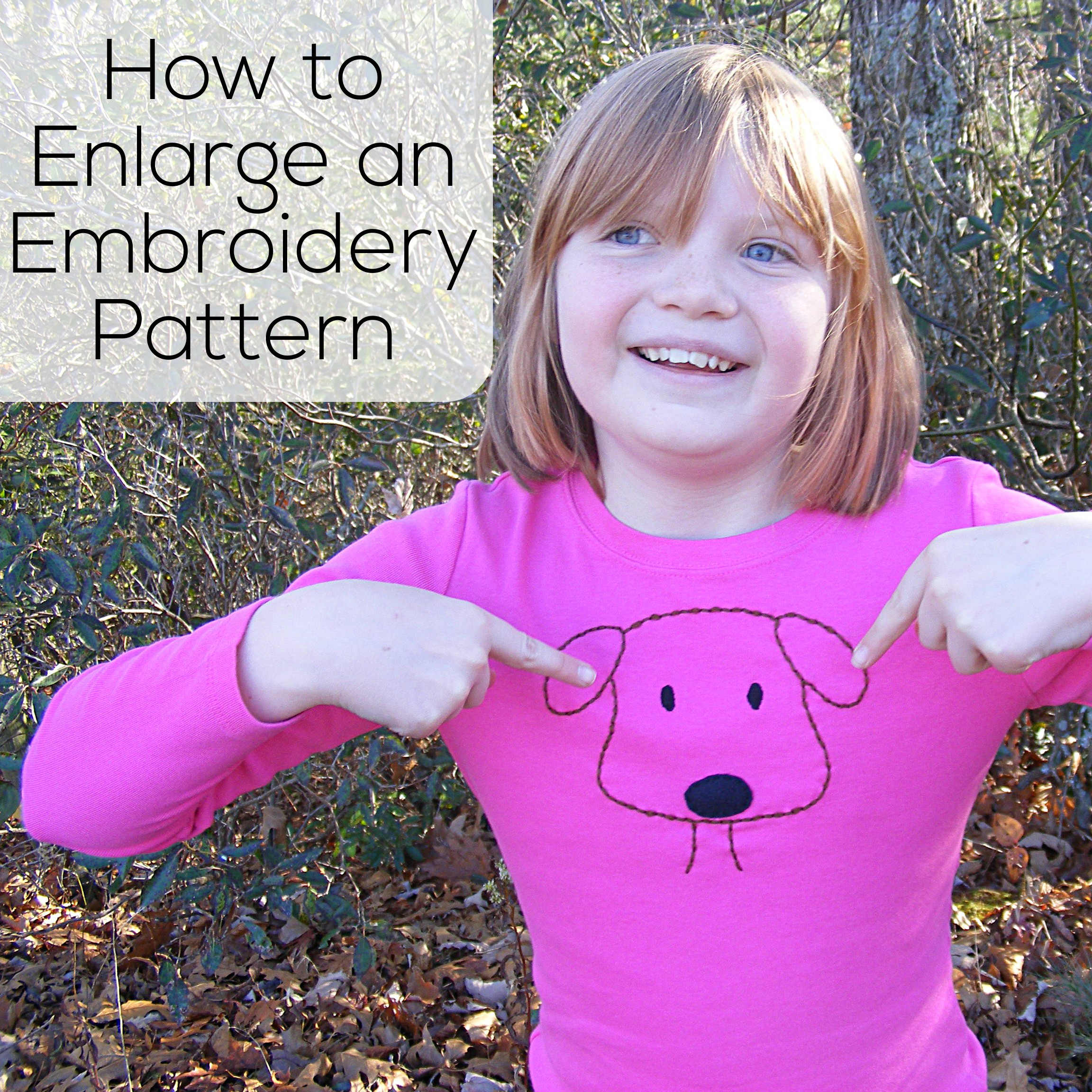
You know how I’m always saying you can play with the size of your embroidery patterns? Well – here’s a prime example. As soon as she saw the finished dogs my daughter squealed, “Ooooooh! That one is soooooo cute! Will you please stitch it on a T-shirt for me?”

Before I could even answer her she had pulled a blank T-shirt out of her closet and chosen the thread color she wanted for the dog.

I enlarged the pattern on the computer (you could use a copy machine if that’s more convenient). 6″ tall seems to be a great size for all T-shirt embroidery.

This post has some instructions for enlarging an embroidery pattern.

It’s important to NOT skip the stabilizer step with any embroidery on stretchy fabric — there’s a how and why video here.

Sulky Sticky Fabri-Solvy is what I use for all T-shirt embroidery. Pattern transfer and stabilize in one easy step – you’ve got to love that! See how it works in this video.

Enlarging the pattern made the lines really thick (remember – I was sizing up from a pattern that was less than 2 inches tall). I used a full 6 strands of thread to get a nice heavy backstitched line. I satin stitched the eyes and attached a little fleece nose with simple running stitches. An hour and a half later I had one finished T-shirt and one very happy daughter. 🙂

Vibrant handmade crochet toys and patterns from Shiny Happy World.

Here are all my posts about working with patterns.

Pattern Sources

How to Resize a Pattern

Return to the Learn to Embroider main Table of Contents.

Move on to the posts about knots. Yes – a whole section about knots. 🙂

Vibrant handmade crochet toys and patterns from Shiny Happy World.

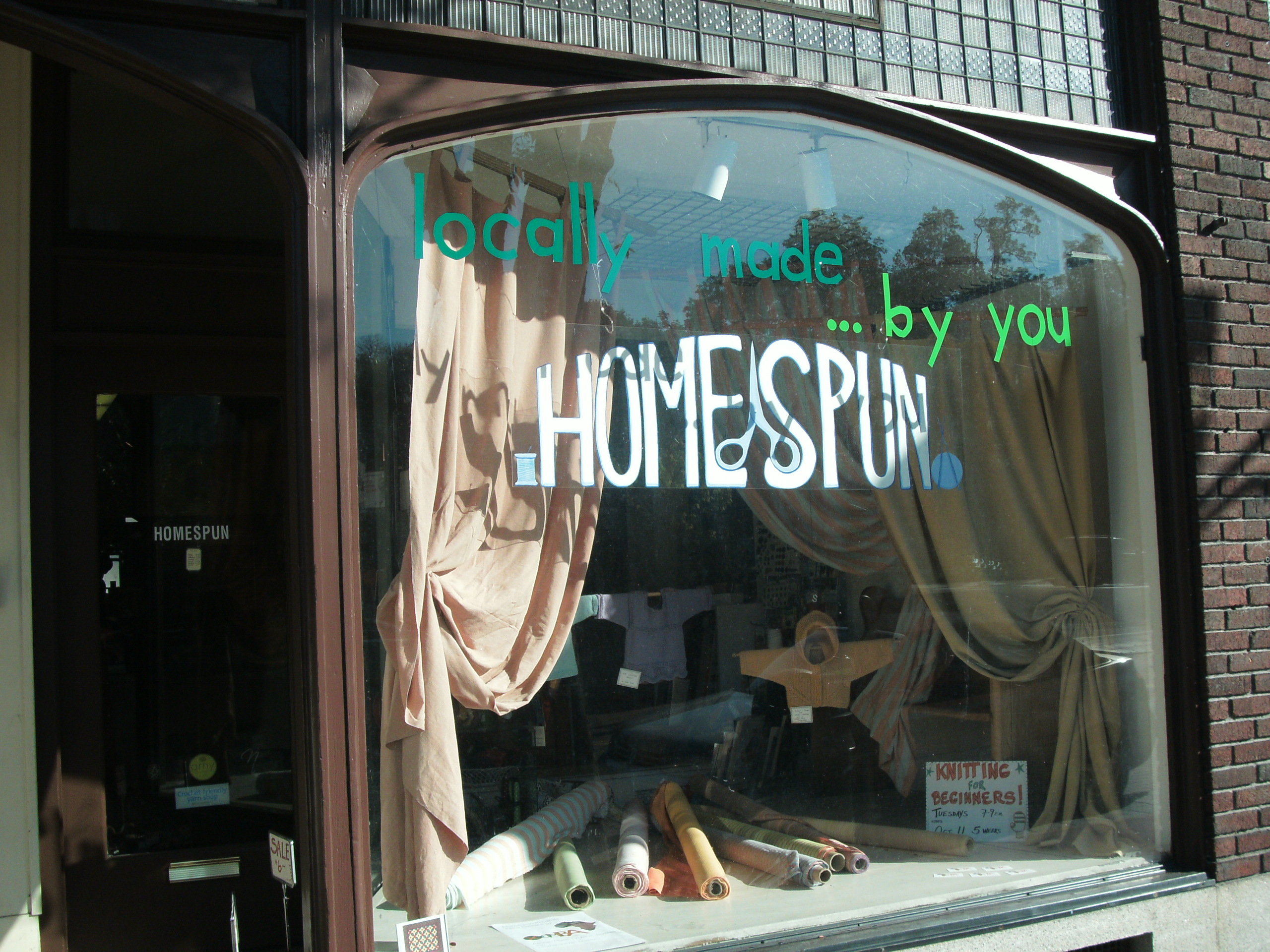
Homespun Boutique: Yarn store in Ithaca, NY


store: Homespun Boutique
address: 314 E. State Street, Ithaca, NY 14850
date of visit: October, 2011

I had no idea what to expect when I visited Homespun Boutique. it’s a store with no website or Ravelry listing… which often means it’s an outdated yarn store with not so lovely yarns. Fortunately, Homespun Boutique far exceeded my expectations!

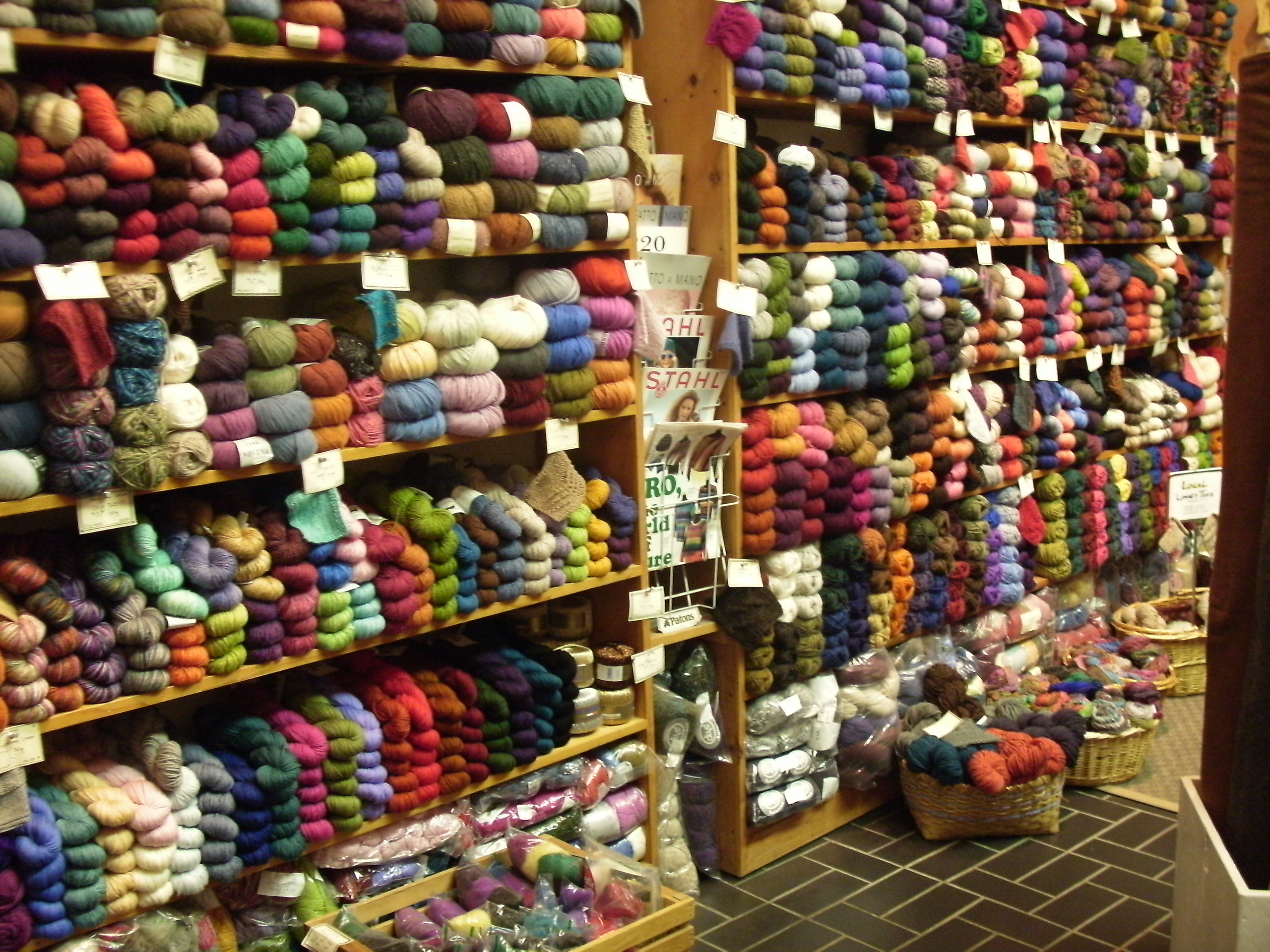
The shop isn’t enormous, but it packs a whole lot of luxury yarn into a little space. You’ll find most of the brands you’re used to finding in a well-stocked LYS, plus some wools from farms local to Upstate NY.

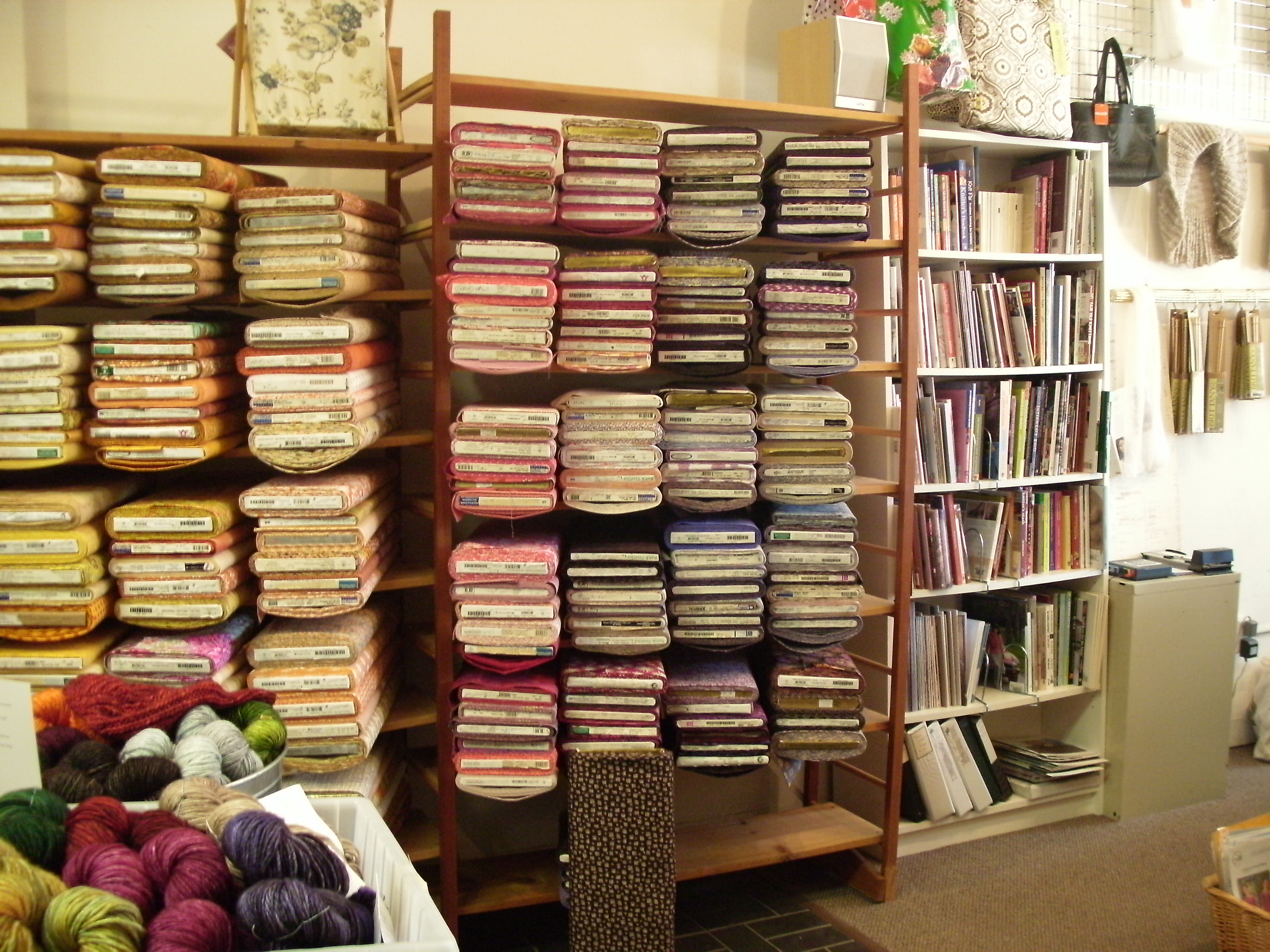
Half of the store is filled with yarn, neatly stacked on shelves, and other half of the store is stocked with bolts of beautiful and modern fabrics.

There didn’t appear to be a table in the main store area for sitting & stitching, but the store advertised classes, so perhaps there’s a separate area, or a table gets moved in. The shop is located right in the heart of downtown Ithaca, so it’s a convenient walk if you’re visiting! I would recommend a stop in if you’re in town!

How to Make a Fabric Bookmark

There are a lot of tutorials out there for fabric bookmarks, but I’m very. . . picky. . . about my bookmarks. I’m a book collector, you see. My husband is a writer. We met when we worked together at an independent bookstore. I spent twenty years selling children’s books. Almost all of the art in our house is by children’s book illustrators. We are book people.

I like a bookmark that’s not so tall that it hangs way out of the top of a standard paperback. And I definitely want a bookmark to be THIN. Nothing that will damage the spine please! (Lots of fabric bookmarks are way too thick.)

So here’s a quick and easy tutorial showing you how to make my kind of bookmark.

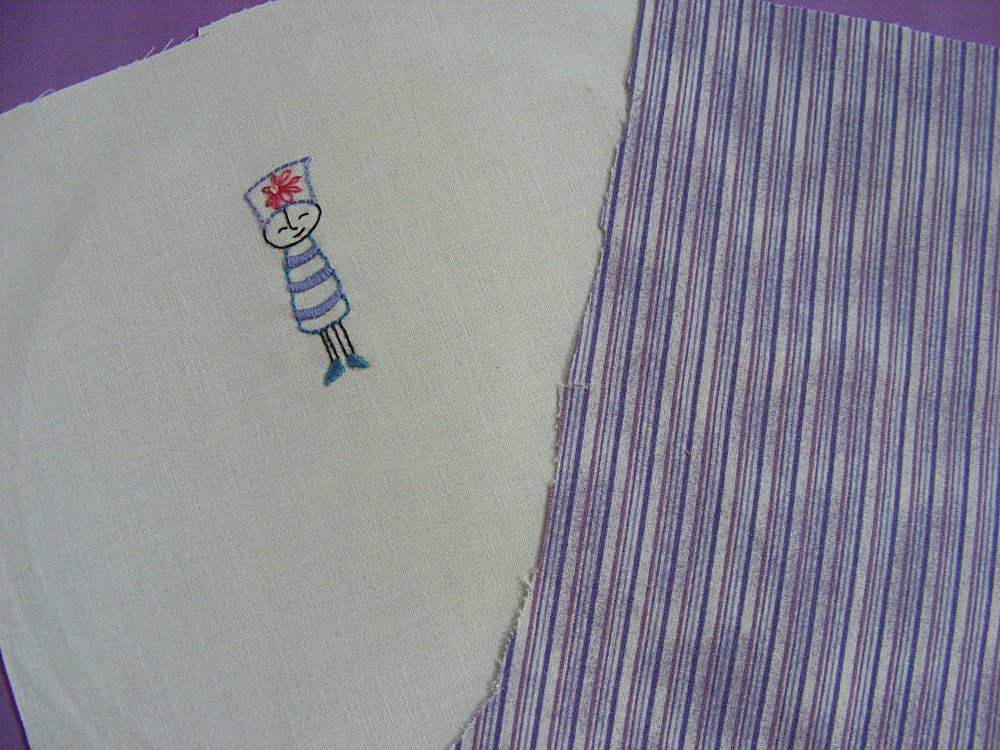
You’ll need two pieces of fabric – one for the front and one for the back of your bookmark. I, of course, am partial to a bit of embroidery on the front, but you could just use any amazing fabric that you love.

If you’re going to have embroidery, do it now before you assemble the bookmark.

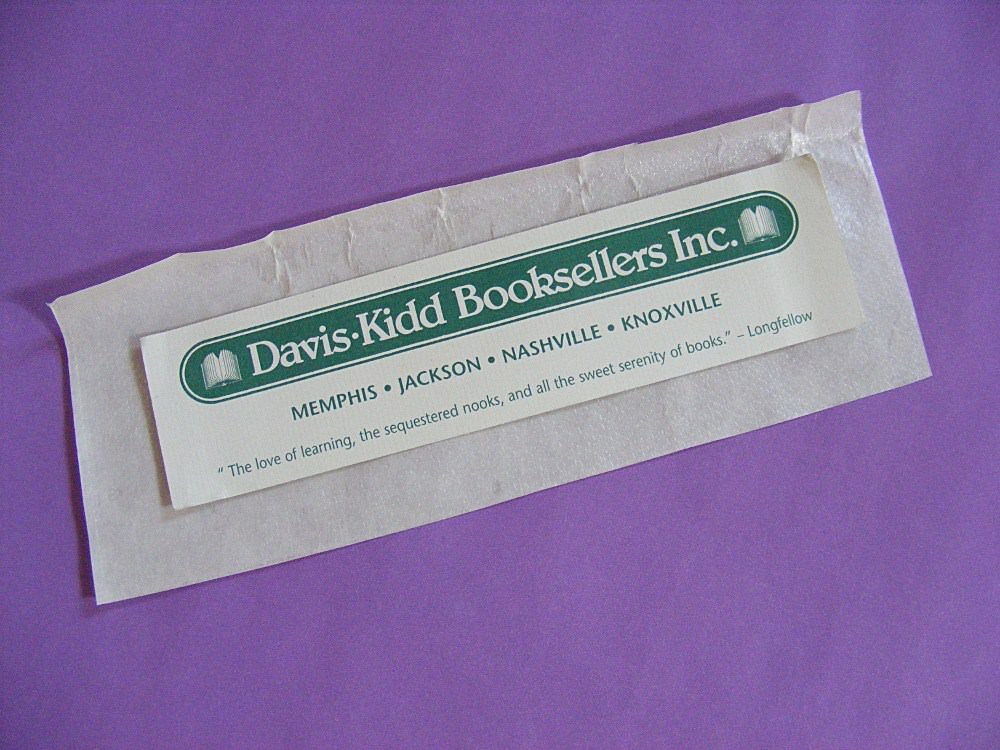
Grab a bookmark you like the dimension of (this one is 1 5/8 x 7) and some super-strong, paper-backed fusible adhesive. I use Heat and Bond Ultra Hold. Do NOT try to sew through that stuff! It will gum up your needle like crazy. I keep mine separate from all my other fusibles – just in case.

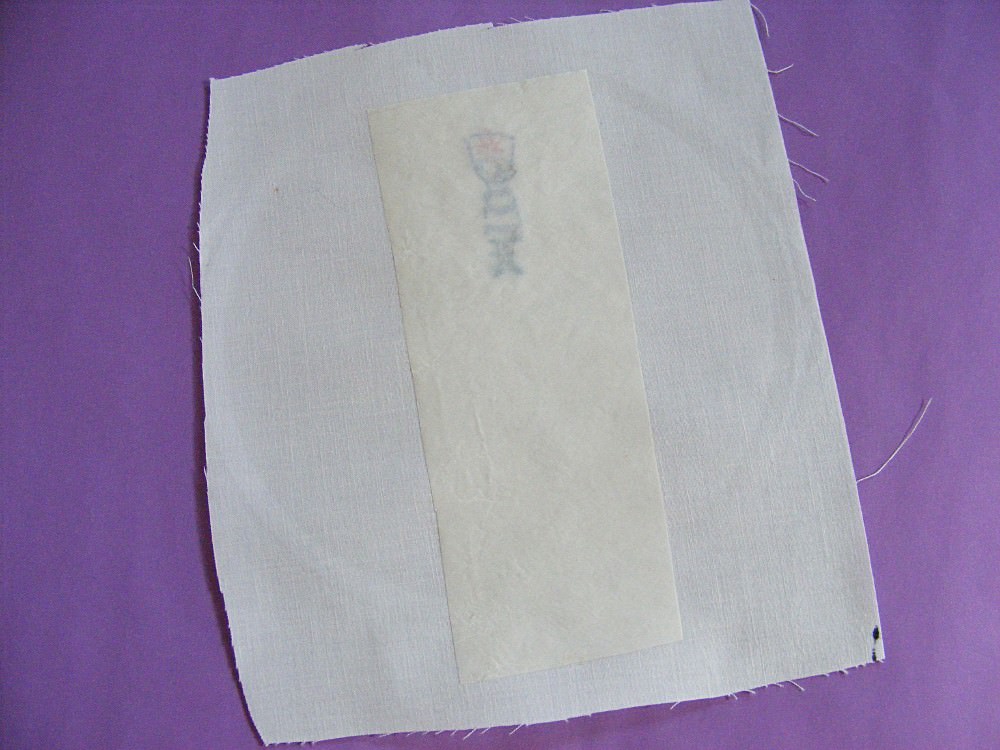
Cut out a piece of adhesive about 1/2 inch bigger than your bookmark all the way around. It doesn’t have to be neat.

The bookmark in the photo is just a guide for the dimensions. You’re not going to glue it inside or anything.

Lay it adhesive-side down over the back of your embroidered piece. (Never iron the front of your embroidery! There’s more info here about how to iron your embroidery without smooshing the stitches.) Follow the manufacturer’s instructions to fuse it in place.

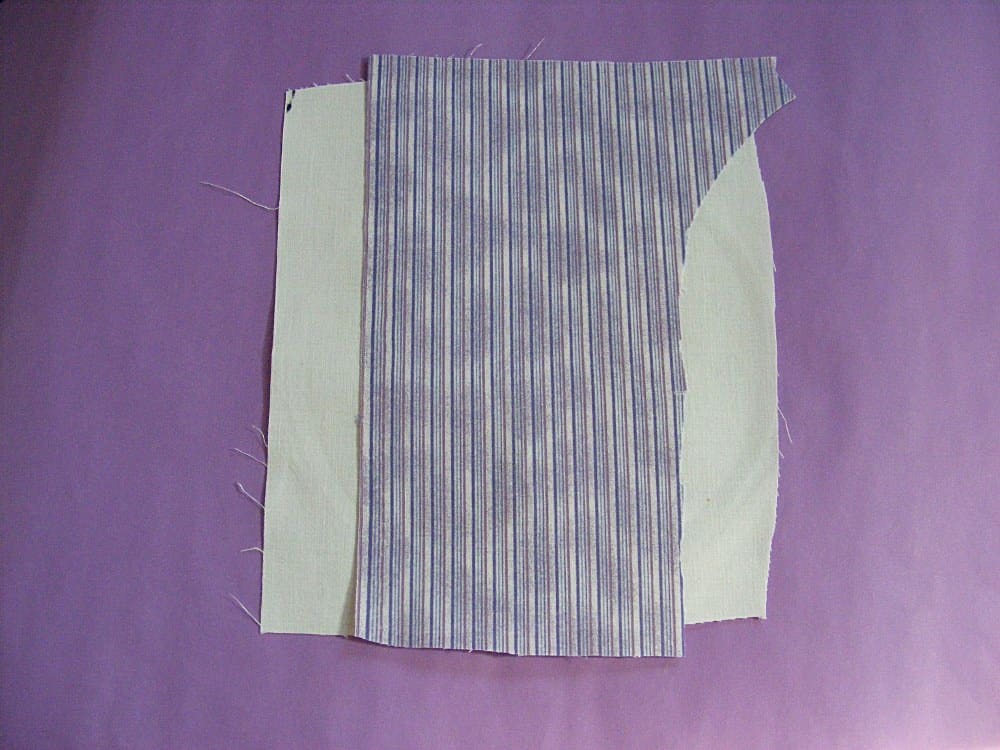
purple striped fabric

Let it cool. Peel off the paper and lay your bookmark backing right side up over it. Fuse in place. Now the bookmark front and back will be glued together.

Flip it over so you can see the front. Trim to the size you want it. This is super easy with a rotary cutter and a ruler, but you can do it with scissors too.

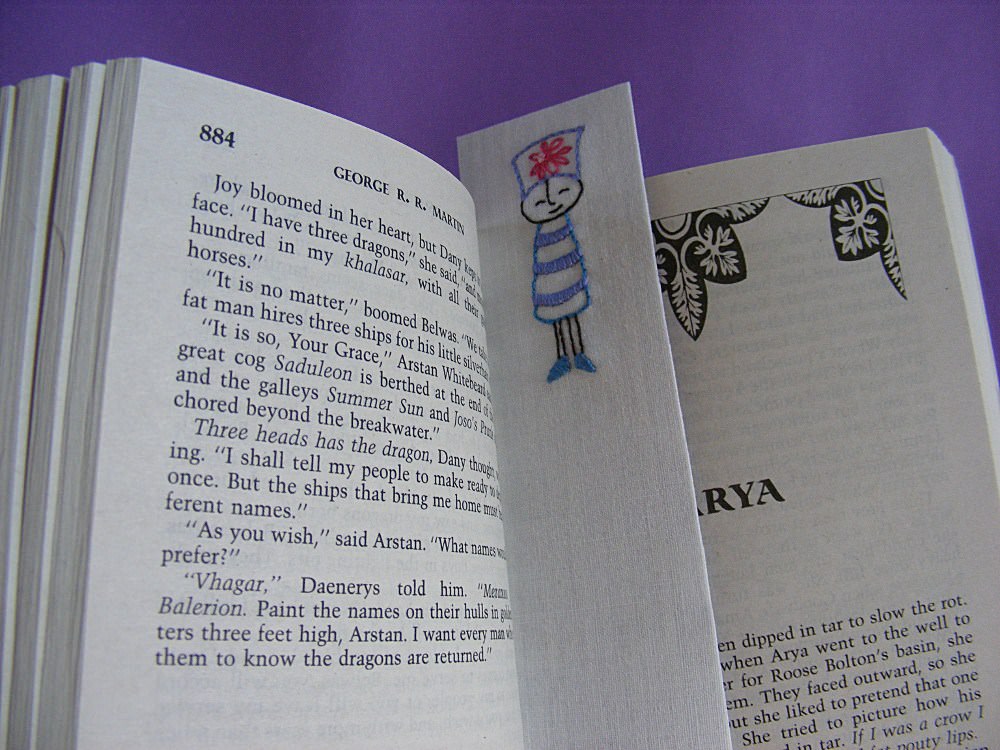
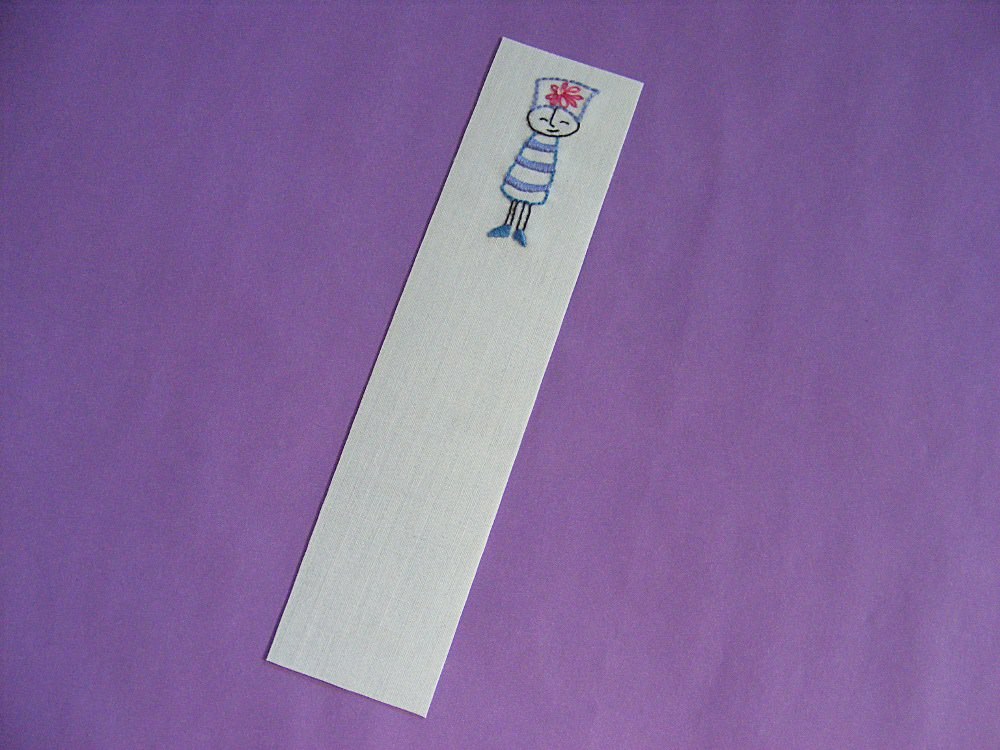
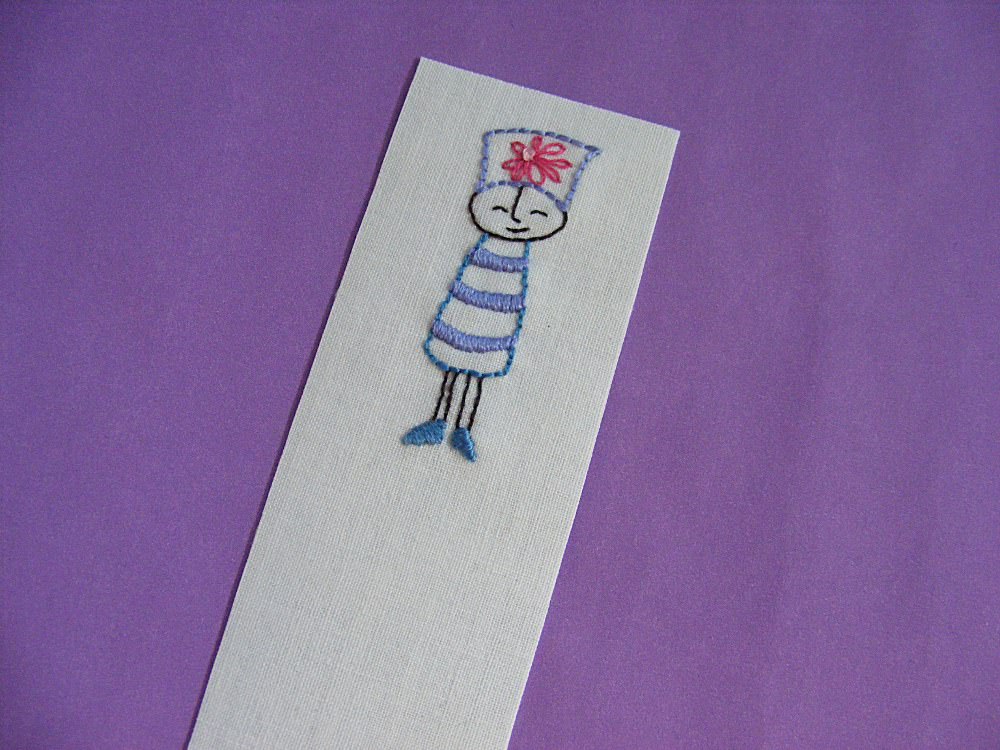
Embroidered lady wearing a hat - motif from the book How to Embroider Almost Everything

You’re done! The adhesive will add quite a bit of stiffness to the fabric bookmark. You could make it even stiffer by using two layers of adhesive with a sturdy interfacing between them, but I’m ok with some bend to my bookmark. And the adhesive does a really great job of keeping the edges from fraying – so you can skip the time (and bulk) of adding a hem.

I think including a handmade bookmark with a book makes it a really nice gift. And it takes no time at all! The lady took me about an hour to stitch (it would have been faster if I hadn’t added all the satin stitching) and making the bookmark takes all of five minutes.

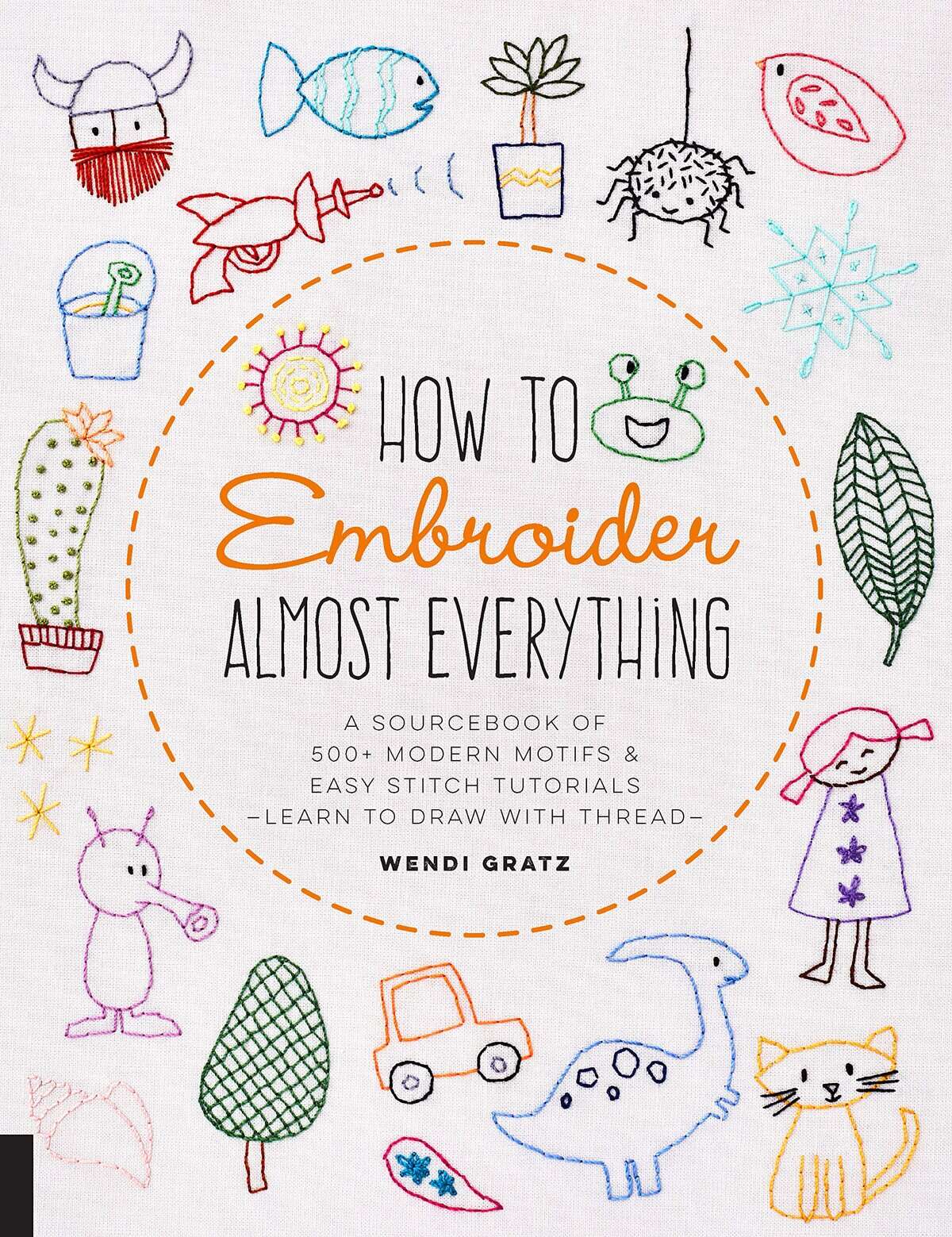
Looking for the pattern for that lady? It’s in my book How to Embroider Almost Everything.

Happy stitching!

Tips for storing knitting & crochet projects

Most of us have a couple of knitting or crochet Works-in-Progress going on at one time. For today’s Tip Tuesday blog post, I’ve gathered ideas about different ways to store in-progress works. Store them neatly, and you’ll avoid the perils losing your hook or spare yarn associated with the project!

I gathered ideas by asking my twitter friends how they store WIPs. They all agreed… storing WIPs needn’t be expensive, but the storage has to keep the project together and tidy.

Questions to ask yourself before selecting a storage mechanism

  • Where do you crochet/knit? If you store and work on your WIPs in the living room, then portability might not be very important. If you tend to carry a few projects around in your purse, then you’ll need to make sure your method is travel-hardy!
  • What’s important for you to keep on hand? Some stitchers keep only the current work stored. Others like to gather up all of the yarn they’ll need for the project, plus that extra needle. Knowing how much you like to store will help you determine the kind of storage you’ll need.
  • What size are the projects you work on? If you love making afghans, you’ll need a larger tote or basket. If lacey shawls are your fave project, then a smaller bag will do. Most knitters/crocheters need a variety!
  • Do you need any extra accoutrements? In this post, I’m showing off different bag/holder ideas, but storage doesn’t end there! Think about if you need any extra tools for storing. For example, if you want to carry around a pair of socks on double points, you’ll probably also want to invest in some point protectors or a DP tube so that your socks don’t fall off of your needles while in your bag.

Storage Options

Ziplock bags
The most popular way of storing WIPs was hands-down the Ziplock bag. They come in various sizes (try the gallon size for projects like scarves, quart size for socks and mittens), are inexpensive and see-through. Since they’re transparent, you can instantly see what project is inside (a must when you start to gather WIPs). As an added bonus, you can either write on the bag itself, or stick a note inside that reminds you of crucial project info.

Cloth tote/ Reusable grocery bags
Many of us have reusable grocery bags in our home. These make great storage bags.

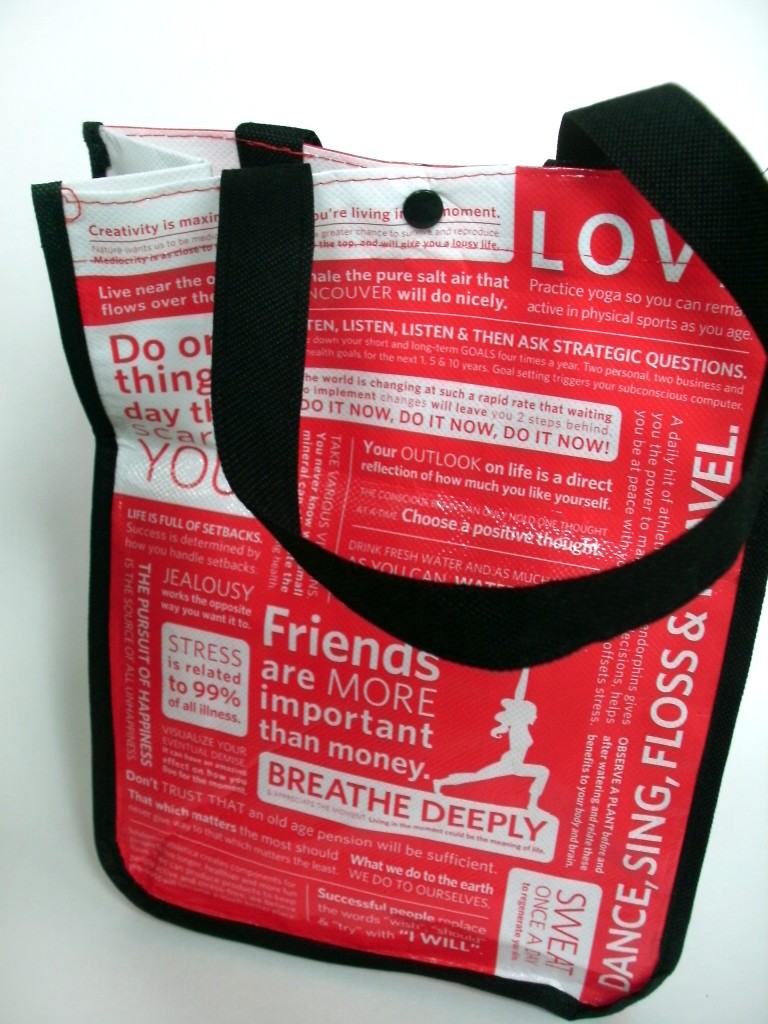
These bags often have handles, which makes them easy to carry around. They’re also suitable for larger projects because of their size. Lululemon bags (pictured above) come along with any purchase you make, and have a snap at the opening that’s great for keeping projects inside.

Plastic shoeboxes
If you aren’t interested in portability, then plastic shoeboxes are a great storage idea. They stack (meaning they’ll fit nicely in a corner of your room) and they’re often transparent.

For your larger projects, you can grab plastic boxes in larger sizes that are still stackable and tidy.

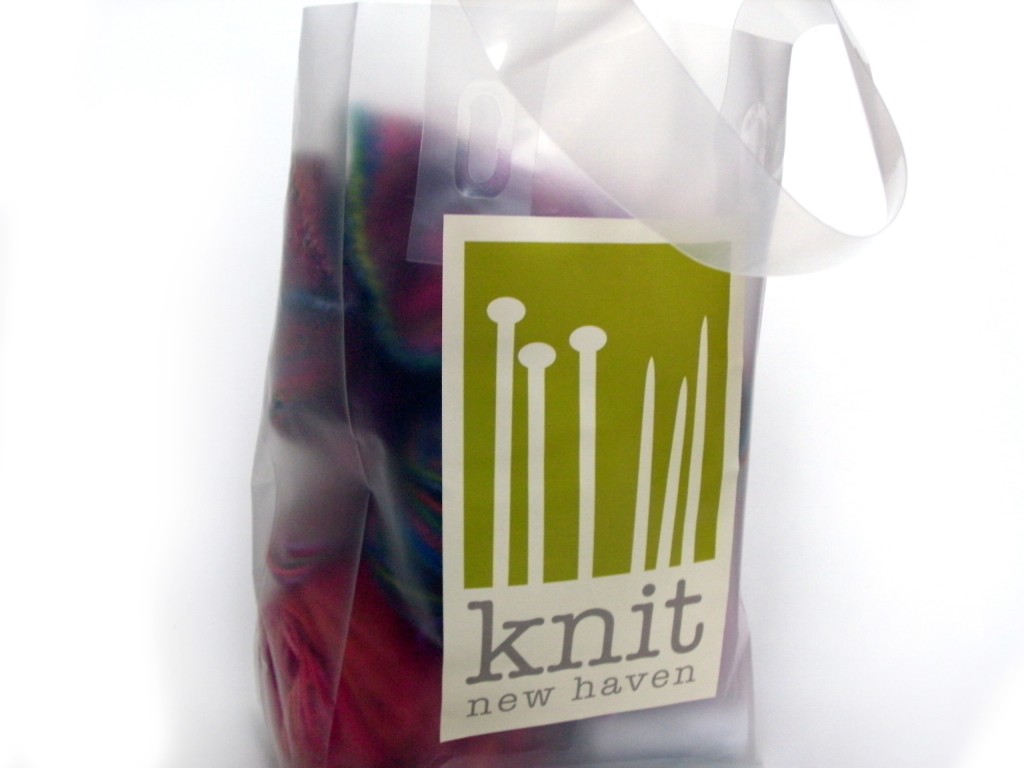
Your yarn store’s bag
You’re already buying the yarn… why not use the bag as a project bag?

Many yarn stores actually keep future-use in mind when ordering their bags… so make use of it!

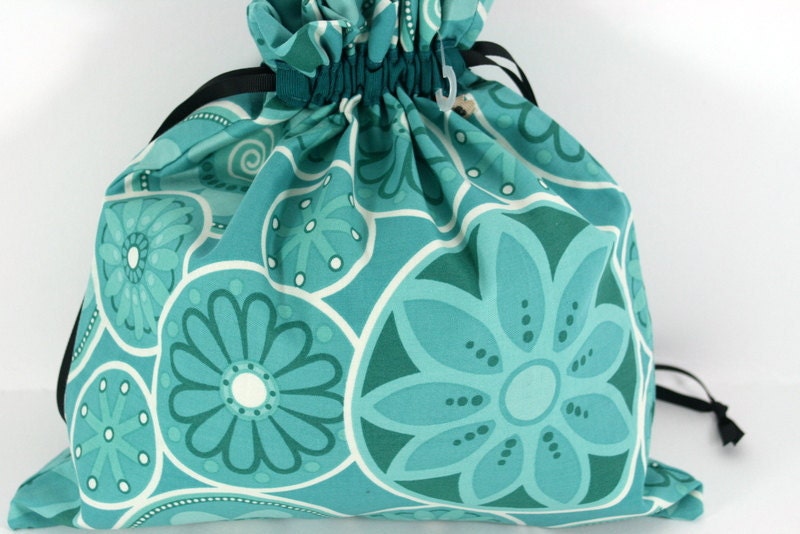
Fancy project bags
I, of course, advocate re-using bags and making do with what you have. But, every once in a while, you need to get yourself something nice… so why not make it a lovely project bag?

You can purchase project bags in every shape, size and fabric! Check your LYS (they’re bound to carry a few styles) or have a look around Etsy (search for ‘project bag’). Erin Lane stocks a large selection of project bags- including the adorable drawstring bag pictured. I also love the square zippered bags from JessaLu. Have a look around… you’ll probably want to treat yourself to one!

How do you store your WIPs?

Please share! I’m always on the lookout for new ideas!

Ultimate Crochet Hook Review: the review!

As I said before, there’s no such thing as a perfect hook. What works well for one person may be a disaster for someone with a different crocheting style. The best thing that I can do, as a reviewer, is tell you the pluses and pitfalls of various crochet hooks. What you end up loving is going to be dependent on your style! On Wednesday, you learned what kinds of hooks suit your particular crochet style (if you weren’t here on Wednesday, no worries… go do it now!).

There are oodles of crochet hooks on the market, and I didn’t have the time to review them all! And, to be honest with you, I’m not sure you’d be interested in reading all of them. I mean, lots of companies make a bamboo hook… and the differences between them are pretty minimal. So, in this review, I’ve focused on hooks that are different from the rest!

They each have pros and cons… and only some will be suited for your particular crochet needs. Let me know which ones work for you!

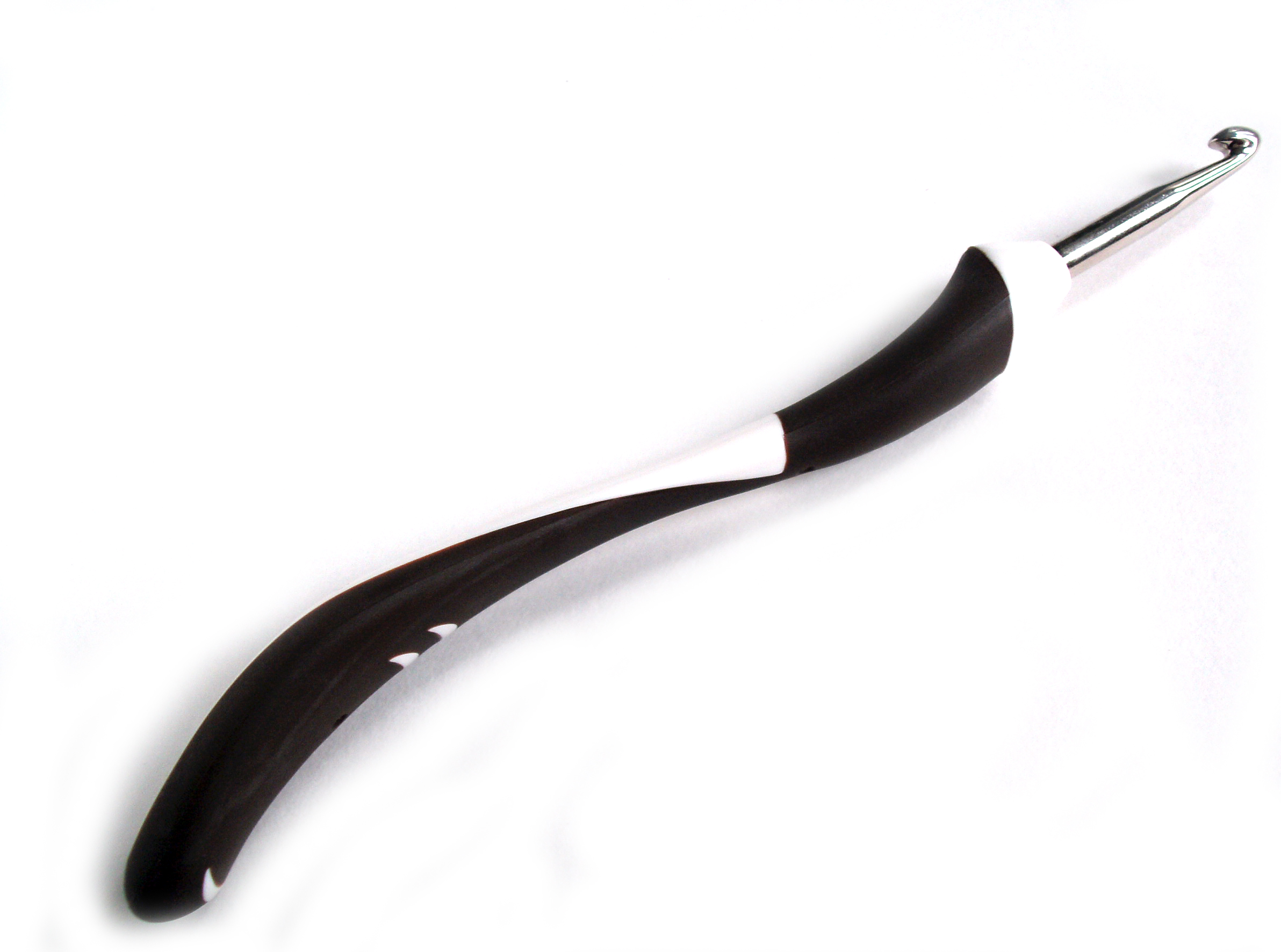
Addi Swing

The Addi Swing is the ‘most ergonomic’ hook that I’ve tried: it really is made to fit perfectly in the palm of your hand. It also has some flexibility (the actual handle is some type of plastic, without the metal hook penetrating into the handle), so it’s very comfortable on your hands.
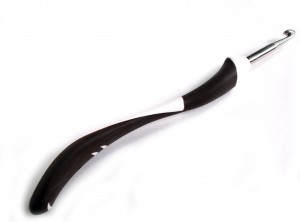
And the hook is made from the same high-polished chrome as the Addi knitting needle (my personal favorite needle), making for low-friction and speedy crocheting.

Even though I love holding the hook, I don’t love actually crocheting with it. Perhaps my hands are too small? I can’t pin it down exactly, but something about the design of the hook forces my palm to be further from my thumb than I like it to be. Despite giving it a fair go, I just can’t get used to it.

Pluses: The handle is super-comfortable, the head is quick and the hooks are clearly labelled for size.
Pitfalls: Because the hook is made to fit the hand, it might not be perfect for everyone’s hand or crocheting style.
Verdict: Totally worth giving a try if your hands are a bit achy. Although, I might try to find a friend with one to test out before splurging.

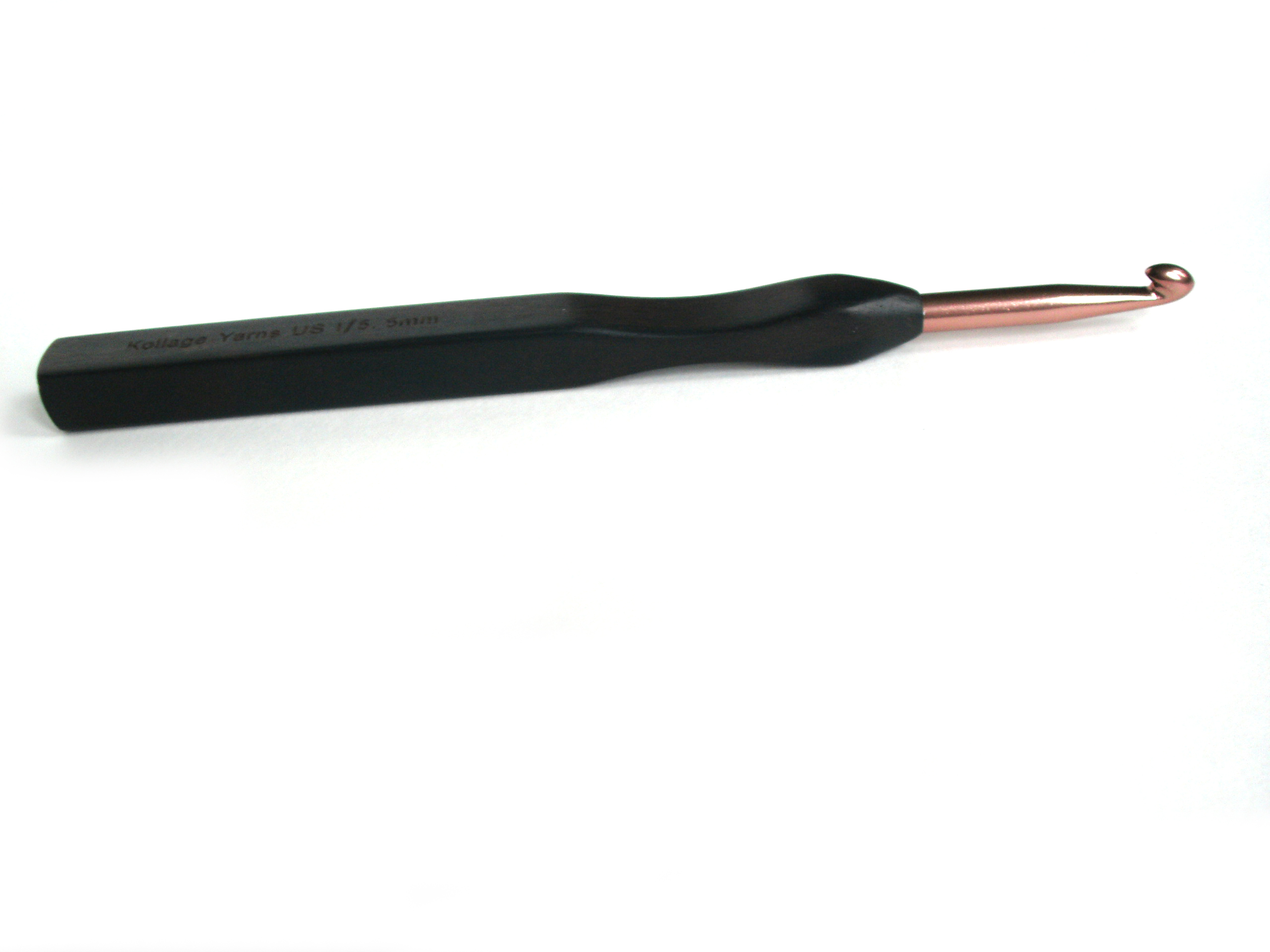
Kollage Square Crochet Hook

The square handle was invented by Kollage… so it’s completely unique to the brand. The package claims that the hook decreases stress and strain, and is perfect for those who have arthritis or carpal tunnel syndrome.
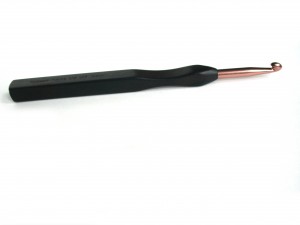
I have the same general comment with this hook as the Addi… it feels fabulous! But, I have trouble crocheting with it. Maybe it’s me! The Kollage hook has the thumb rest 1″ lower than the Susan Bates or Addi Premium hooks, which for me, is just too far away. However, I think there are oodles of people out there who would love this hook.

Pluses: The handle is super-comfortable and isn’t as ‘hand-specific’ as other ergonomic hooks.
Pitfalls: The thumb rest is much lower than other hooks, which may require some adjustment for folks.
Verdict: Feels lovely, but like other ergonomic hooks on the ‘nice’ side, I’d try to touch one in person before committing.

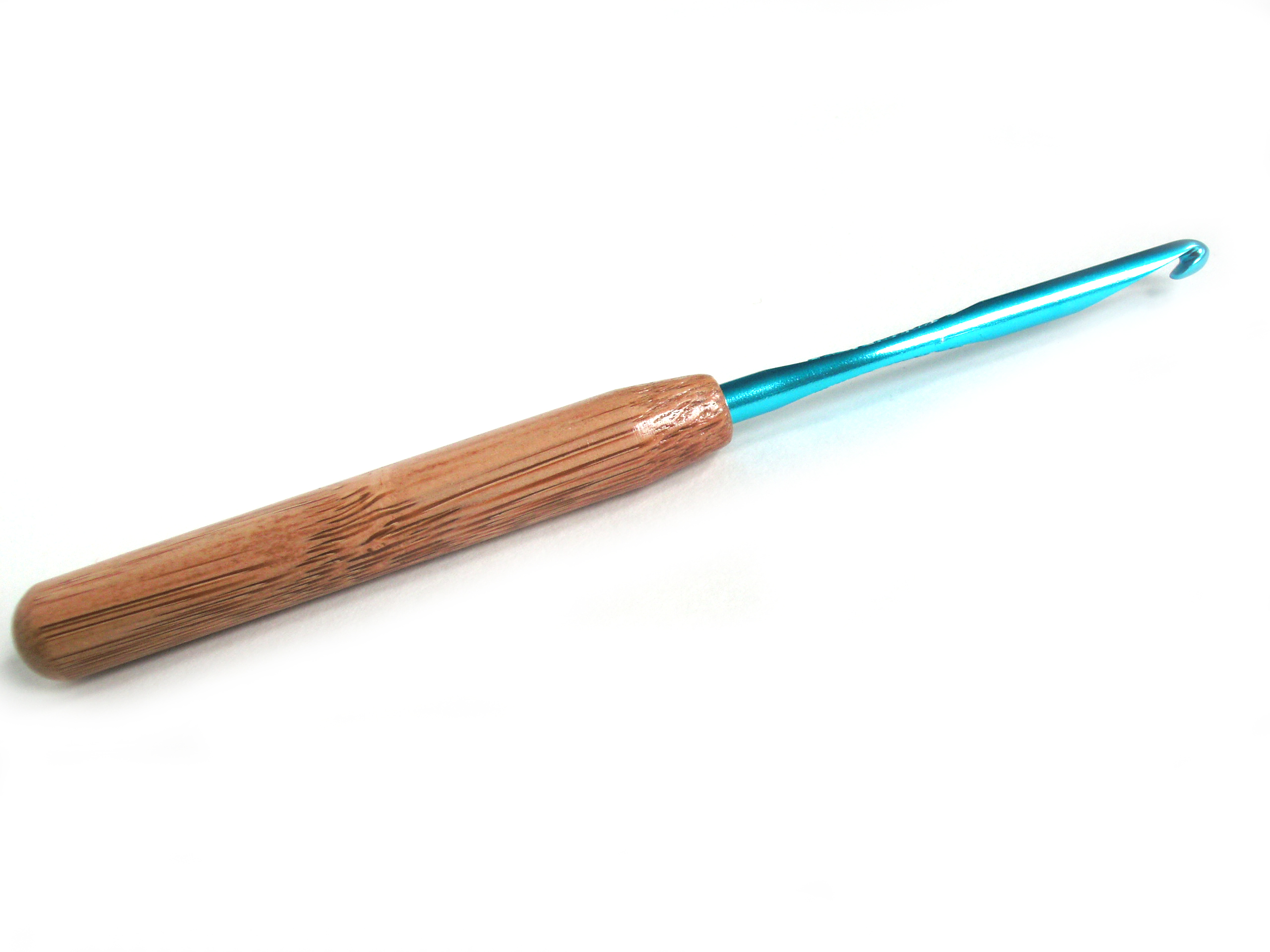
Susan Bates Bamboo Handle

This hook sports the ‘standard’ Susan bates hook, with a bamboo handle below the thumb rest.
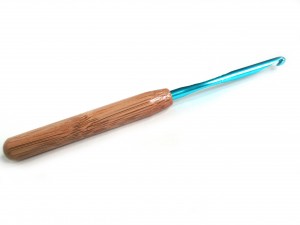
Because the handle is below the thumb rest, using this hook feels a lot like crocheting with a Standard Susan Bates hook. The advantage is a slightly bigger handle to hold on to.

Pluses: The bamboo handle may feel more comfortable for some crocheters.
Pitfalls: Since only the handle (below the thumb rest) is bamboo, the design may not be sufficiently ‘comforting’ enough for those with pain to experience relief.
Verdict: If you’re in love with Susan Bates hooks, and are looking for a step up, give this one a try.

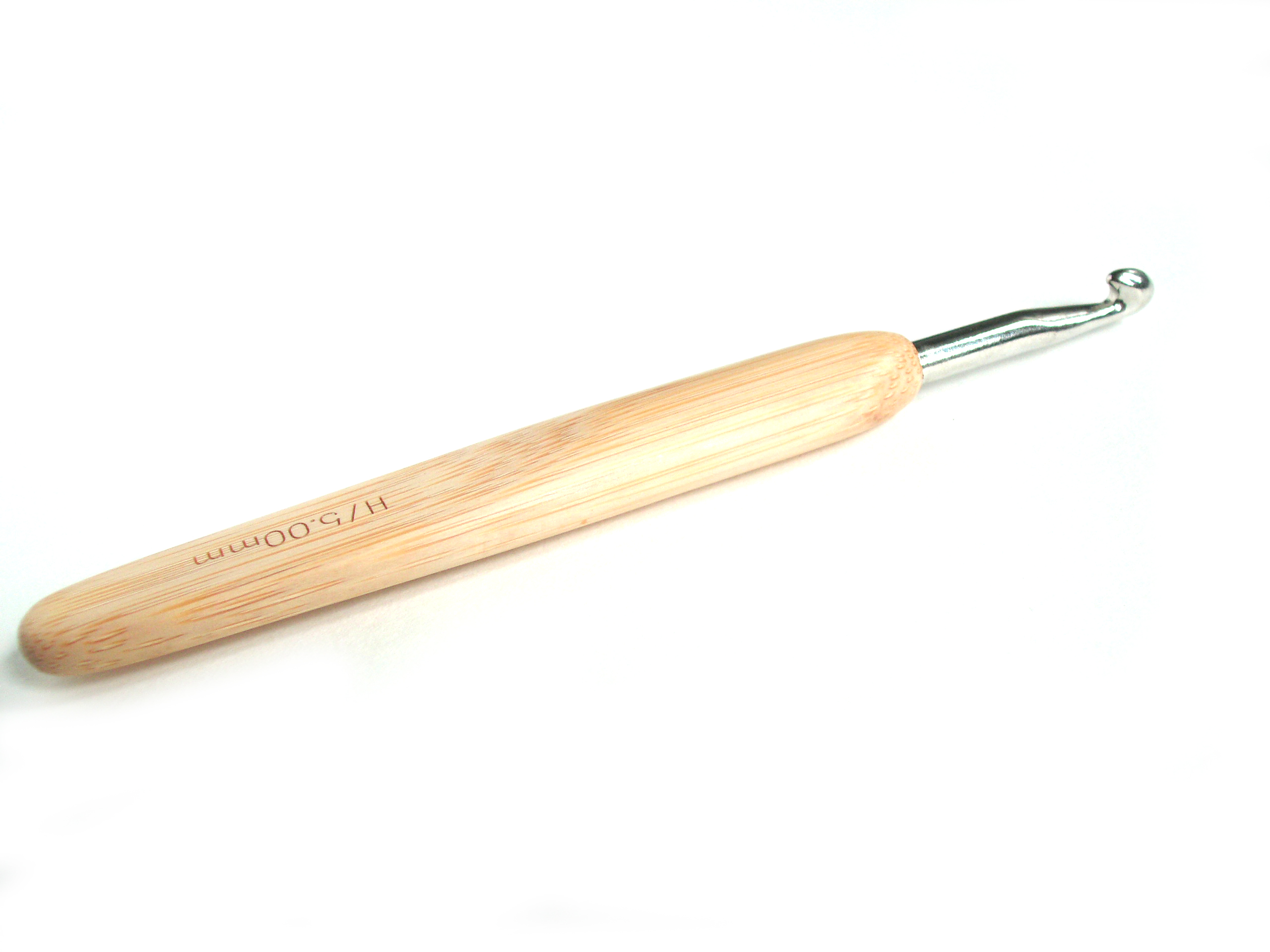
ChiaoGoo Comfort Grip

This hook features a sleek metal head with an oval-shaped bamboo handle, laser-etched with the hook size information.
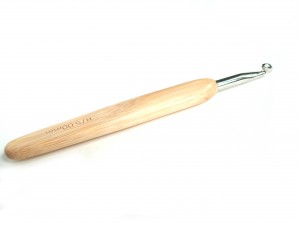
The bamboo on this hook is super-smooth… I just love touching it! The handle is also very comfortable: fits nicely in your hand without being over-shaped.

Pluses: The hook feels wonderful, and gives a nice handle for someone who wants to hold onto wood, but crochet with metal. Unlike other comfort hooks, the handle begins comparatively high up the shaft, making this hook comfortable for those with smaller hands.
Pitfalls: This hook is about 1/2″ shorter than other hooks, so it may not be comfortable for those with bigger hands.
Verdict: If you have arthritis (that’s helped by working with wood over metal), this hook and the Kollage are two hooks on the market that still allow you to crochet with the speed of a metal head. This hook may not be for you if you have larger hands, but see if you can try it out in person. This hook feels amazing to the touch.

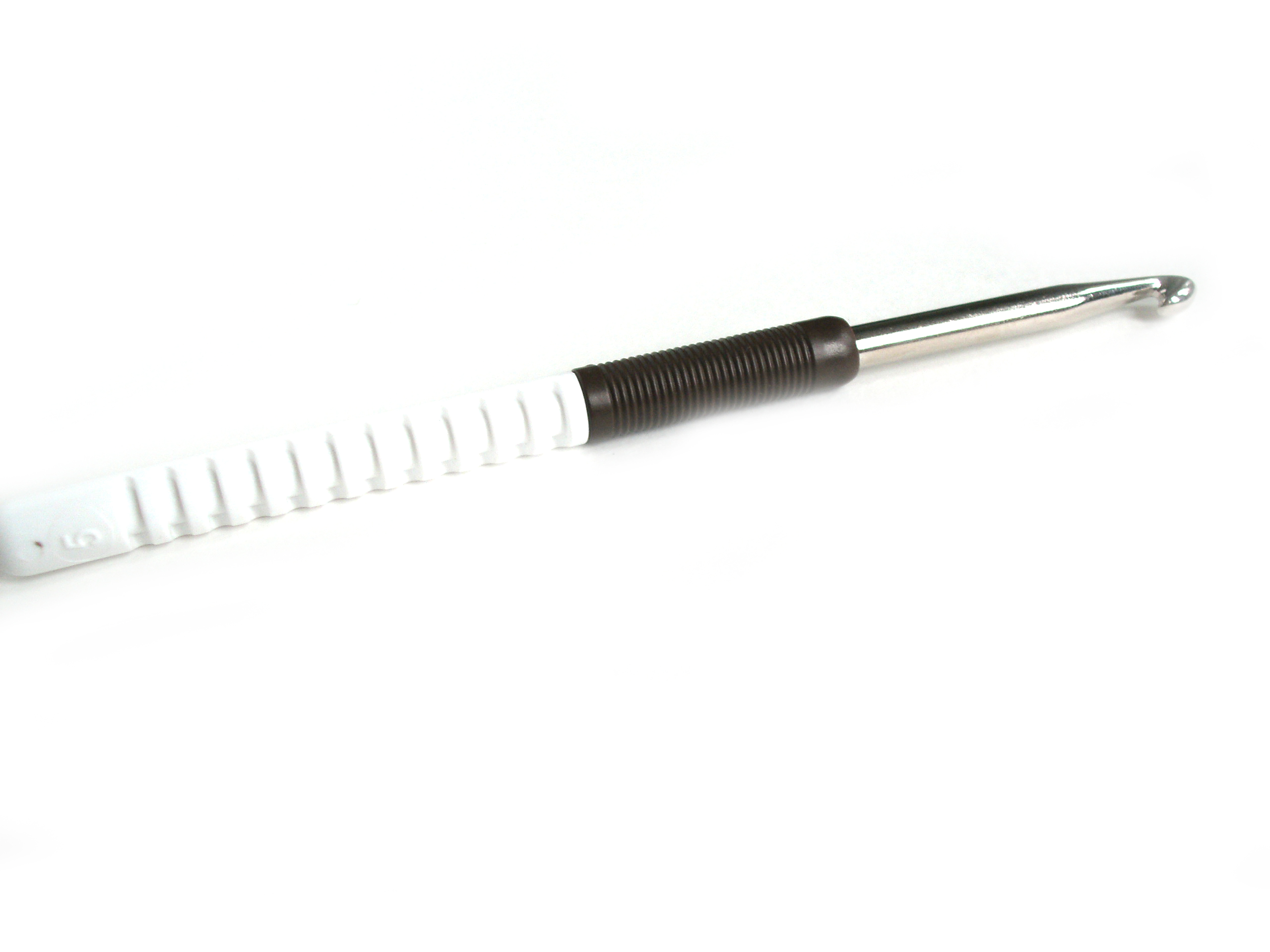
Addi Comfort Grip

This hook features the same head as the Addi Swing (above), but with a much simpler handle. The handle is slightly thicker than normal hooks, and provides ridges for better grip.
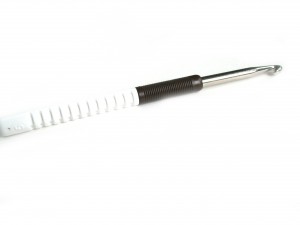
The hook is marked only with ‘5’ (it’s a 5.0mm size H hook), which might not be convenient for those who haven’t fully gotten the hang of the metric system. The handles, though, are also color-coded, which is useful for picking the right size out quickly from a whole assortment.

Pluses: This hook gives you a bit more to hold onto than a plain hook, and the ridges will be welcome to people who find metal hooks too slippery. (yes, one side-effect of crocheting too speedily is sweaty hands!)
Pitfalls: There isn’t much ‘comfort’ to this hook except that the handle is thicker than an average hook.
Verdict: If you find an average hook too skinny, this handle will be a welcome improvement for you. I’m not convinced it’s the best hook for those looking for comfort in the sense of ‘lessening aches in hands while crocheting’.

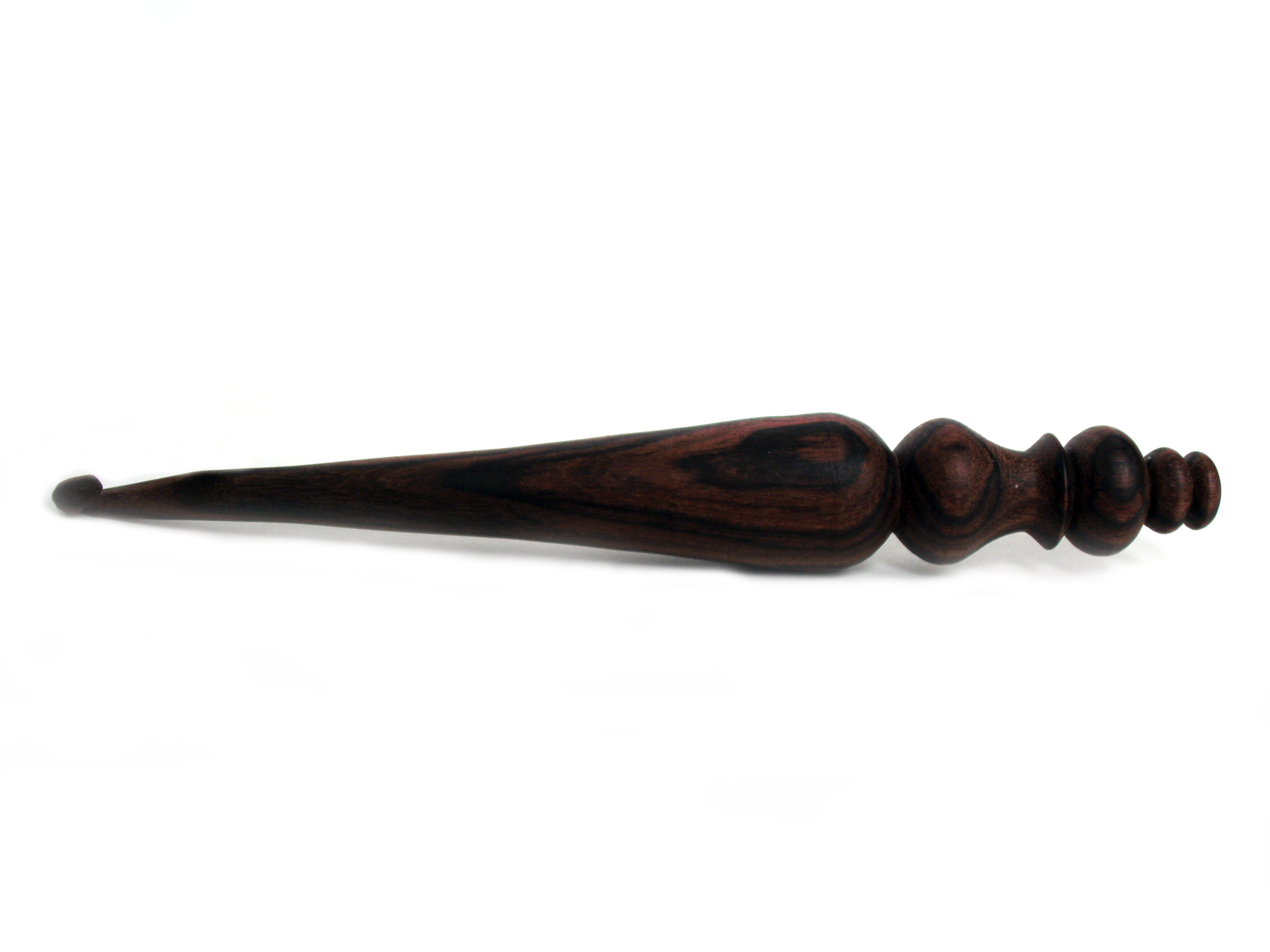
Furls hand-carved hook

This hand-carved hook is a fabulous piece of artistry. I can’t believe someone out there has the talent to make these… but obviously, the folks at Furls do!
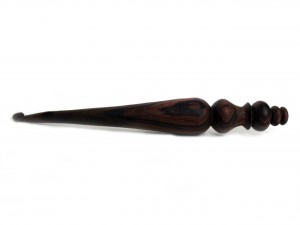
The hook is absolutely beautiful, feels incredibly smooth and has a medium-pointy point. The shaft on the hook is tapered, which means that there isn’t a part of the hook that has a resting place for the stitches (perhaps there’s a centimeter where it isn’t tapered? It’s hard to tell.). This feature will probably make it difficult for many crocheters to obtain an even gauge… although maybe it just takes practice.

Pluses: This. hook. is. stunning.
Pitfalls: The tapered shaft is a sticky point. In practice, my loop slides way too far down the handle, giving me bigger stitches than I’d wanted.
Verdict: With practice, you could probably develop a rhythm that will give you even stitches. Functionality aside, this hook is beautiful, and makes an amazing addition to any collection.

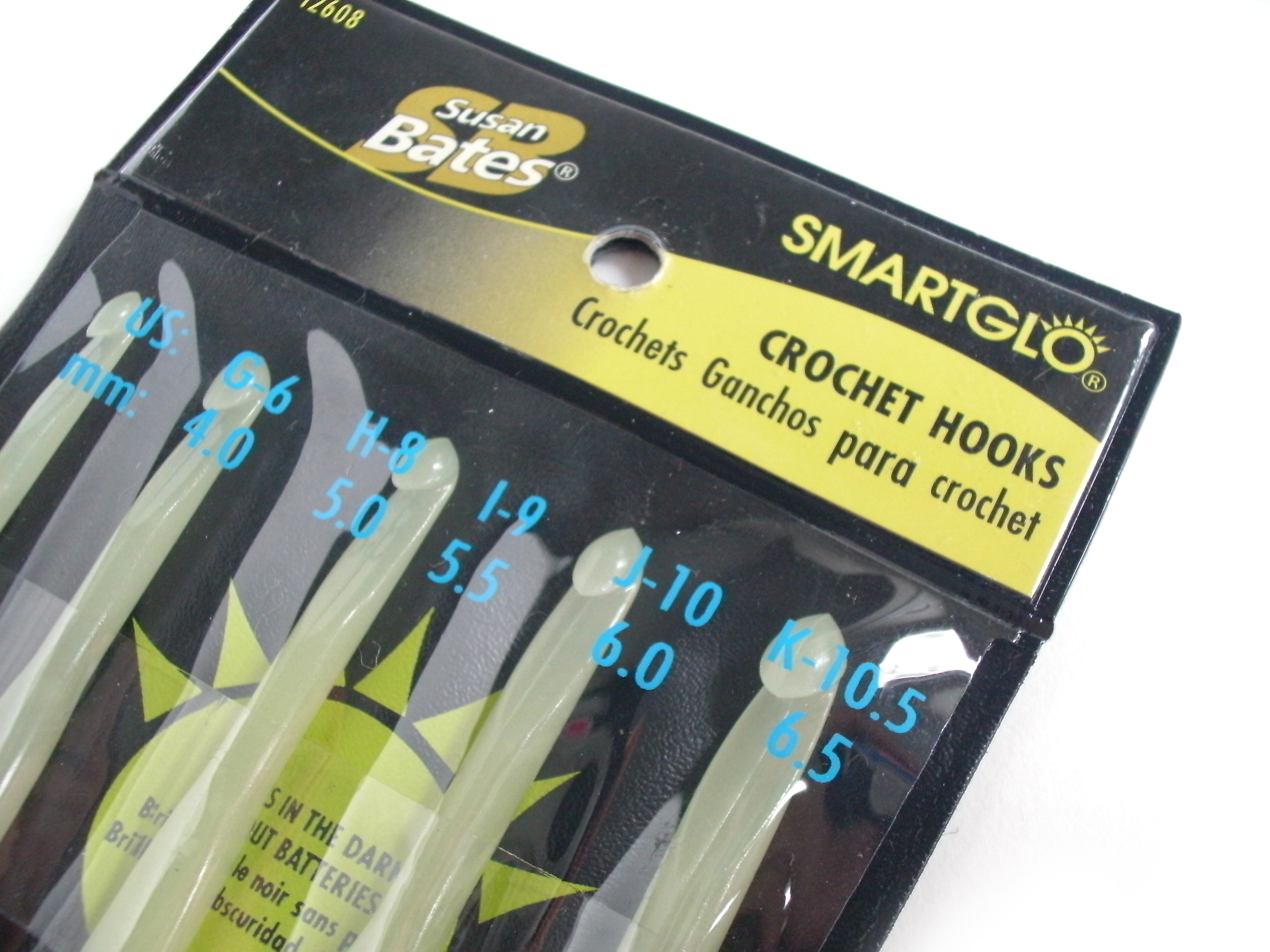
Susan Bates SmartGlo hooks

These hooks really do glow in the dark!
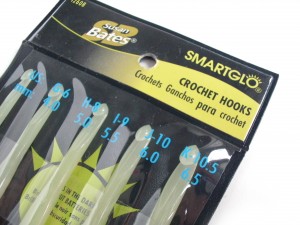
I tried these hooks out during my 36-hour power outage (courtesy of Hurricane Irene), and although they really glowed, they’re not meant to actually let you crochet in the dark. These hooks would be beneficial if you’re working on very dark yarn or if your eyes need extra light as you work (as so many of us do as we age).

Pluses: They’re fun! They glow… that’s kinda cool.
Pitfalls: They aren’t a replacement for a lamp.
Verdict: Being a youngster with great eyes (I’m actually light-sensitive, so I’m rarely seeking out more lighting) who works at home (where I can turn on a lamp if I want), I probably wouldn’t use these. But, if you work on-the-go in places where the lighting isn’t great (the subway comes to mind), these might give you the boost you need!

Ultimate Crochet Hook Review Wrap-up

Phew! That’s a lot of hooks! There’s even more on the market… there’s too many to get them all!

I really hope you’ve enjoyed all of this information and maybe you’ve spied a new hook you want to try!

I’d love to hear in the comments about your favorite hook! What’s the one you love using now? Are there any you’re inspired to try? Let me know!


Ultimate Crochet Hook Review: Susan Bates controversy

A few weeks ago, one event rocked the crochet world.

Okay, maybe I’m being a bit dramatic… but when word spread that Susan Bates had changed its hook design, there was a whole lotta chatter about it!

Susan Bates (aluminum, size H) has always been my absolute favorite crochet hook. And, not because it’s cheap (even though it is). I loved the little-bit pointy point and deep groove. It just fit me.

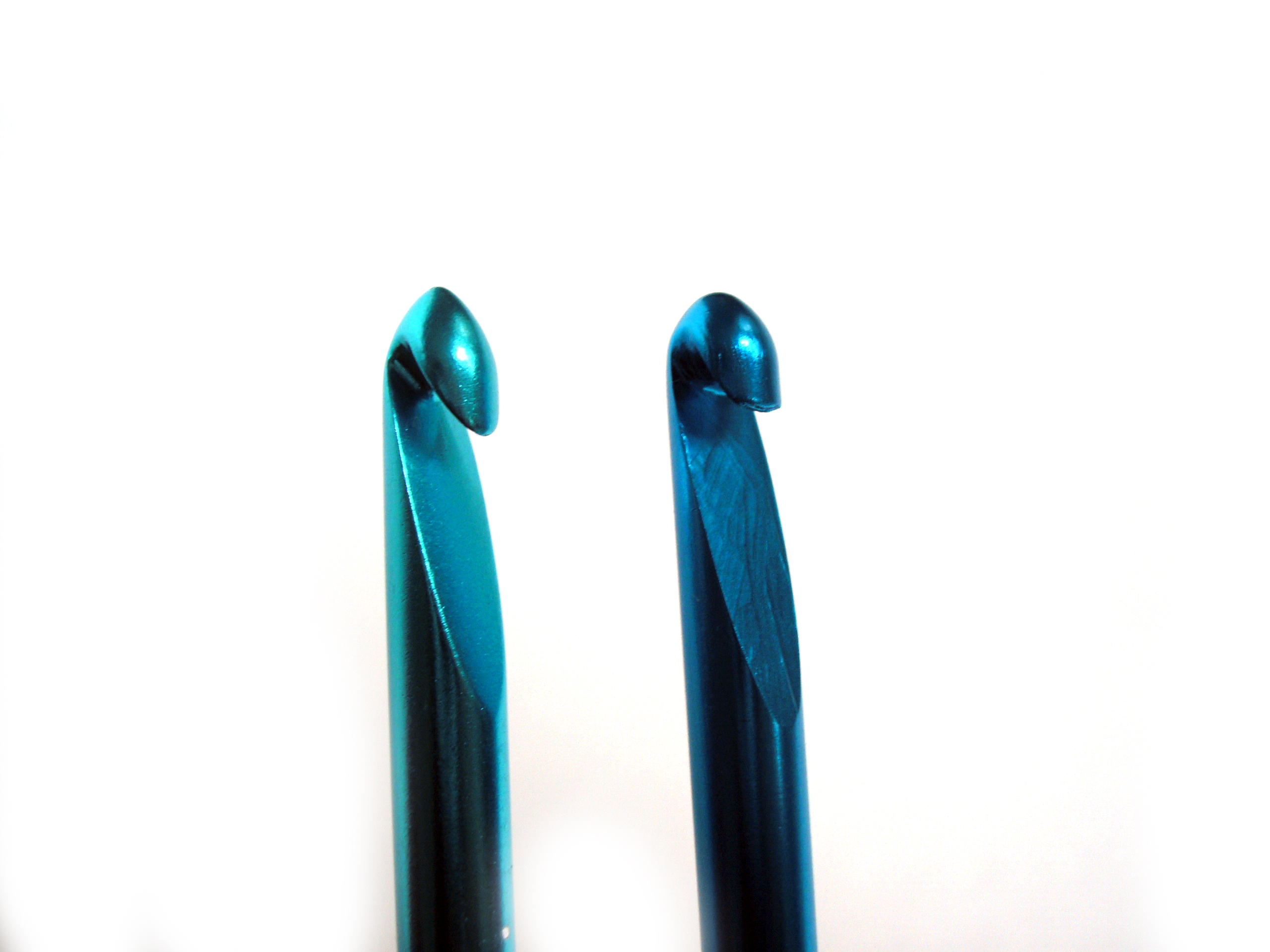
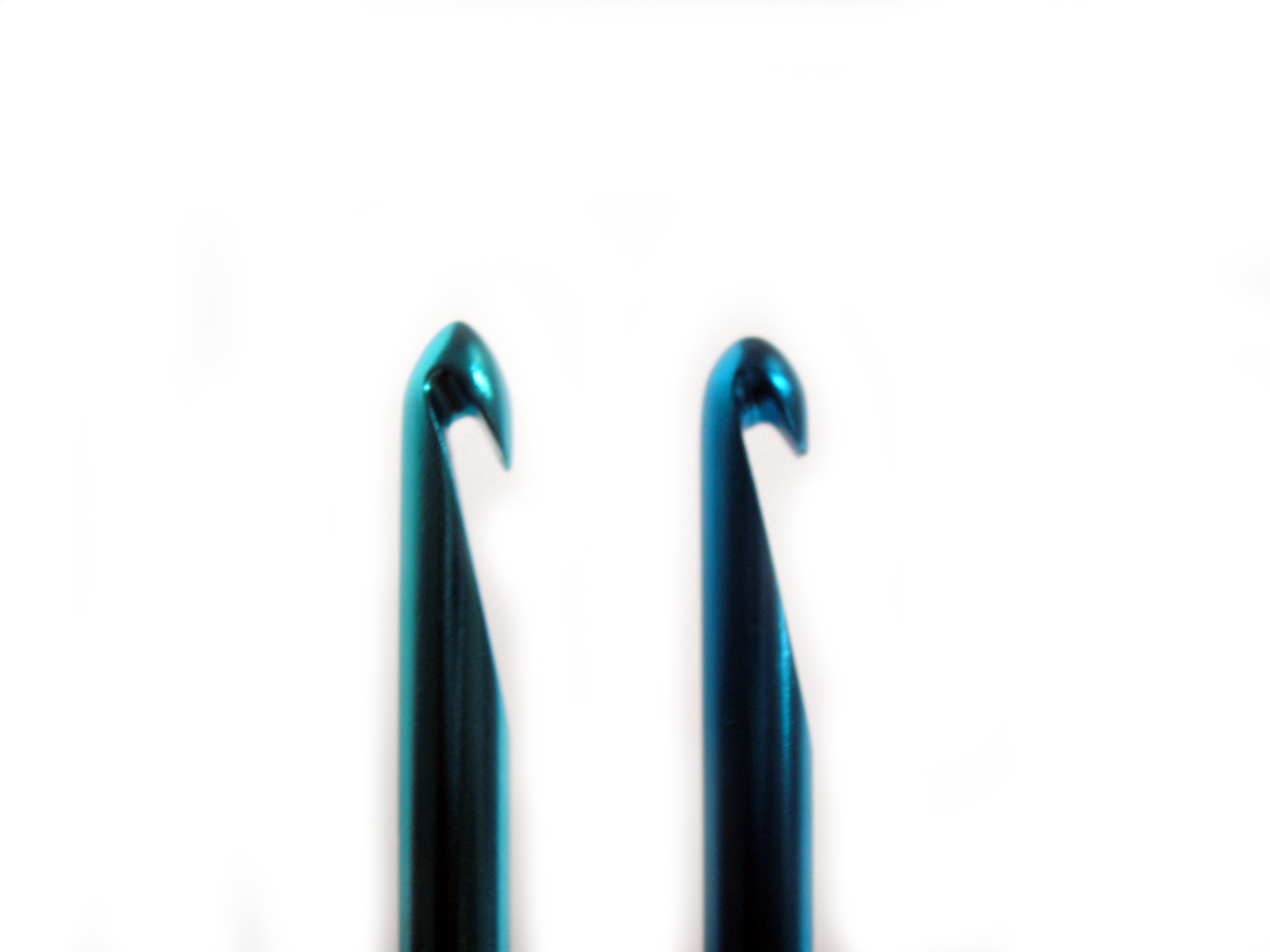
What’s the new design like?
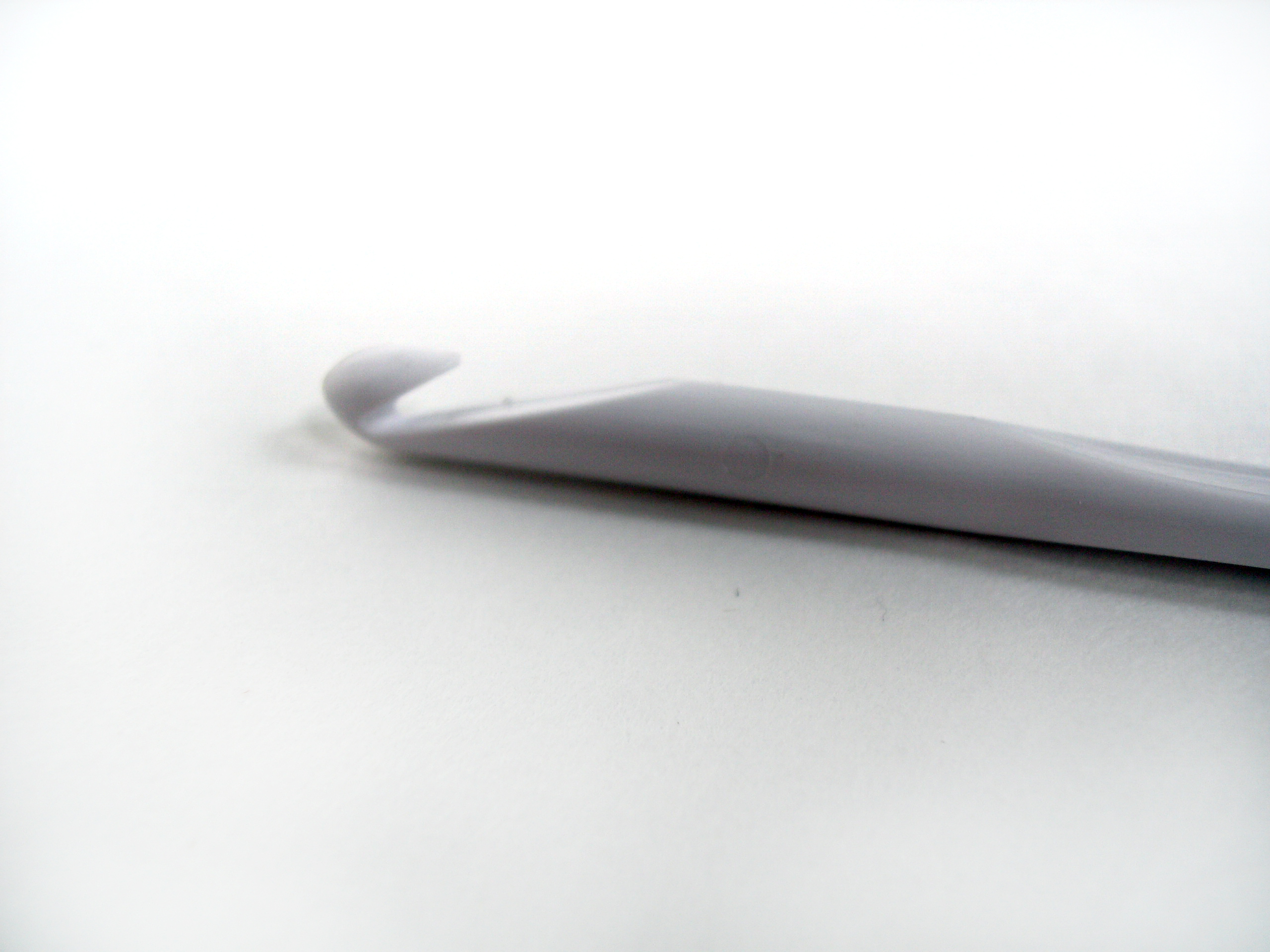
The new design features a rounder point and a shallower groove (although, the shallower groove seems to be the result of a smaller head, not of a change in the depth of the groove, per se).

Front view: old hook, left and new hook, right

Side view: old hook, left and new hook, right
I contacted Coats and Clark (the makers of Susan Bates hooks), and received this response:

The rounded head on the Susan Bates crochet hook is actually the original design for this product. Over the years, many of our long-time consumers have told us how much they prefer the original head as it doesn’t split the yarn the way the more pointed head does. When we were given the opportunity to return to that design, we took it.

Please note that the inline feature of our crochet hooks remains the same; the hook is the same size from the throat of the head to the thumb rest, ensuring a consistent size to all your stitches.

The new, rounded head resembles the head available in Boye, Addi and many other crochet hook brands. However, Susan Bates is keeping its signature inline throat, which is a comparatively unique feature among hooks.

Which hooks are affected?
Most of the Susan Bates hooks are being revised according to the new design. However, I discovered that a Luxite hook I recently received had the design I know and love. I emailed Coats and Clark to find out if it was a remnant, or if the design will remain unchanged. I received this response:

The Luxite hooks up to size P have a typical Susan Bates In Line head. The Q hook has an A Line head. They have not changed.

For now, it seems, the Luxite hook is keeping the old design. However, I could not get any comment on whether this design is be the permanent Luxite design, or if it is scheduled to be redesigned in the future.

Moving forward…
If you were in love with the old Susan Bates design, you have a couple of options: you can switch to the Luxite hook (which, for now, isn’t changing in design) or scope out yard sales for some older hooks.

The Susan Bates hooks are keeping their signature inline hooks… a feature I know many folks appreciate!