Lessons on how to wear a long scarf

How to Wrap a Long Scarf

As you may know, I’ve spent this weekend at the Pittsburgh Knit and Crochet Festival… and I’ve been having a great time. I’ve learned a lot… but do you want to hear the most exciting thing I’ve learned all weekend?

I learned a super-awesome new way to wear a long scarf!

If you’re like me (well, at least the me a few days ago), your standard way to manage a long scarf is to fold it in half, and tuck the ends through the loop. Easy, but leaves a giant bulge around your neck. But, Steven Be, fiber stylist extraordinaire, taught me a new way to wear a long scarf! Squee! And I’m so excited about sharing it with you that I took photos of how to do it in the hotel lobby!

Super-stylish way to wrap a long scarf

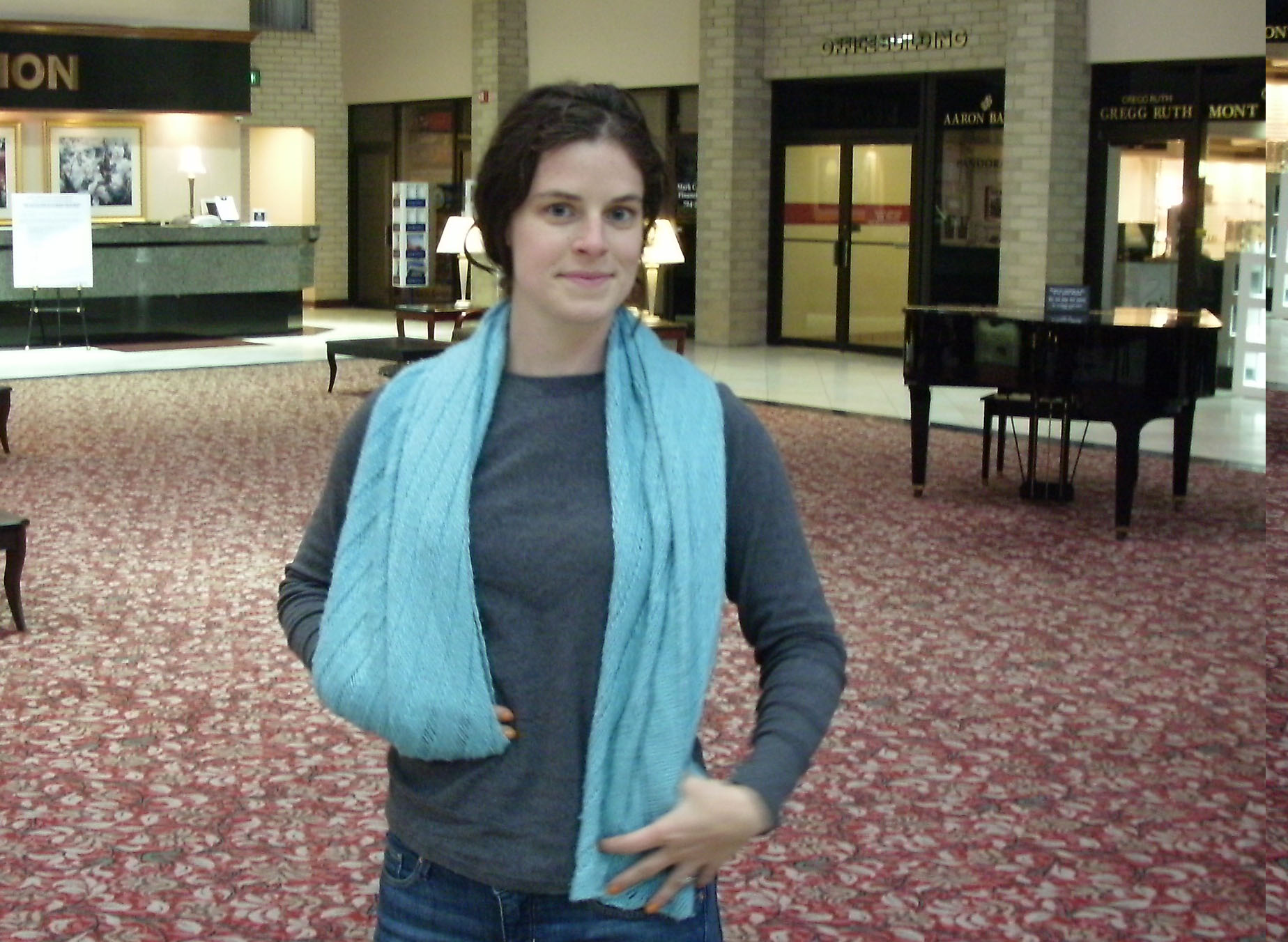
First, fold your scarf in half:

And then put it around your neck (so far… just like the old way!)

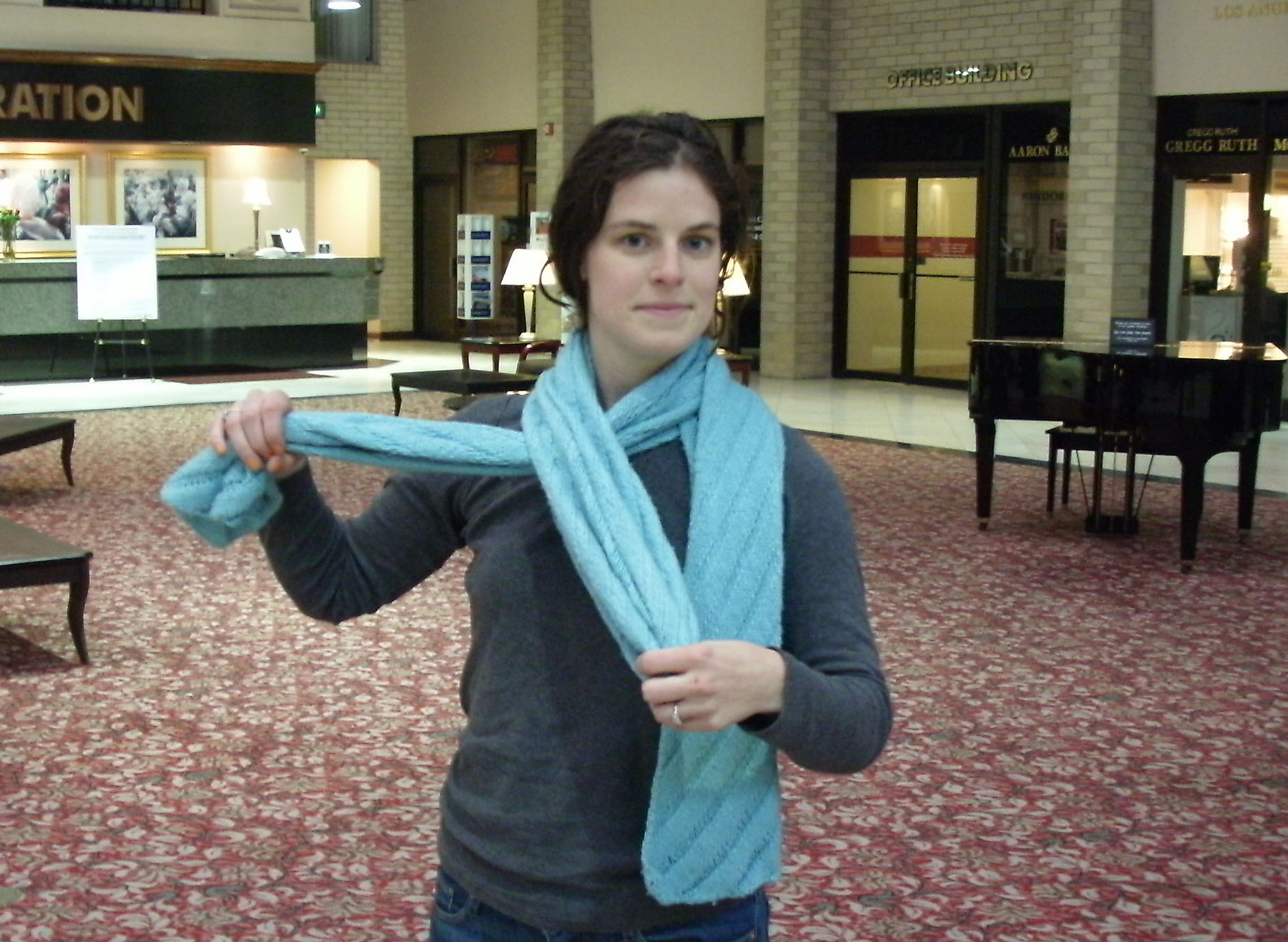
Now, here’s where it gets new! Pull only one tail through the loop:

Now, scoot that tail up a bit, and twist the loop once. The first tail should be above the twist. Pull the second tail through the loop you’ve just twisted:

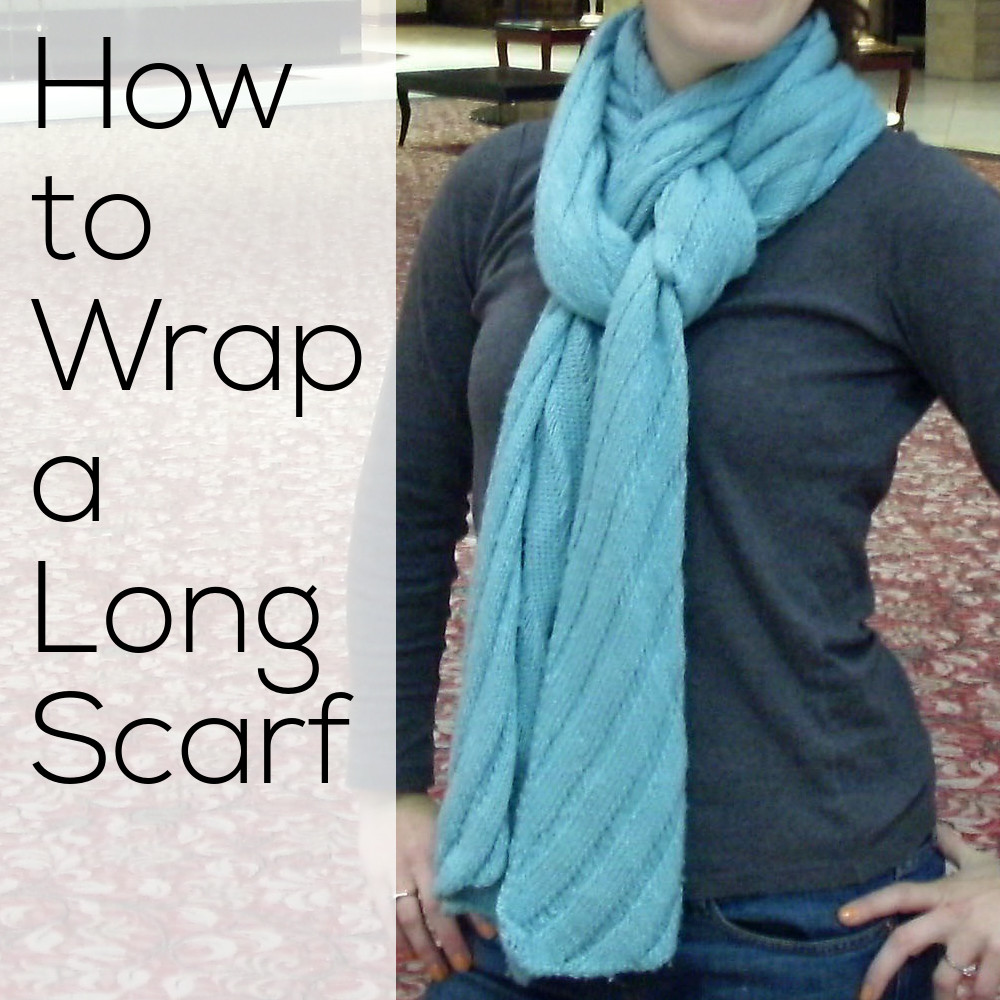
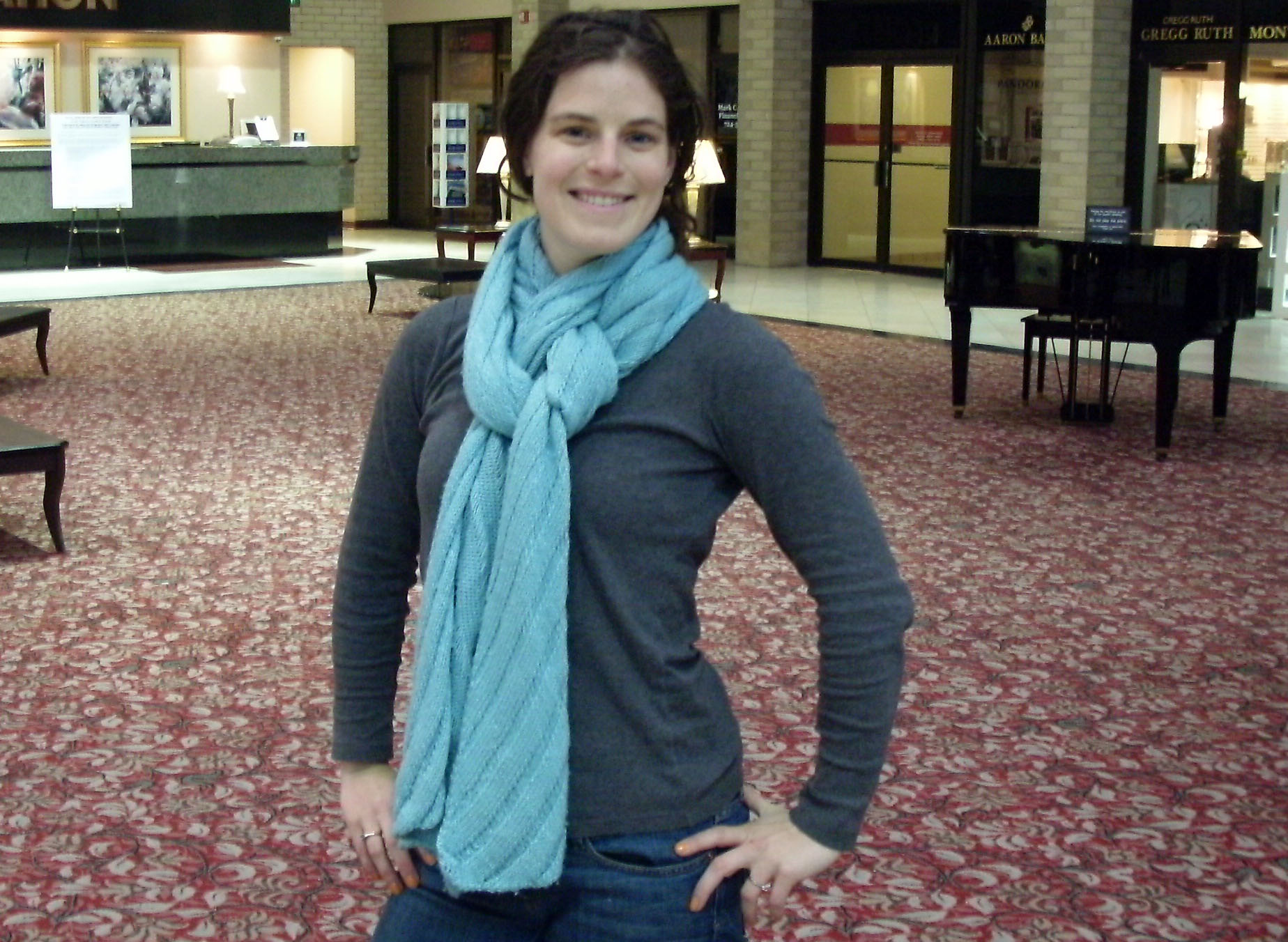
Pull it all snug… and ta-da!

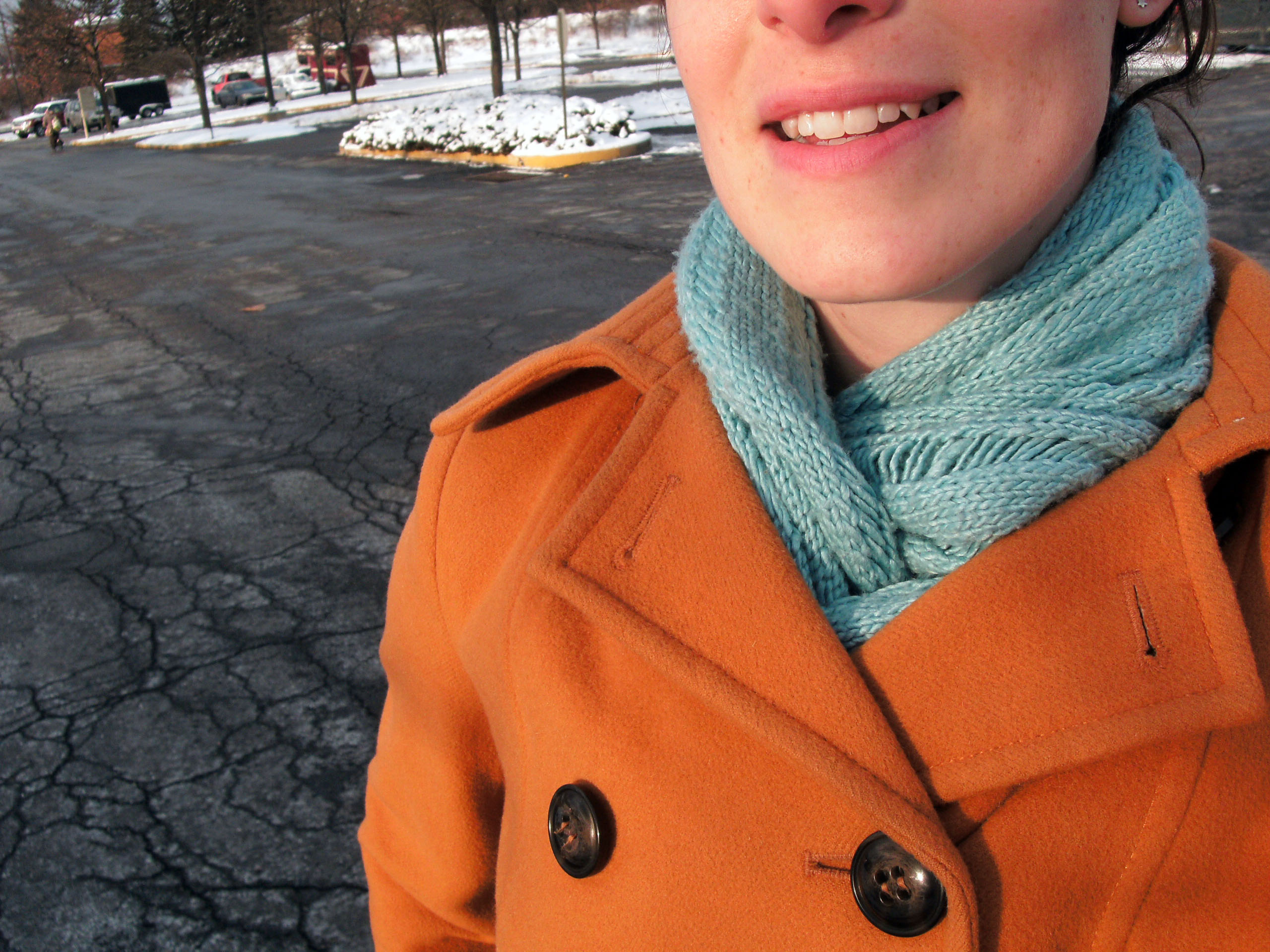
It looks like an awesomely-intricate knot… and lies really nice and flat. Look how nicely it fits under my coat:

Hooray! I’m wearing my scarf like this every day!

Do you have any cool ways of wrapping a scarf to share?

When do you need to "true up" fabric?

Back in this video about cutting strips using a rotary cutter I showed folks how to “true up” the edge of your fabric. That is – make sure that you’re cutting straight strips with the grain of the fabric.

Loretta asked. . .

This makes sense for when you have a piece of fabric that you might get from the store that has selvedge edges. But what if you are using scrap fabric – like you are cutting up an old shirt or pair of pants to make bean bags? Do you need to make sure that your fabric is true?

Ooooh – good question! It’s really a judgement call and depends on what you’re making.

A good guideline is to ask yourself if the finished thing you’re making is going to hang – on the wall, in a window, on your body, etc. If it’s going to hang, you usually want to make sure you’re working on the straight grain. As it hangs, it stretches, and if it’s not cut on the straight grain it will stretch unevenly. Have you ever had a T-shirt that got all twisty over time? Where the side seams stopped running straight up the sides and instead kind of spiraled around your body? That means the grain was messed up. It can happen with pants too. So annoying!

For stuff that won’t hang it’s not as important. So for most softies and beanbags, most patches for scrap quilts, etc. just cut out your pieces to maximize the fabric you have, or to get the pattern to run in the direction you want.

For really precise pieced quilts (like super-fancy stars and things like that) the pattern will often include cutting instructions and a good pattern will let you know if the direction of the grain is important.

Got any other questions? Send them to me here.

Happy stitching!

Best,
Wendi
Applique Wendi (with fabulous hat)

How to Machine Applique Convex Curves – video

How to Applique Convex Curves using the freezer paper method - video tutorial

This is the first in a series of videos teaching a machine applique technique that I used to use for all my applique quilts. In previous videos I showed you how to applique with fusible adhesive and how to do needle-turn applique. This technique is kind of the best of both worlds. It’s almost as fast as using fusible, but without the potential stiffness and sometimes clunky outline. It’s similar in look to needle-turn, but not as slow. It’s a great technique for snuggly quilts that you want to wash and dry in the machine without a lot of fuss.

So – in this video I’m using the technique on a specific pattern (the Peekaboo Bear Quilt) but you can use it on any convex curves. Those are curves that bow out, like the edge of a circle or oval. In future videos I’ll expand on the info here – showing you how to handle inner points, concave curves, outer points, and more.

See how easy it is? I mostly use fusible adhesive now (I discovered some really nice quality, not stiff options) But I still go back to this every once in a while – especially for big, easy shapes.

Click here for all my posts and tutorials about applique in one handy dandy place.

Best,
Wendi
Applique Wendi (with fabulous hat)

Felt Embroidery – All My Tips and Tricks

I’ve gotten a few questions lately about felt embroidery – and I’m going to answer them all here today.

Most of your patterns use smallish shapes. Do I transfer the pattern, hoop them and stitch, and then cut them out?

Well – I buy the good stuff (there’s no point embroidering it if it’s going to get all pilled and nasty-looking the first time someone touches it) and I don’t like to waste any of it. That means no excess for hooping. You don’t really need to hoop felt anyway – and it’s hard to get the crimp marks out when you do. It’s stiff enough to embroider easily without a hoop. Just be careful not to pull your stitches too tight.

My method is to transfer the pattern, cut it out, and then stitch.

How do you transfer your pattern to felt? You can’t trace through this stuff, and any pen or pencil tends to lift the fibers.

I use one of my favorite embroidery products–I call it The Magical Embroidery Stuff and you can read more about it here. I use it for all of my embroidery, but it really is pure magic for felt embroidery. In fact – it’s so magical that I wrote a whole post here, just about how amazing it is with wool felt.

Where do you find wool felt in such gorgeous colors?

I recommend Benzie Design. They have an amazing selection of colors – including lots of gorgeous felt bundles.

By the way – that picture up at the top is a close up of some of the blocks from the Felt Blocks Embroidery Pattern. Those were so much fun to stitch!

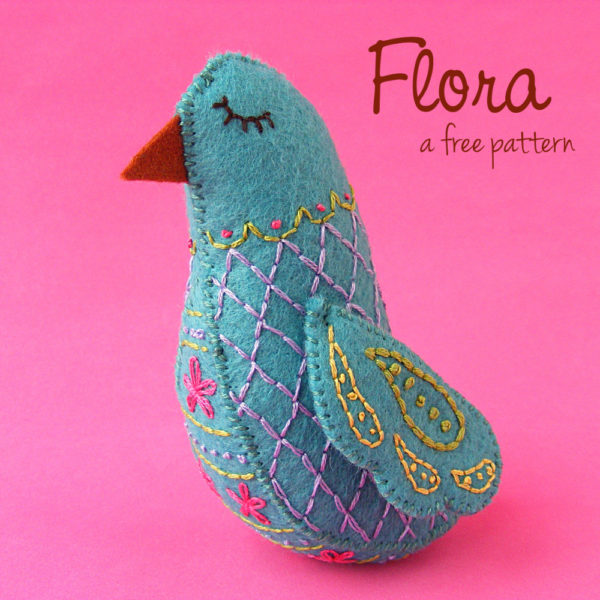
If you’re looking for a free pattern to try, I recommend Flora the felt bird.

Colorful felt bird ornament with embroidery and applique details, perfect for sewing projects.

She’s so pretty!

Vibrant handmade crochet toys and patterns from Shiny Happy World.

Here are links to all my posts about embroidery tools and supplies.

For Beginners

Specialty Fabrics

Threads

Stabilizers and Pattern Transfer Tools

Return to the Learn to Embroider main Table of Contents.

Move on to the posts about working with patterns.

Vibrant handmade crochet toys and patterns from Shiny Happy World.

How to Add a Crocheted Edge to Anything – video and PDF

How to Add a Crochet Edge to Anything - a video tutorial from Shiny Happy World

Today we’re going all out with the fancification you can add to the hem of a simple skirt (or a pillowcase, a hankie, a tea towel – anything with a hem really). Today I bring you my favorite fancy schmancy embellishment – the crocheted scallop edge.

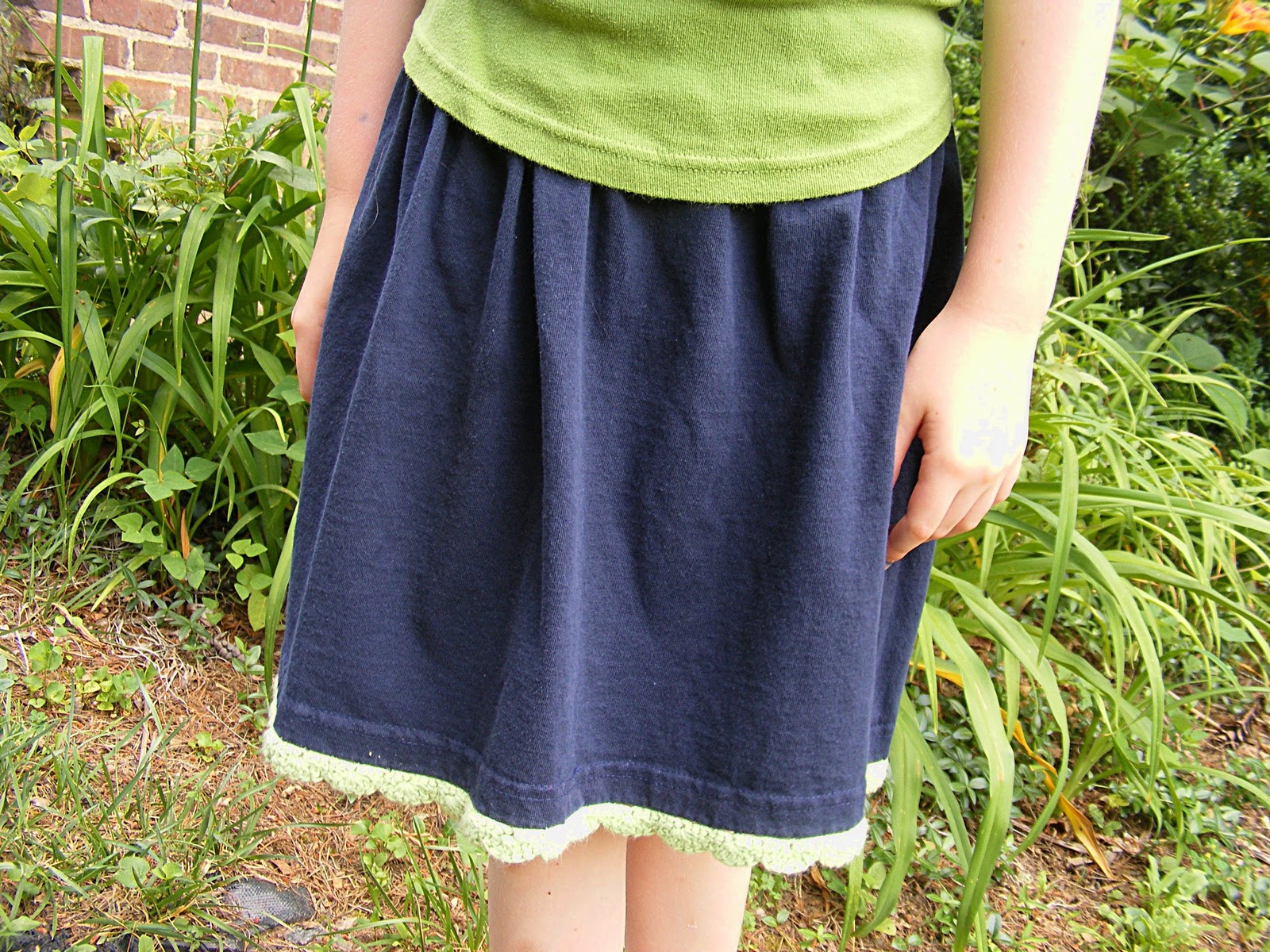
Here’s what it looks like. I happen to think this elevates a simple T-shirt skirt into something really nice. That simple band of color around the bottom, the addition of a different texture – it just works. And it works for grown up clothes too!

Want to see it closer?

You can click on any of the images to see them even bigger.

I don’t care if you’ve never picked up a crochet hook before – you can totally do this! The video is longish – not because it’s extra complicated, but because I take you slowly through every step. AND I’ve also made up a printable PDF with a kajillion step by step photos that you can keep near you on the sofa while you work. You can download that here. I tell you what needle size to use and I even took photos of the label of the yarn I use so you can see all the details. You can do this!

This is the last of this batch of skirt fancification videos. Here’s a rundown of the other posts.

How to Add Ruffles to a T-shirt Skirt (video)

How to Embroider the Hem of a T-shirt Skirt (video)

How to Add a Crocheted Scallop Edge to Anything. That’s this one. 🙂

Are you ready to sew some fabulous skirts? I’m ready to see them! Post photos to the Shiny Happy People group! 🙂

Happy stitching everyone!

Best,
Wendi
Applique Wendi (with fabulous hat)

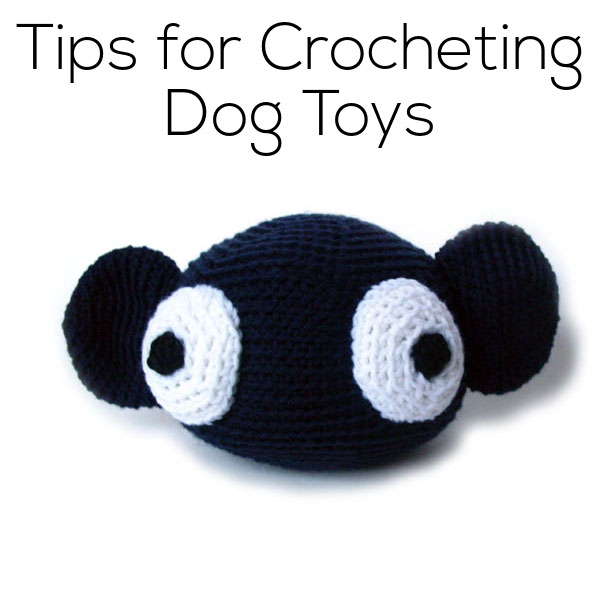
Guide to Crocheting Dog Toys

Crochet dog toy with big eyes, cute and soft, perfect for pets and DIY crochet projects.

If you have a dog, you probably think of him as a member of the family… so wouldn’t you want to crochet him a sweet toy?

When crocheting for a dog, safety is the top priority! It’s a lot like crocheting for a baby, with a few extra considerations to keep in mind.

Don’t use buttons or plastic parts!

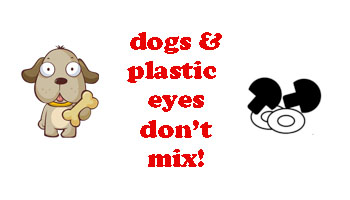
Some dogs are avid chewers, and even ‘safety eyes’ can come off when the fabric they’re attached to has been chewed through. I don’t need to give details about the digestion distress a swallowed eye can give your pup… so just avoid them!

dogs and plastic eyes

For any plush, you can easily add baby-safe crocheted eyes instead of plastic ones.

Select a Sturdy Yarn

Linen would totally rock, but so would wool or cotton. Nothing too soft (no merino!), because you want it to hold up. Even the gentle-est dog will have the toy in its mouth!

You can also look at thin rope in the hardware store. It’ll be sturdy and strong – you’ll just need to do some experimenting to find the right hook size.

Don’t forget to also select a machine washable yarn… because you’ll probably want to wash it!

Crochet a tighter gauge than usual

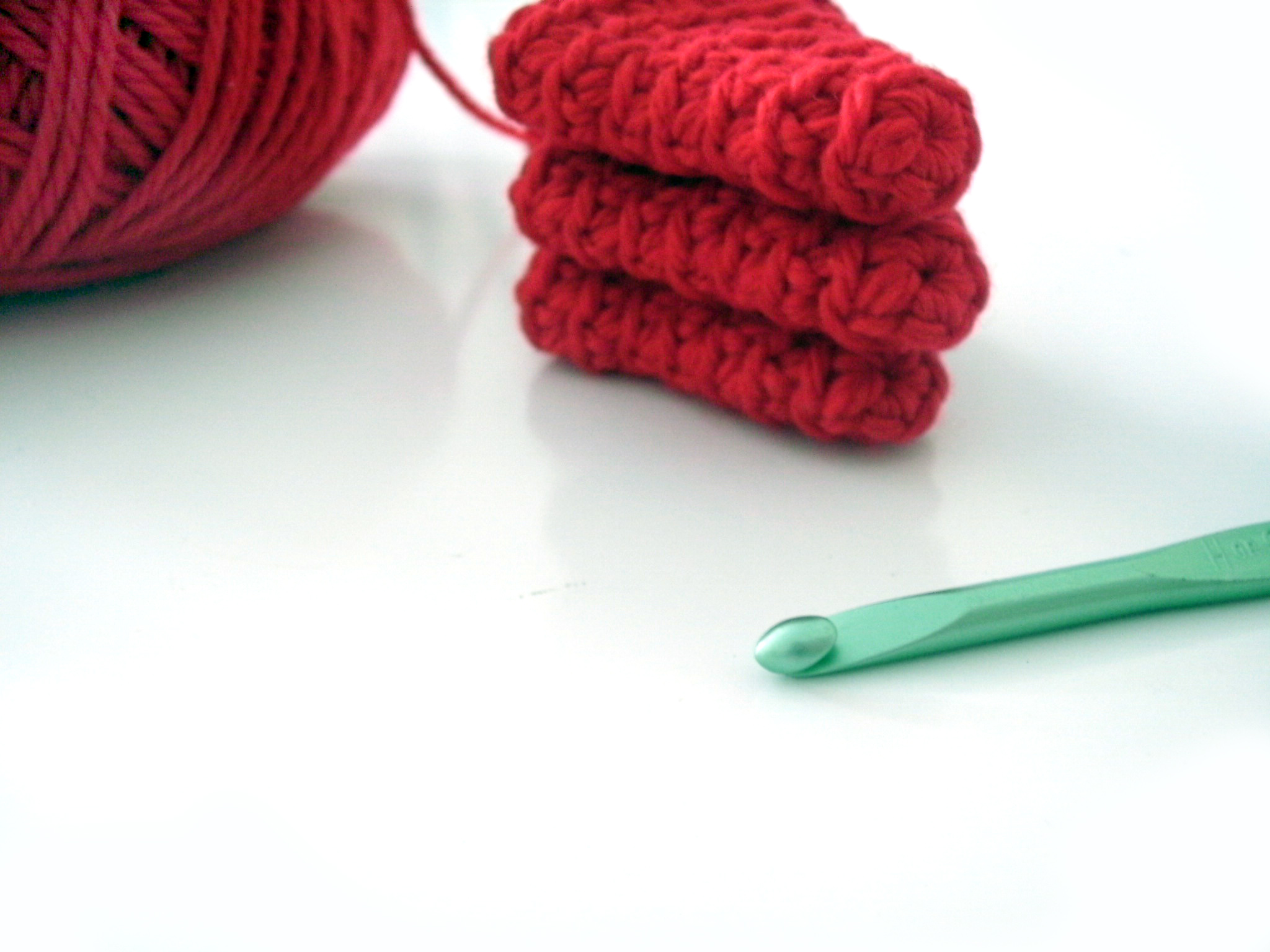
I used a size G hook on a worsted weight yarn- giving me a very stiff fabric. This will help almost any yarn last longer and stand up to more chewing.

Keep it Safe

Don’t make a super-tiny toy. I don’t know what the exact minimum size is, but make a toy that’s about the size of the toys you see sold in shops- that way you know you’ll be safe.

If you follow these tips, you can crochet an adorable toy that your pup will love… and will last through lots of playing!

Are crochet hooks allowed on planes?

This question came up recently, and I since I have a lot to say on the topic (because I travel oodles), I thought it’d make a good blog post!

The short answer- in US and Australia

The quick and easy answer is “Yes, crochet hooks are allowed as carry-on items in planes in the US, Australia and lots of other countries”.

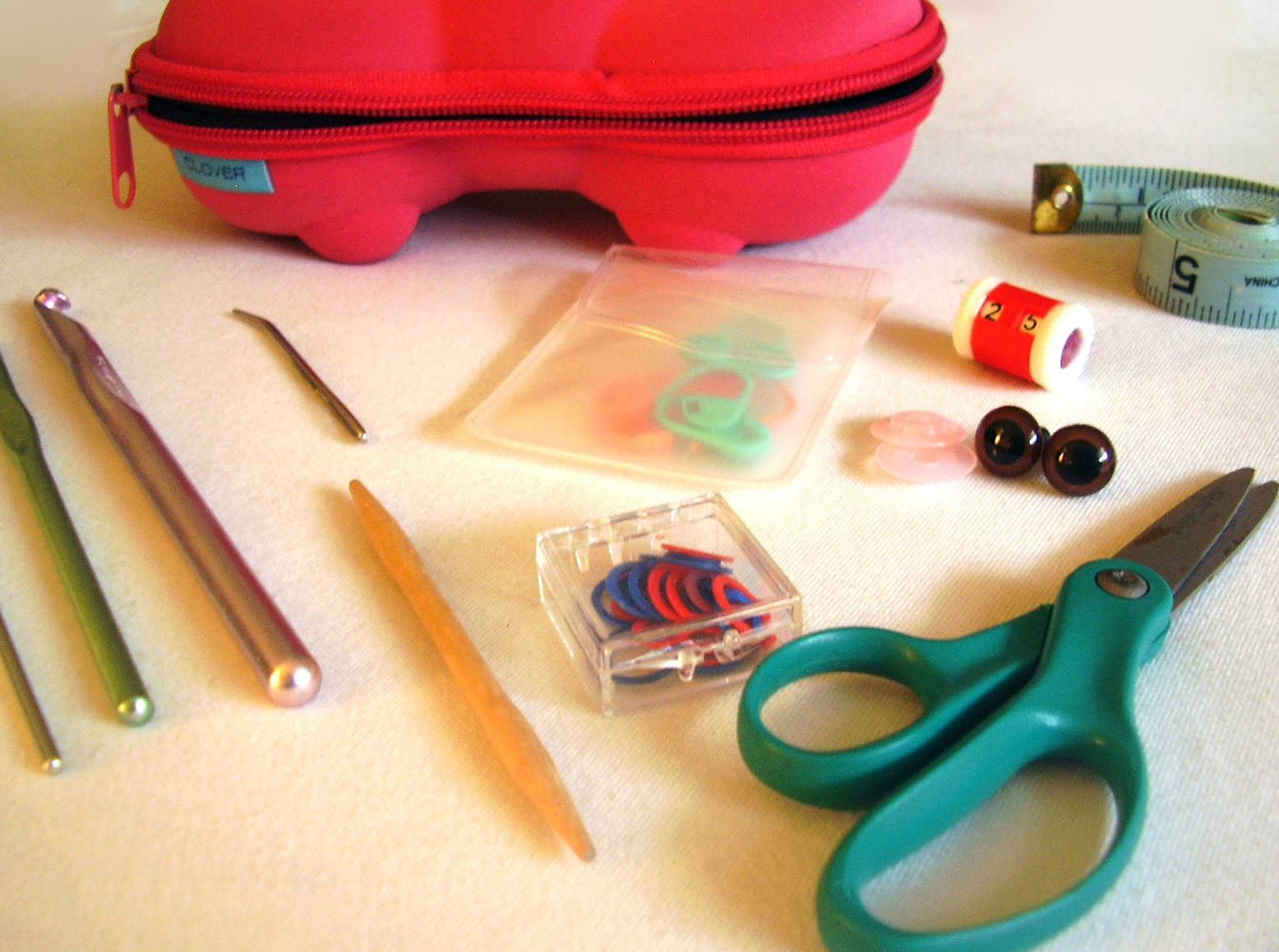
In my personal experience, I’ve carried crochet hooks on board planes in the US, England, France, Switzerland and Australia without any problems. The photo below is of my ‘hippo’, the case I carry around with me at all times while traveling.
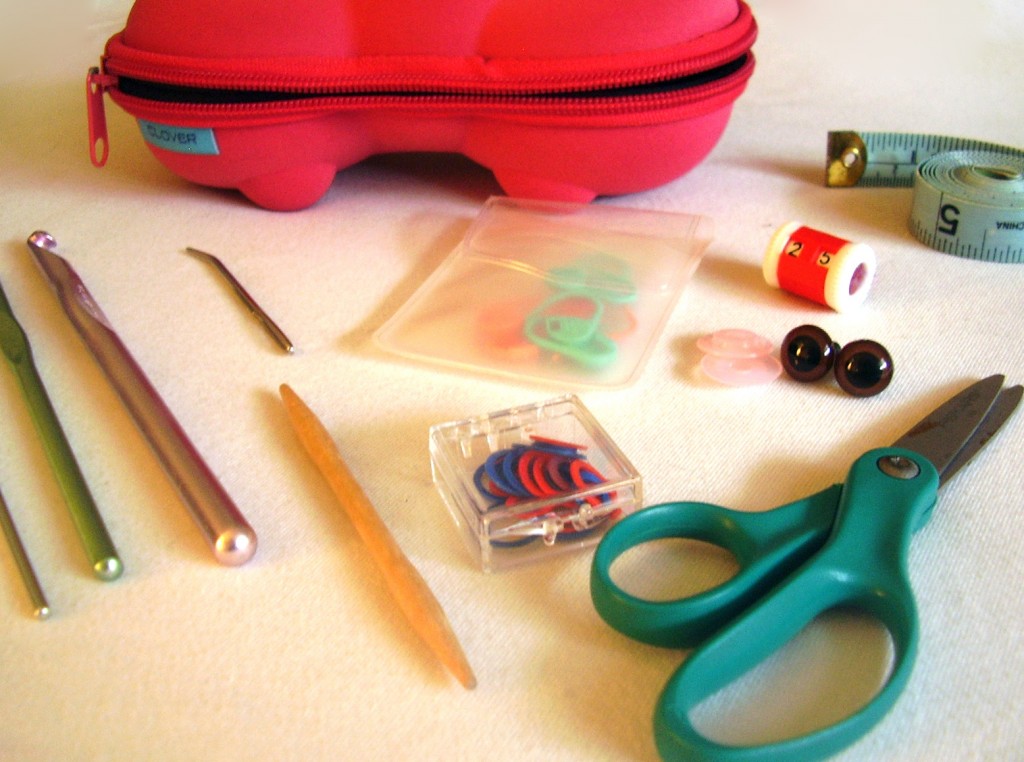
Yes, I travel with metal crochet hooks (as pictured), and I have even brought steel crochet hooks (the tiny, pointy ones) with me. (For the tiny crochet hooks, I was questioned in Paris about what they were, but they weren’t taken away). I often hear people say that ‘wood is allowed, but metal isn’t’, and as far as I know- at least in countries that permit crochet hooks- there’s no difference between the materials.

And (at least in the US), child-safe scissors (that is, blunt-tipped and with blades shorter than 4 inches) are allowed on board as well (and is stated so in the TSA Regulations).

The Caveat

Of course the disclaimer is this: any TSA agent (or their analog in another country) may confiscate something if they feel it is a threat. Ultimately, the agents are permitted to make judgement calls- and of course, you’ll hear stories about someone who had their hook taken away.

Also, there are countries where crochet hooks aren’t permitted on board (in fact, Australia was one of them until 2009). So, when you travel, always check the local regulations.
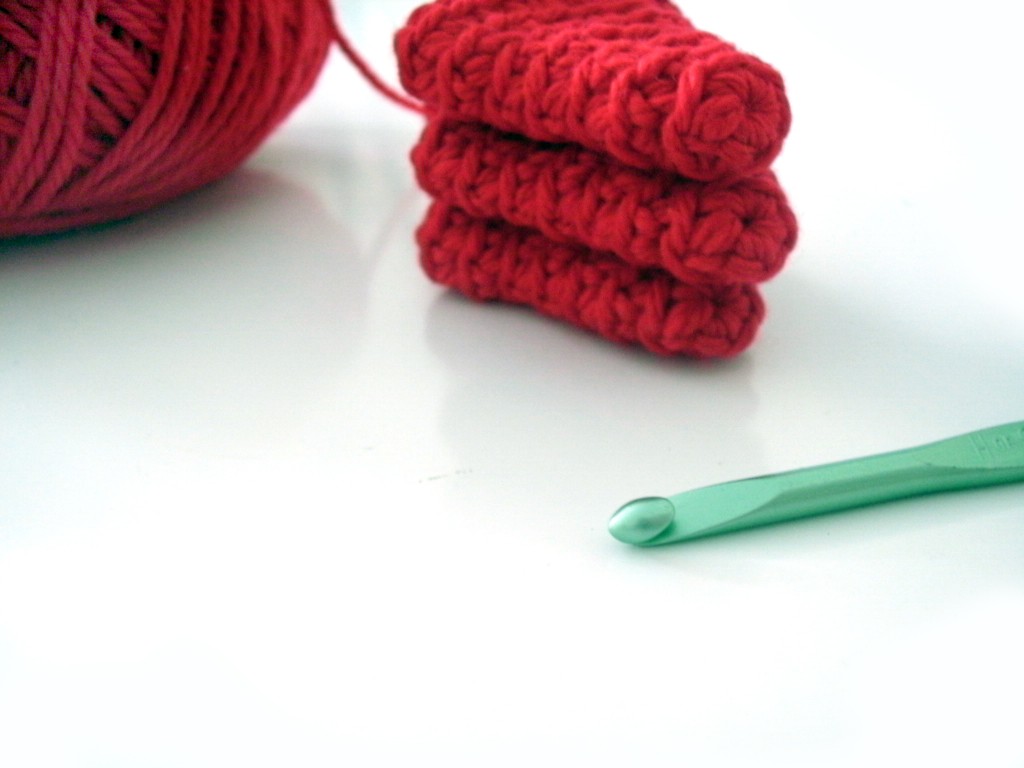
Tips for traveling with hooks

I’ve said that hooks are allowed… but that a guard could take them away from you if they are deemed dangerous. So, how can you feel confident bringing your hooks? Here are some tips:

  • Bring yarn along with your crochet hooks. Better yet, be in the middle of a project. It’s much easier to explain what you’re doing (and that it’s a handicraft and not harmful) if there’s evidence of what you’re working on.
  • Use a pencil case. If you’re not in the middle of a project, throw your hooks in with some pencils and pens in a pencil case. Especially if your hooks are wood, they’re unlikely to be noticed.
  • Don’t bring anything irreplaceable. Actually, this rule applies to more than just crochet hooks! There’s always a tiny chance your hook can be taken away, so don’t bring your grandmother’s ivory hook- it’s just a risk you don’t need to take!

I’m not trying to help you sneak on anything that’s not allowed… crochet hooks are permitted on planes. But the truth is that sometimes you’ll run across an agent who either doesn’t know what a crochet hook is or doesn’t know that they’re allowed. And, it really makes for a nicer plane ride if you can have your hooks with you!

Do I need to prewash my tea towels?

Reader Question: Do I have to wash new tea towels before I embroider them? And then should I iron them before I stitch them?

I pre-wash everything. Everything. I don’t mess around. When I come back from the fabric store, everything I just bought goes straight into the laundry hamper and isn’t allowed in my sewing room until it’s been washed, dried and ironed. I’m a little obsessive about it – but I have a good reason.

The very first thing I ever sewed was a tablecloth. Truly, the ugliest, worst-made tablecloth the world has ever seen. One of the many things I did wrong was that I didn’t pre-wash my fabric. So the first time I threw the tablecloth into the wash, it shrank just enough for every seam to pucker and look terrible. This was exacerbated by the fact that I had a seam running right down the middle of the table – the long way – but that’s a whole other sewing problem. 🙂

Now I always pre-wash everything.

Including tea towels.

They’ll come out all wrinkly and you’ll definitely want to iron them before you stitch on them. The hoop will leave rings in your fabric and you can press them out – but I usually throw the whole thing in the wash again. It’s a towel, right? And it’s going to be washed a million times. Just go ahead and wash those creases out. If you need to iron them after you’ve done the embroidery, do it carefully.

There’s a video here showing how to iron finished embroidery without squishing the stitches – but I don’t iron my finished tea towels because I’m lazy and I really USE them.

Good luck!

Got any other sewing or embroidery questions? Send them to me here.

Happy stitching!

Best,
Wendi
Applique Wendi (with fabulous hat)

How to Embroider the Hem of a Knit Skirt – video

Embroidery on knit skirt hem, colorful stitching, sewing tutorial, DIY clothing, fashion embellishment.

Brightly colored quilt with playful patterns on a cozy bed.

Want to learn the basics of hand embroidery with an easy online workshop – totally free?

Sign up for Embroidery 101 here. You’ll learn how to get started, the tools and supplies you’ll need, the four most basic stitches, how to transfer your pattern and how to display your work.

If you already know the basics – sign up for Embroidery 201. It’s also free! You’ll learn how to stitch on specialty fabrics like felt and stretchy T-shirts. Plus you’ll learn lots and lots and LOTS more stitches – all my favorites!

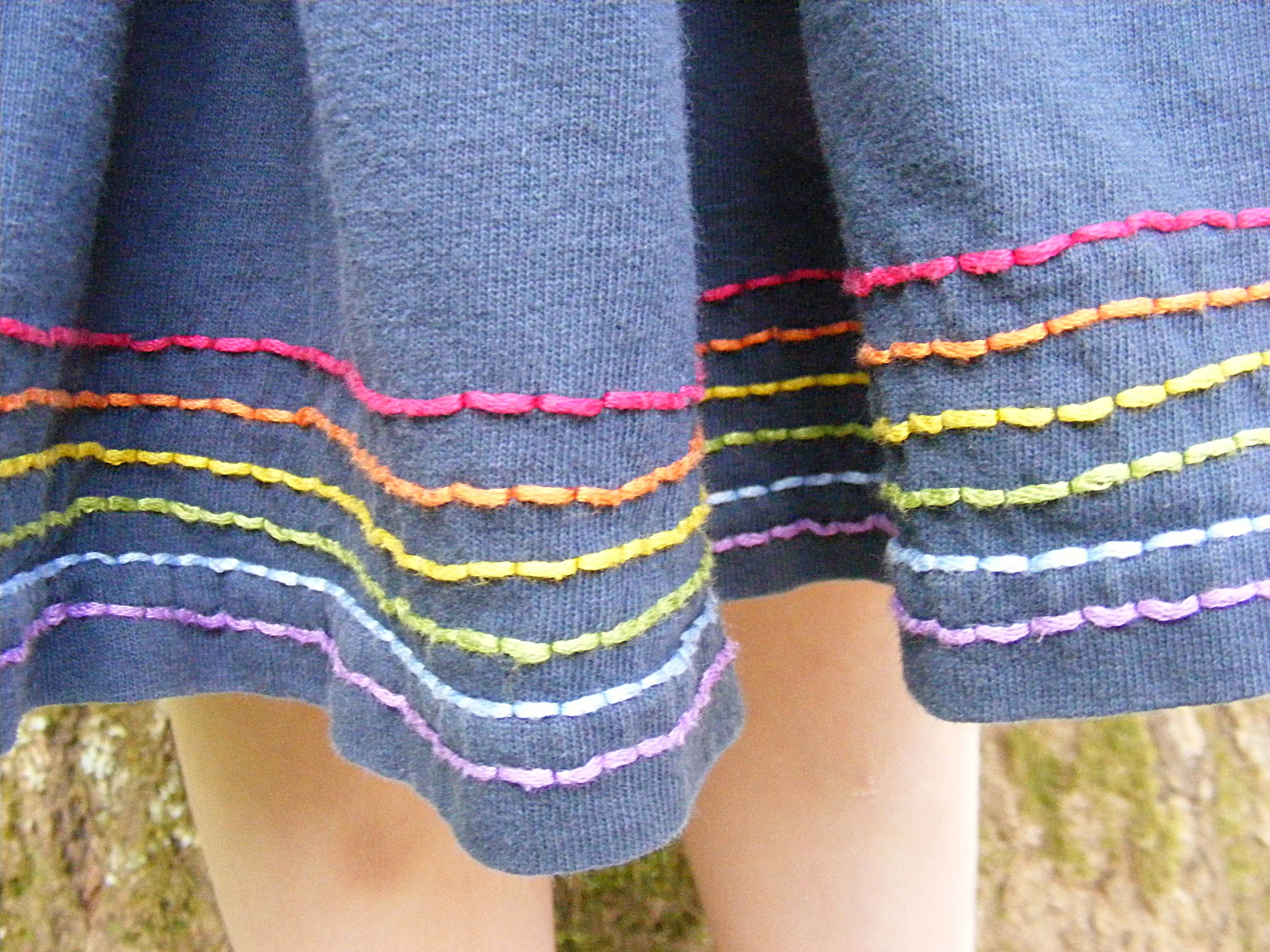
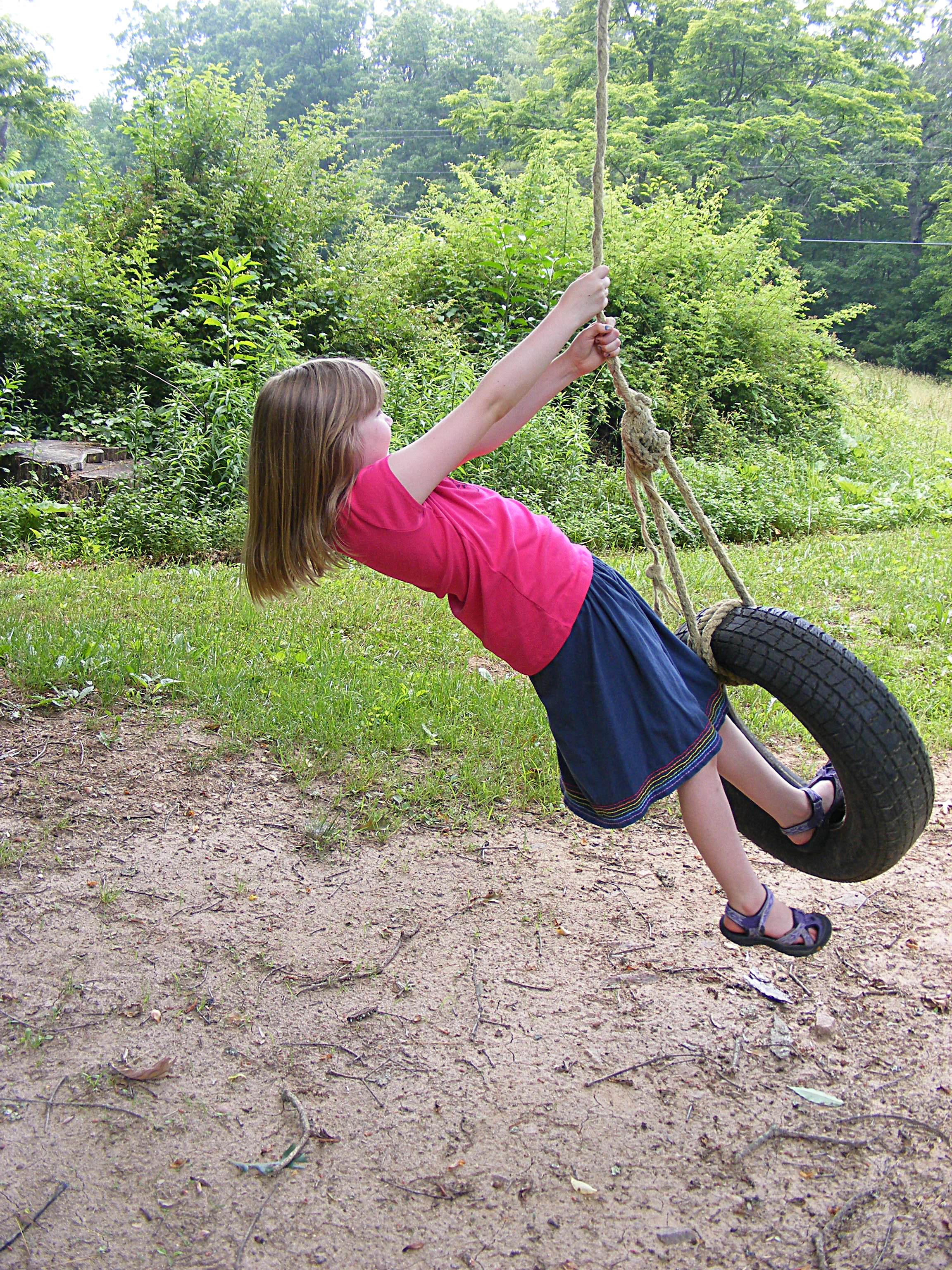
Brightly colored quilt with playful patterns on a cozy bed. I love using a little bit of embroidery to fancy up a simple garment – like this T-shirt skirt I made for my daughter.

Colorful embroidered stripes on dark gray fabric, showcasing vibrant craft details.

I’ll tell you – I love this skirt. I’m going to be so sad when Jo outgrows it!

Vibrant children’s outdoor tire swing on rope, kids playing in nature, backyard toy.

I really need to make one for myself. . .

But you want to know about the embroidery. That’s what the video is for! 🙂 I show you exactly how to do it. It’s easy. Even easier than the ruffles video I shared last week. But it takes longer – that’s why I waited to do it second.

Want to know something else? You don’t have to do this only on a skirt. You could totally stitch a rainbow like this around the hem of a regular T-shirt and it would look awesome! Just make sure it’s not too tight a T-shirt, because this stitching will kill the stretch.

Want even fancier fancification? Jump ahead to this post showing how to crochet a scalloped hem. Oooh. . . 🙂

Happy stitching, everyone!

Best,
Wendi
Applique Wendi (with fabulous hat)

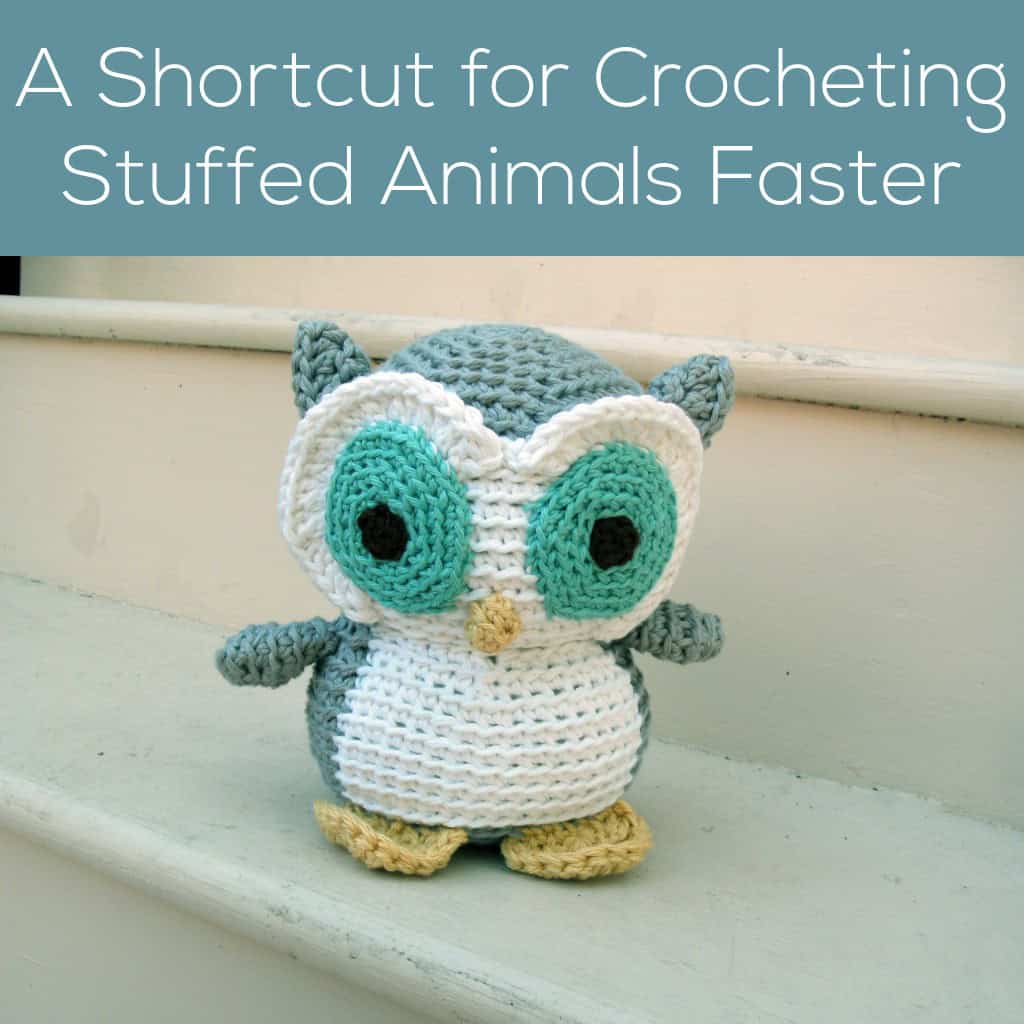
A shortcut for crocheting stuffed animals more quickly!

It’s Tip Tuesday! Today, I’m going to share my trick for cutting down on the crochet-time of an adorable stuffed animal!

We’ve all been there before: you have a baby shower/birthday party/event to go to this weekend, you want to crochet an adorable stuffed animal, but you don’t have a lot of time. What can you do?

You can slash your crocheting time with a combo approach: use a bulky yarn and downsize the pattern!

I do this all the time… and it cuts my crochet time by about 30%, and you still get a great result! Let me walk you through it.

The side-by-side comparison

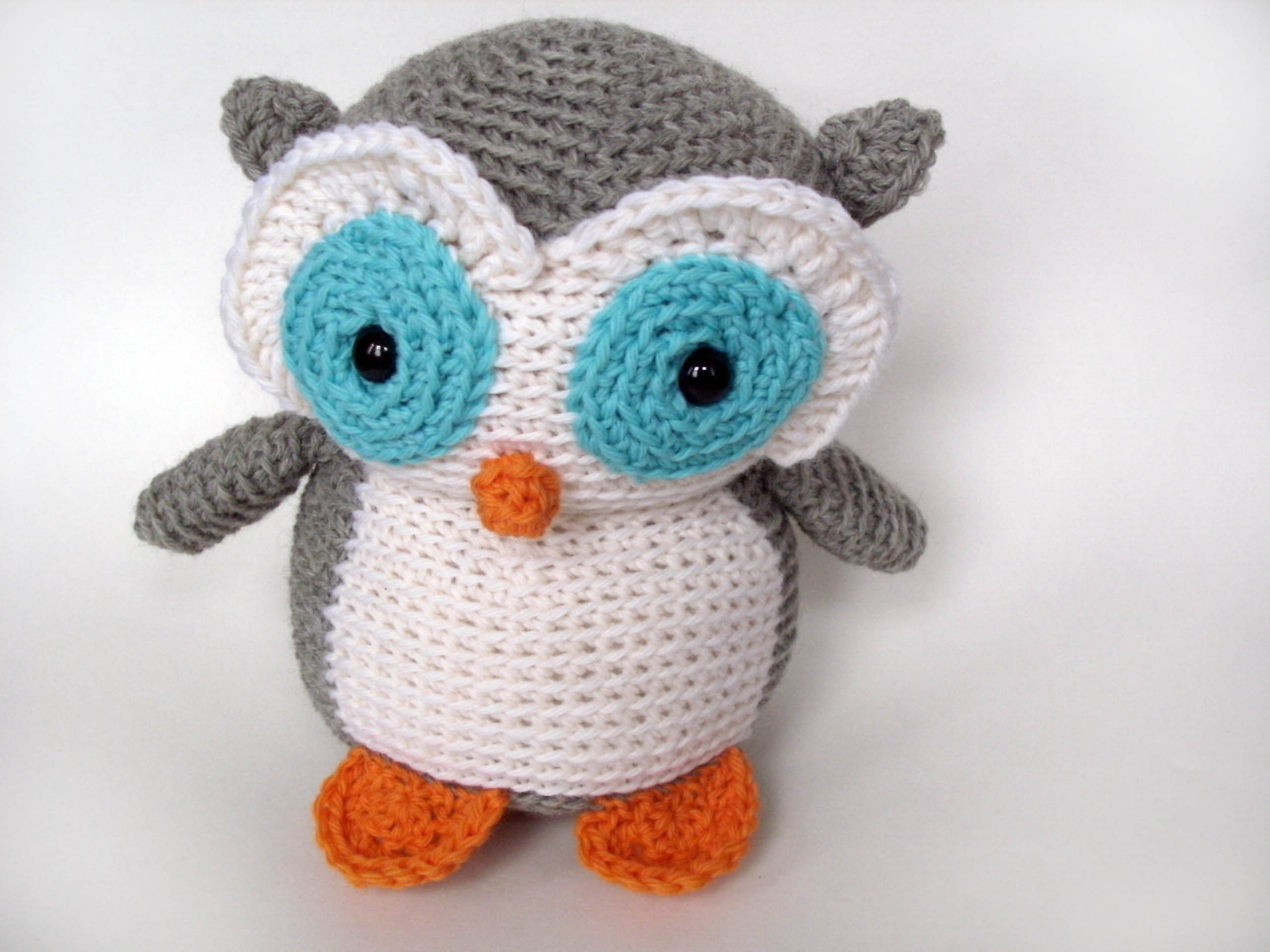
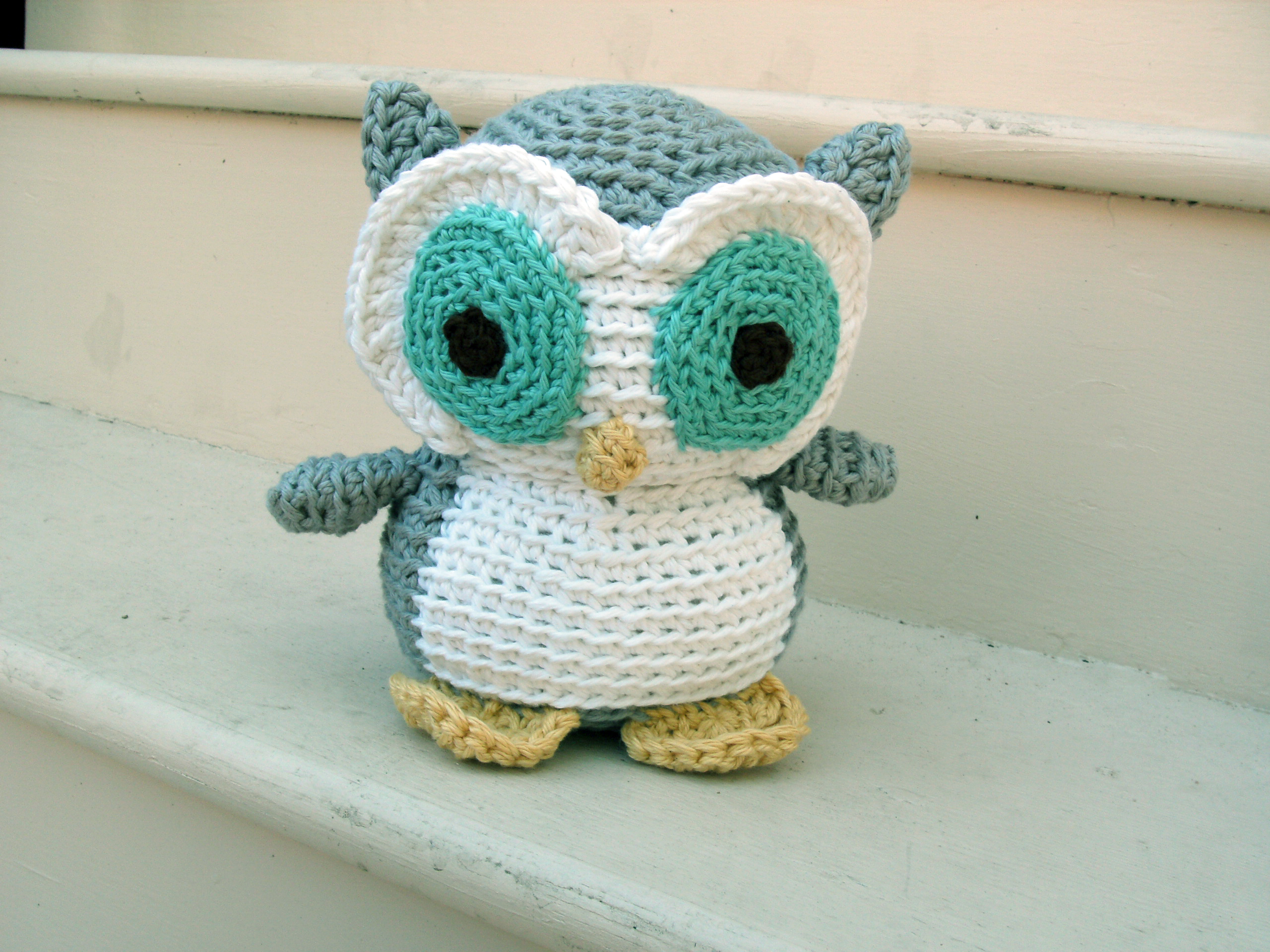
Here is an owl that I crocheted following the pattern exactly (using a worsted weight yarn):

Now, here is an owl that I crocheted using a bulky yarn and a ‘downsized’ pattern:

Can you see a big difference? Probably not! They’re both 8″ tall… but the second one took me far less time to crochet! And you can do it, too!

The trick

The pattern I’m using is Nelson the Owl, but this trick will work on almost any amigurumi pattern.

My owl pattern calls for a worsted weight yarn, and tells me to do work 10 increase rounds for the head & body. So, here’s what I do to speed up the process: I use a bulky-weight (thicker) yarn and tweak the pattern to crochet a smaller amigurumi, basically working fewer increase rounds than the pattern says to.

You’ll want to read this blog post for details on how to crochet a smaller amigurumi… why smaller? Well, because you’re using a thicker yarn- you’ll end up with the same sized owl, but with less crochet time!

You ready to try it?

For my quicker owl, I worked 7 increase rounds on the head and body and crocheted the other features as written in the pattern. This means that the features (eyes, feet, ears) will be slightly proportionally bigger than on the original owl… but that doesn’t bother me! In fact, I think it’s a little extra-cute!

So, are you ready to give it a try? It takes a little bit of experimentation (to get the hang of making a smaller amigurumi pattern), but once you’ve got it… you can save oodles of time!

Vibrant handmade crochet toys and patterns from Shiny Happy World.

Here are handy links to all the posts about crocheting stuffed animals in different sizes. . .

Return to the main table of contents for Let’s Learn to Crochet Amigurumi.

Move on to the lessons for crocheting more advanced shapes.

Happy stitching!

Vibrant handmade crochet toys and patterns from Shiny Happy World.